Guides
Ashtanga vs vinyasa: how the two styles differ
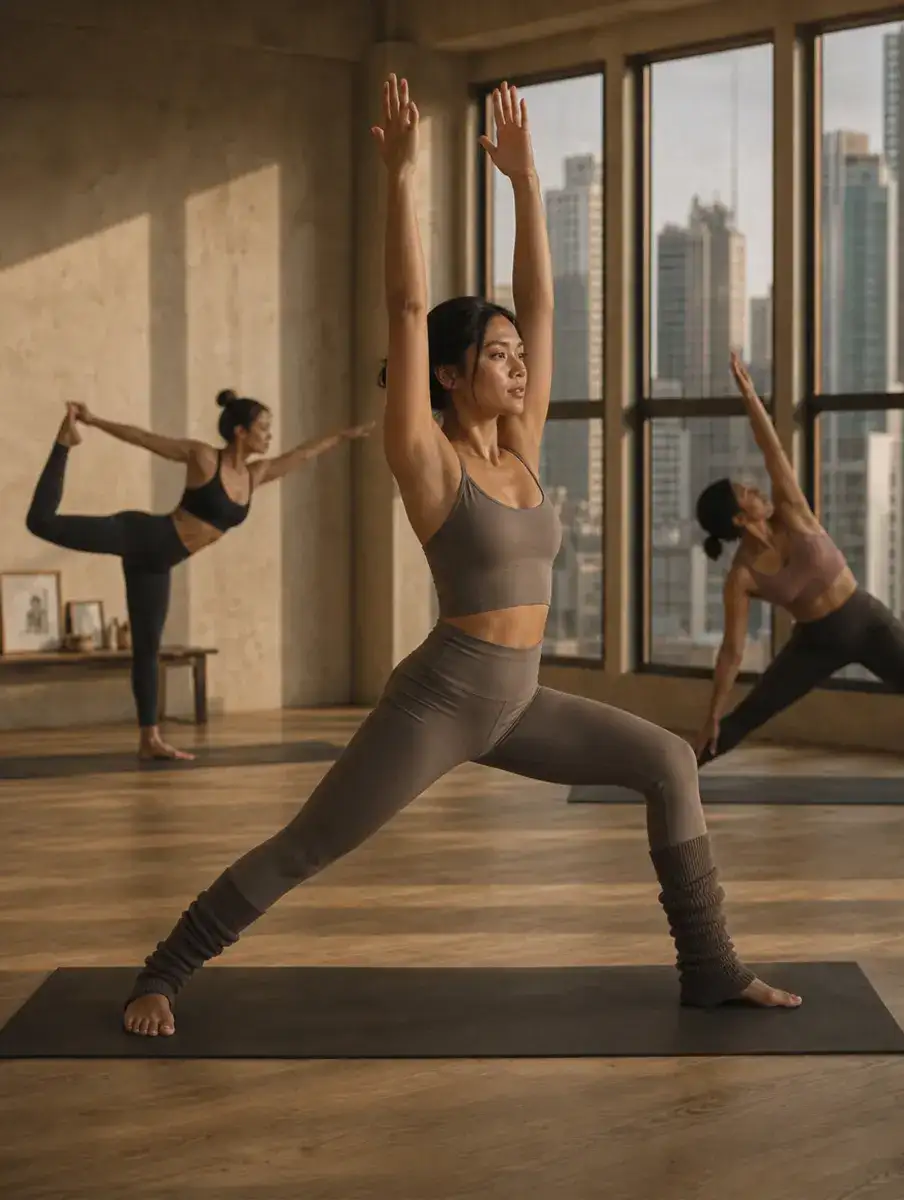
Ashtanga follows a fixed series of poses in the same order every time, linked by breath, and is often practised Mysore style at your own pace. Vinyasa uses the same breath-linked movement, but the teacher builds a new sequence for each class. Ashtanga offers structure and repetition; vinyasa offers variety.
Ashtanga and vinyasa look alike from the outside. Both link movement to breath, both use Sun Salutations and both get warm. The real difference is in the sequence: whether it is fixed, or whether it changes every class.
What is ashtanga yoga?
Ashtanga, in the sense used on a timetable, is the method taught by K. Pattabhi Jois in Mysore, India, from the middle of the twentieth century. You practise a set series of poses, always in the same order, starting with the Primary Series. Each movement is matched to a breath, with steady ujjayi breathing, a fixed gazing point for each pose, and short linking movements between poses.
It is often taught Mysore style: you learn the sequence a few poses at a time, then practise at your own pace in a shared room while the teacher moves between students. Led classes, where the teacher counts the breaths aloud, are also common. The page on Ashtanga yoga and the two meanings of its name covers its history and the eight limbs it is named after.
What is vinyasa yoga?
Vinyasa means placing in a special way. In a studio, a vinyasa class strings poses together into a flow, one movement to each breath. Much of modern vinyasa grew out of ashtanga, but the teacher designs a new sequence for each class, often around a theme: hips, twists, a peak pose or a slower day.
So two vinyasa classes, even with the same teacher, rarely look the same. The pace can be strong and quick or slow and gentle.
Ashtanga vs vinyasa at a glance
| Ashtanga | Vinyasa | |
|---|---|---|
| Sequence | Fixed series, same order every time | Changes each class, set by the teacher |
| Format | Mysore style (self-paced) or led | Usually led by the teacher |
| Pace | Steady, set by your own breath count | Anything from gentle to strong |
| Progress | You add poses as you are ready | New shapes appear class to class |
| Music | Traditionally none | Often played, depending on the studio |
| Frequency | Traditionally six days a week | As often as suits you |
| Suits | People who like routine and clear progress | People who like variety |
Which is better for a beginner?
Neither is better in itself. It depends on how you like to learn.
Choose ashtanga if you like structure. Repeating the same sequence lets you measure change over months, and a Mysore room gives you personal attention while you learn. It asks for commitment, because the method is designed around regular, frequent practice.
Choose vinyasa if you like variety, music and a class that feels a little different each time. A gentle or beginner vinyasa class is an easy first step, and the strong classes are there when you want them.
If you are new to yoga altogether, a slower held class may come first. The comparison of hatha vs vinyasa explains the difference between holding shapes and flowing through them.
What do the two have in common?
Both start, as a rule, with Sun Salutations. Learning the Sun Salutation, step by step prepares you for either class, and the sun salutation timer can pace your rounds at home. Both use the same kind of breath-linked transition through plank, a low push-up and an upward dog or cobra. Both build heat, strength and stamina.
Both also ask you to listen to your body. Bend your knees in forward folds, skip any linking movement that strains your wrists or shoulders, and come out of a pose that causes sharp pain. If you are pregnant, injured or managing a health condition, check with your doctor and tell your teacher before class.
How do you choose your first class?
Try one of each. Notice how you feel afterwards, and which one you want to go back to. The yoga style quiz can also suggest a starting point, and the main types of yoga puts these two beside the other common styles. When you are ready, browse yoga studios across the Philippines for ashtanga and vinyasa classes near you.
Put it into practice with the yoga style quiz, built on pages like this one.
Browse every practical guide.
Sources: Mayo Clinic, Fitness program: 5 steps to get started; NCCIH (US National Institutes of Health), Yoga: Effectiveness and Safety; NHS, Exercise in pregnancy; CDC, Pregnant & Postpartum Activity: An Overview; Canadian Family Physician (Chan et al., 2014), via PubMed Central, Hot yoga and pregnancy: Fitness and hyperthermia. Last reviewed 2 October 2026.
Questions
Is ashtanga harder than vinyasa?
Ashtanga is usually more demanding, because the full Primary Series is long and vigorous and is meant to be practised most days. A vinyasa class can be just as hard or quite gentle, depending on the teacher. In Mysore-style ashtanga, beginners only learn a short part of the series at first.
Can a beginner start with ashtanga?
Yes, especially in a Mysore-style room, where a teacher gives each new student a few poses at a time and adds more as they are ready. Many beginners also start with a gentle vinyasa or hatha class to learn the basic shapes first.
Is vinyasa the same as power yoga?
Power yoga is one strong, fitness-leaning kind of vinyasa class. Not every vinyasa class is a power class: some are slow and gentle, and the name on the timetable usually tells you which to expect.
Is vinyasa harder than other kinds of yoga?
Vinyasa is not harder than yoga, it is one style of yoga. Because it links one movement to each breath and moves steadily through Sun Salutations, it usually feels more active than a slower hatha class where poses are held. The pace varies widely, from gentle beginner flows to strong, quick classes.
Keep reading
Your yoga calendar
We track every yoga event, workshop and pop-up class so you don't have to.
Updated