Guides
Acro yoga and partner yoga: how to start
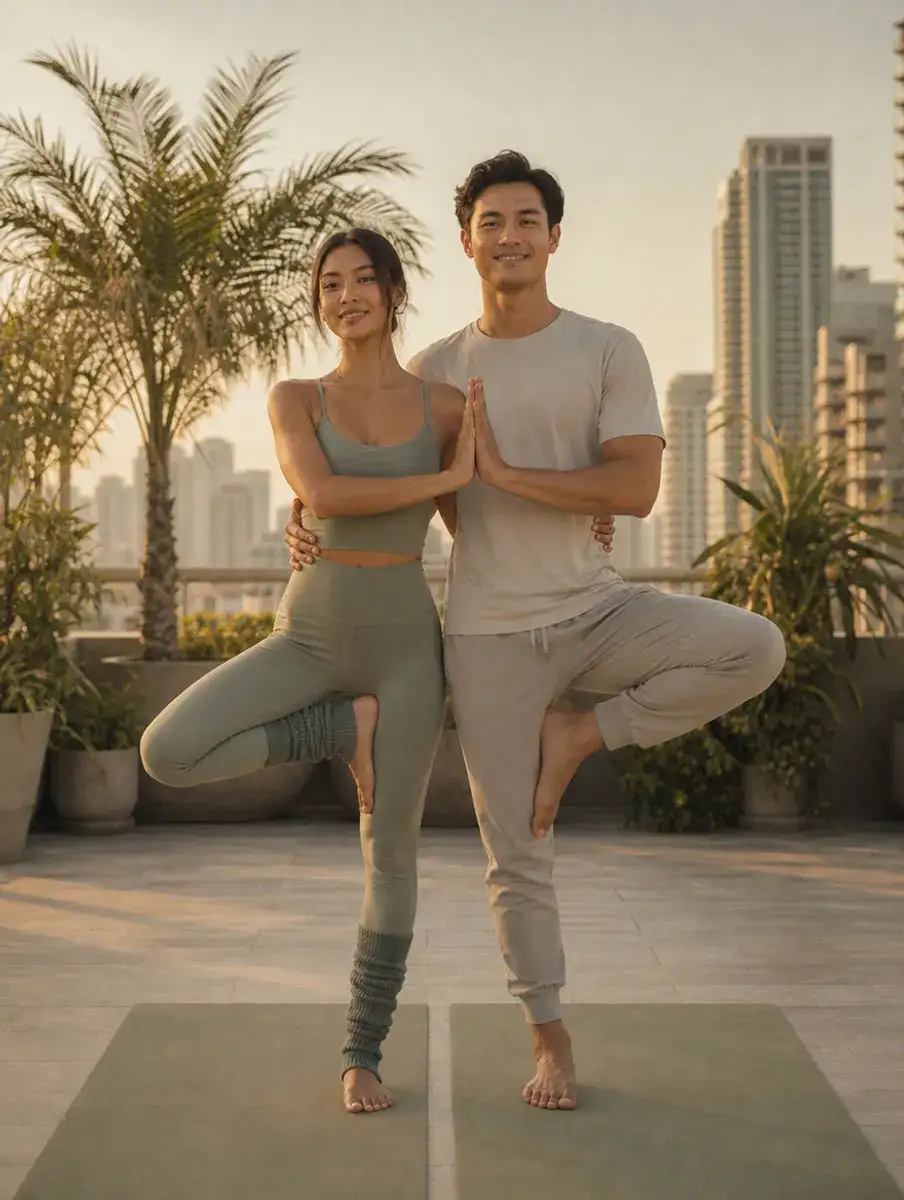
Acro yoga is a partner practice that mixes yoga with acrobatics: one person, the base, lies on the floor and supports the other, the flyer, in balances off the ground, while a third person spots. Partner yoga, often called couples yoga, is gentler: two people share stretches and poses with both staying on the mat.
Partner yoga and acro yoga both take yoga off your own mat and into a shared space with another person. They sit at two ends of a range. Partner yoga is slow and grounded. Acro yoga is playful, acrobatic and done partly in the air.
What is acro yoga?
Acro yoga combines yoga poses with partner acrobatics. As a named practice it took shape in North America around the turn of the 2000s, drawing on yoga, acrobatic balancing and, in some schools, Thai massage. It is usually taught in workshops and jams (open practice sessions) rather than regular timetable classes.
Every acro yoga pose has three roles:
- The base lies on their back, usually with straight legs and arms, and holds the flyer up through the feet and hands.
- The flyer balances on the base, holding a shape such as a plank or a bird with arms reaching forward.
- The spotter stands close, watches the flyer, and is ready to catch or guide.
People take turns in each role. Basing is mostly about steady alignment, not lifting.
Which acro yoga poses do beginners learn first?
- Front plank. The base’s feet press into the flyer’s hips and their hands hold the flyer’s shoulders, while the flyer holds a firm plank pose, as on the floor.
- Front bird. From the same start, the flyer lets go of the hands and lifts the chest, arms reaching forward or back.
- Throne. The flyer sits upright on the base’s feet, with the base holding their hands or shins.
- Folded leaf. A gentle rest, with the flyer folding forward over the base’s feet.
What is partner yoga, or couples yoga?
Partner yoga keeps both people on the ground. You use each other for support, balance and a deeper, gentler stretch. Couples yoga is the same idea, and any two people can do it.
Simple partner poses to try:
- Back-to-back breathing. Sit cross-legged, backs touching. Breathe slowly for one to two minutes and notice each other’s breath. Use it to start and finish.
- Seated twist. Sit facing each other, cross your arms and hold hands, then turn gently to one side for five breaths. Switch.
- Partner forward fold. Sit facing each other, legs wide and feet touching, holding wrists. One leans back slowly as the other folds forward for five breaths. Swap.
- Double down dog. One partner holds Downward-Facing Dog. The other stands just beyond their hands, facing away, places their own hands on the mat about a leg’s length further forward, then steps one foot at a time onto the first partner’s sacrum (the flat bone at the base of the spine), never higher up the back. Hold for three to five breaths. Only try it if both of you are comfortable in the pose alone.
- Partner boat. Sit facing each other, hold hands, press the soles of the feet together and lift the legs for three to five breaths.
If you would rather learn with a teacher at home, see these private couples yoga lessons.
How do you practise acro and partner yoga safely?
- Talk the whole time. Agree on words for “down” and “stop”, and use them without hesitation.
- Always spot beginners. No flying without a spotter until both partners are experienced.
- Warm up first. Wrists, shoulders, hips and the core work hard. A few rounds of the Sun Salutation prepare most of the body.
- Use a soft surface. Practise on mats or grass, away from furniture and walls.
- Never pull a partner deeper. In partner stretches, the person being stretched sets the depth.
- Stop for pain. Sharp pain, pins and needles or a joint that feels wrong means come down and rest. See a doctor or physio if it persists.
If you have a back, neck, shoulder or wrist injury, high blood pressure, or you are pregnant, check with your doctor before flying or basing.
Where can you try acro yoga in the Philippines?
Acro yoga usually runs as weekend workshops, community jams and occasional studio sessions rather than daily classes. Ask studios near you whether they host partner or acro events. To understand how these sit beside the main class styles, see the types of yoga, and browse yoga studios across the Philippines for places to start.
Browse every practical guide.
Sources: Mayo Clinic, Fitness program: 5 steps to get started; NCCIH (US National Institutes of Health), Yoga: Effectiveness and Safety. Last reviewed 2 October 2026.
Questions
Do you need to be strong or light to fly in acro yoga?
No. Beginner acro yoga relies on stacking bones over bones, so the base carries the flyer through straight legs and arms rather than muscle. Flyers of many sizes fly. Core strength and the ability to hold a firm plank shape help more than body weight.
Can you do acro yoga with only two people?
You can once both partners know the basics, but beginners should always add a spotter. The spotter watches the flyer, guards the head and shoulders, and helps both partners come down safely if the balance goes.
Is couples yoga good for complete beginners?
Yes. Partner yoga uses simple shapes such as seated twists, forward folds and back-to-back breathing, with both people on the floor. Talk throughout, move slowly, and let the less flexible partner set how deep each stretch goes.
What should you wear for acro yoga?
Fitted clothes that do not slide, such as leggings and a close top, so the base can see and support your hips and so loose fabric does not slip on their feet. Skip lotions and oils before class, because skin needs grip.
Is acro yoga harder than regular yoga?
It asks for different things. Basing relies on steady alignment more than strength, and flying asks for a firm plank shape, core control and trust. The hardest part for many beginners is the communication and balance with another person. Start with the beginner poses, always with a spotter, and build up slowly.
How is acro yoga different from regular yoga?
Regular yoga is usually practised alone on your own mat. Acro yoga mixes yoga poses with partner acrobatics: a base lies on the floor and supports a flyer in balances off the ground, while a spotter stands close. It is mostly taught in workshops and jams rather than regular timetable classes.
Keep reading
Your yoga calendar
We track every yoga event, workshop and pop-up class so you don't have to.
Updated