Pose collection · 14 poses
Gentle yoga poses for stiff bodies and slow days
Easy yoga poses are low-effort shapes close to the floor, such as Child's Pose, Cat-Cow, Sphinx, a lying twist and Legs Up the Wall. They need no balance or strength, suit stiff or tired bodies, and can be held for five slow breaths or longer with cushions under you wherever something feels strained.
Beginner
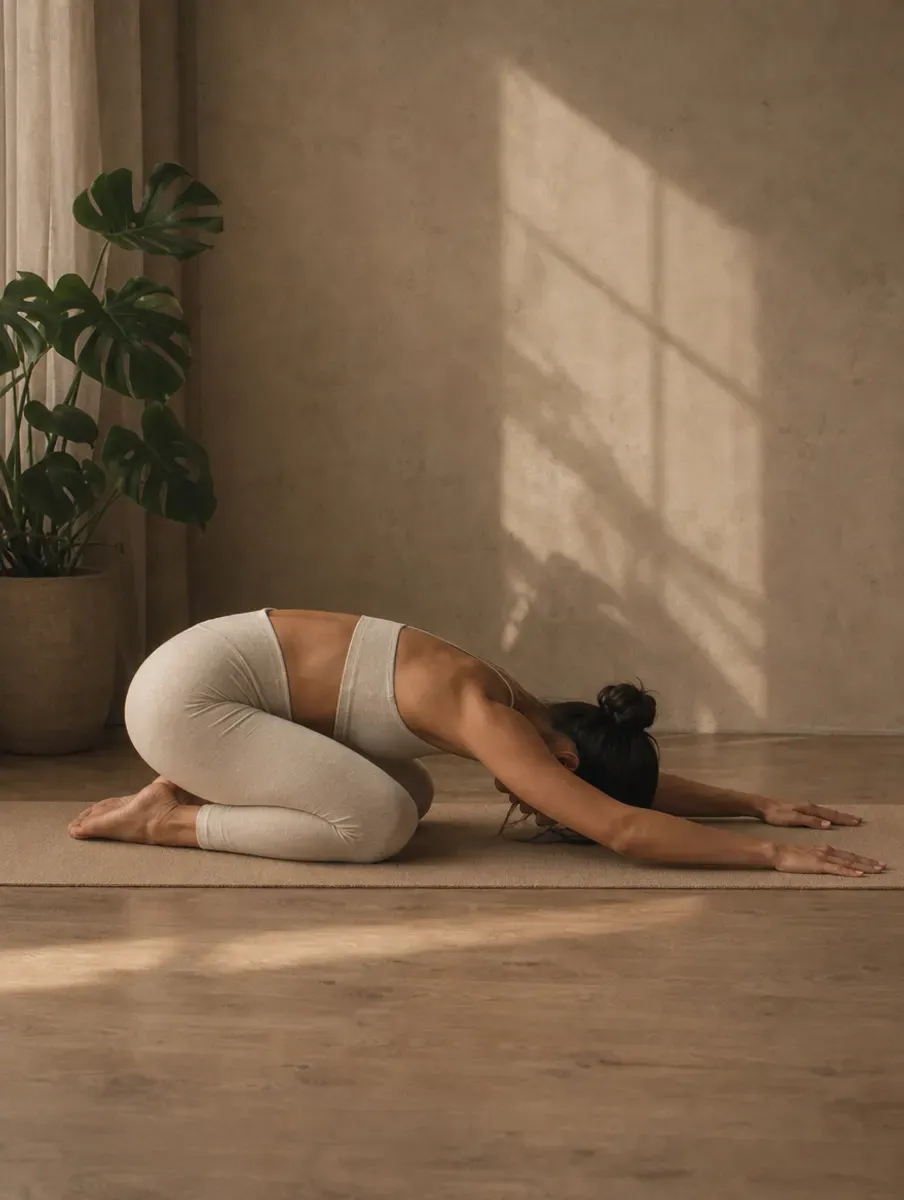
Child's Pose
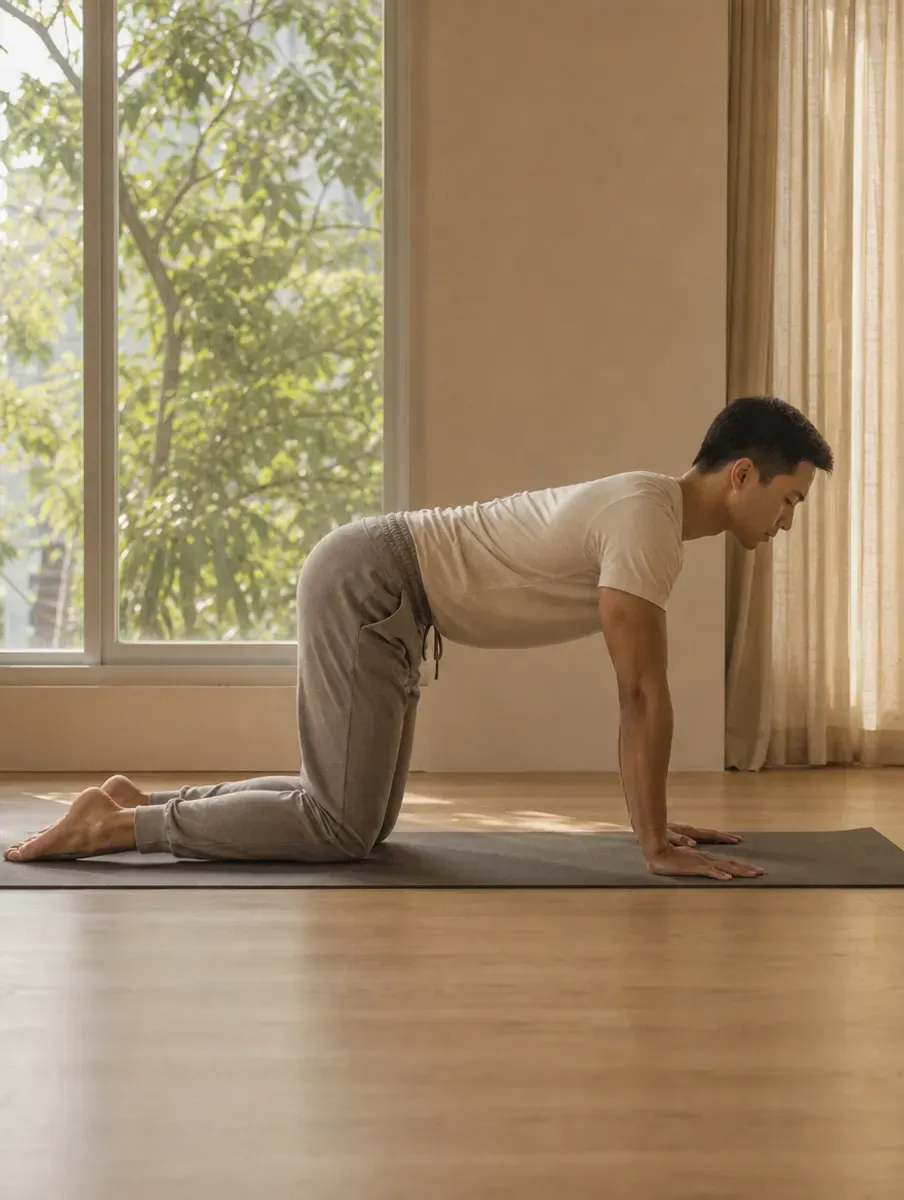
Table Top Pose
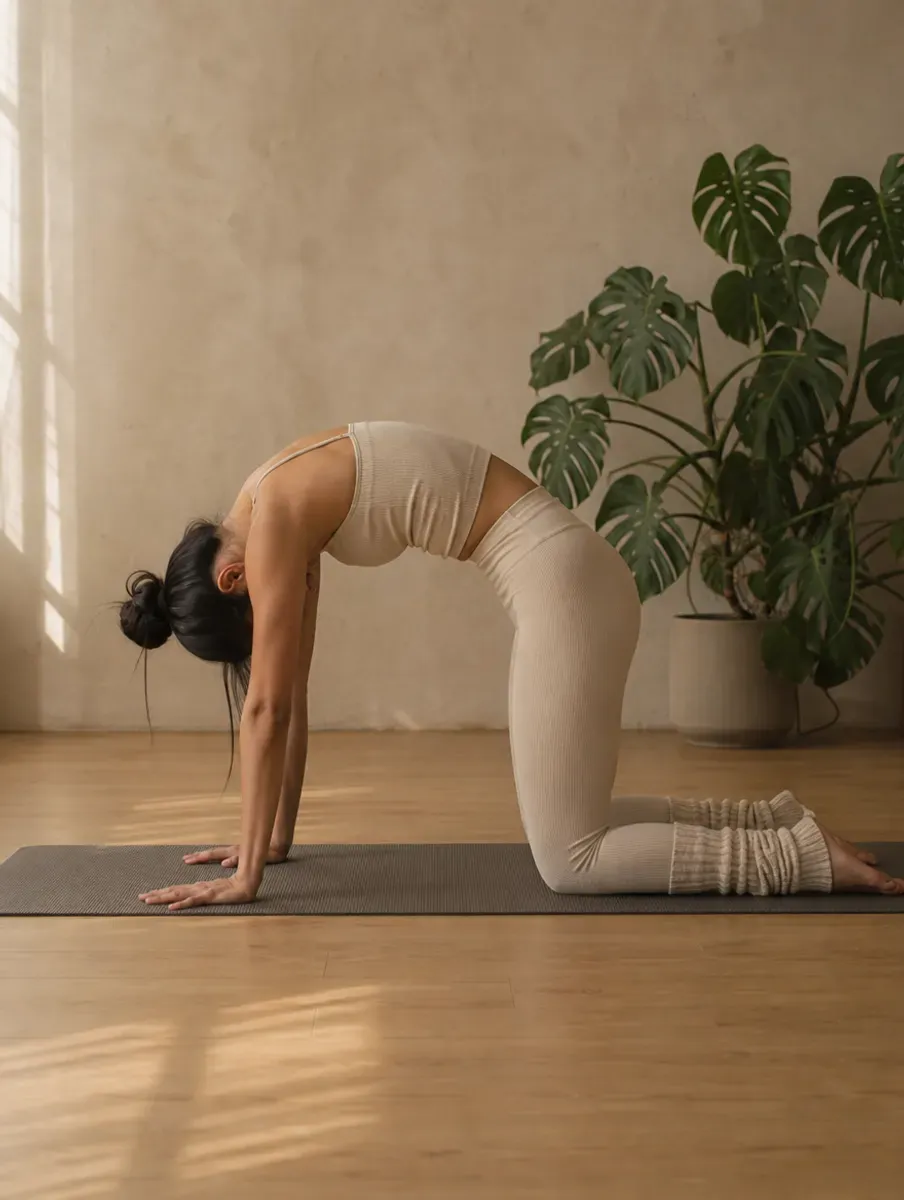
Cat-Cow
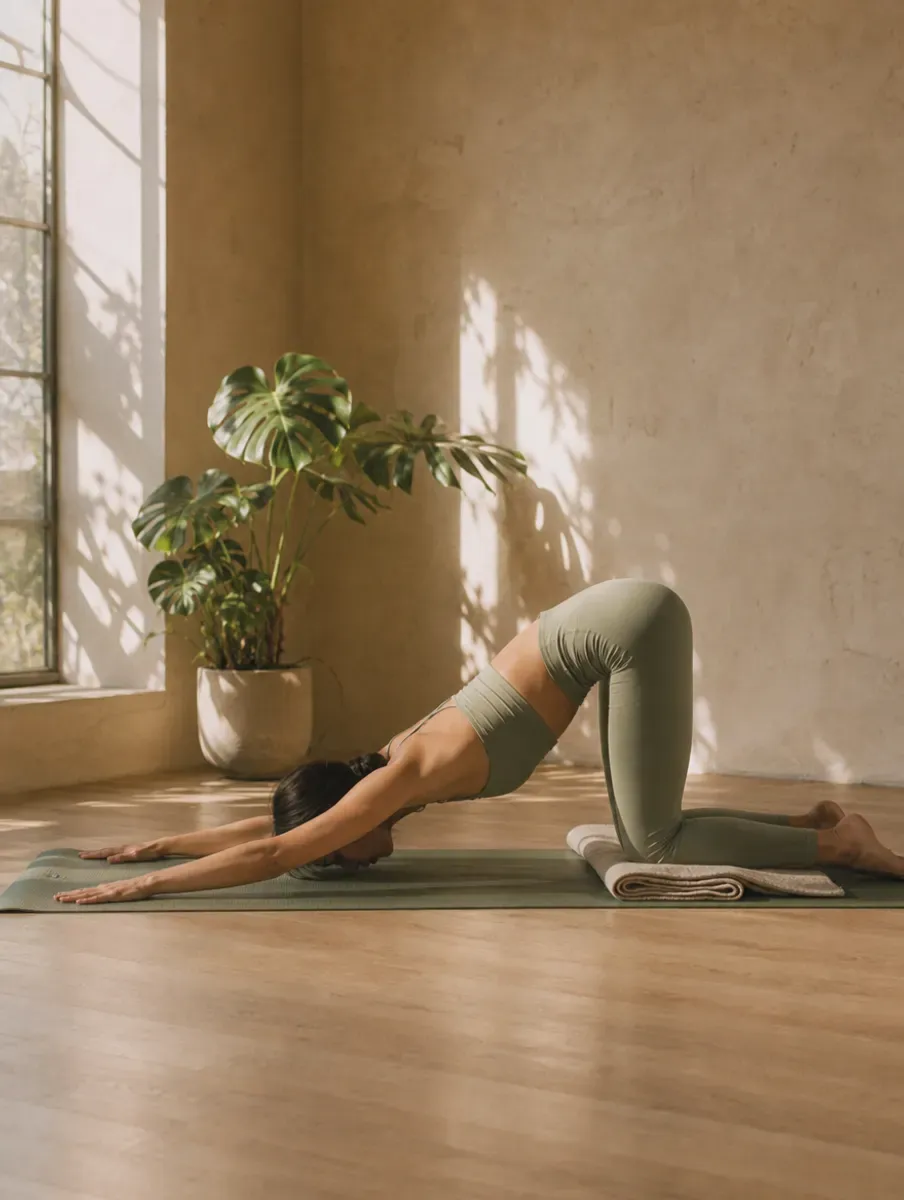
Puppy Pose
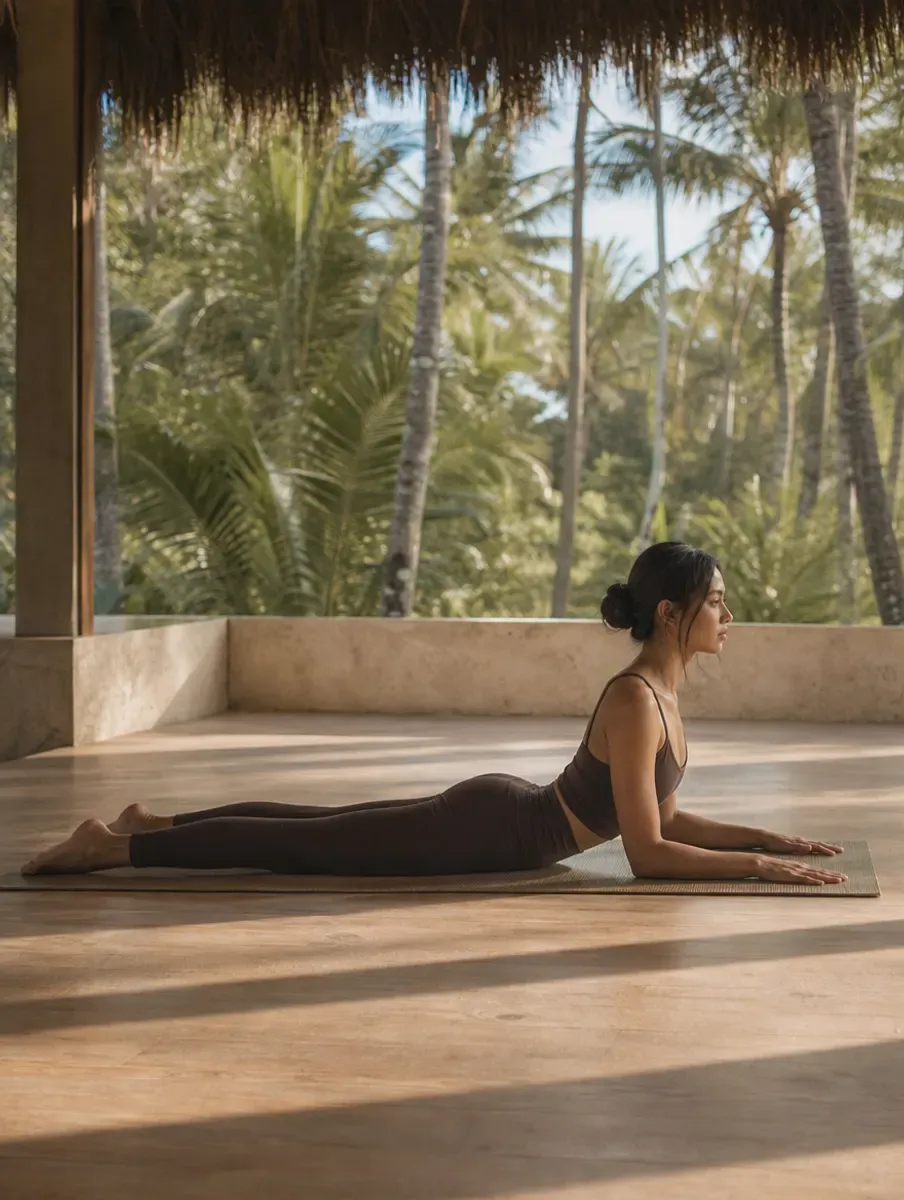
Sphinx Pose
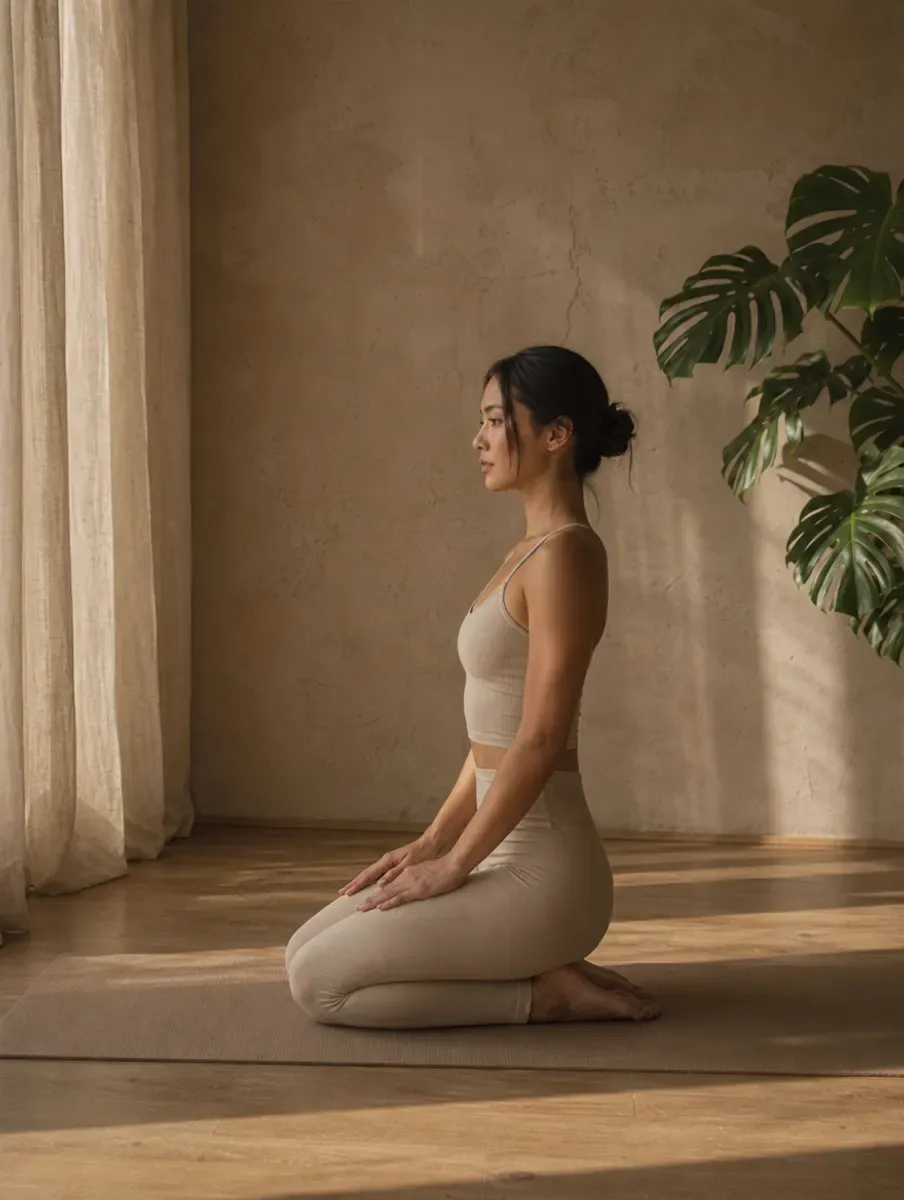
Thunderbolt Pose
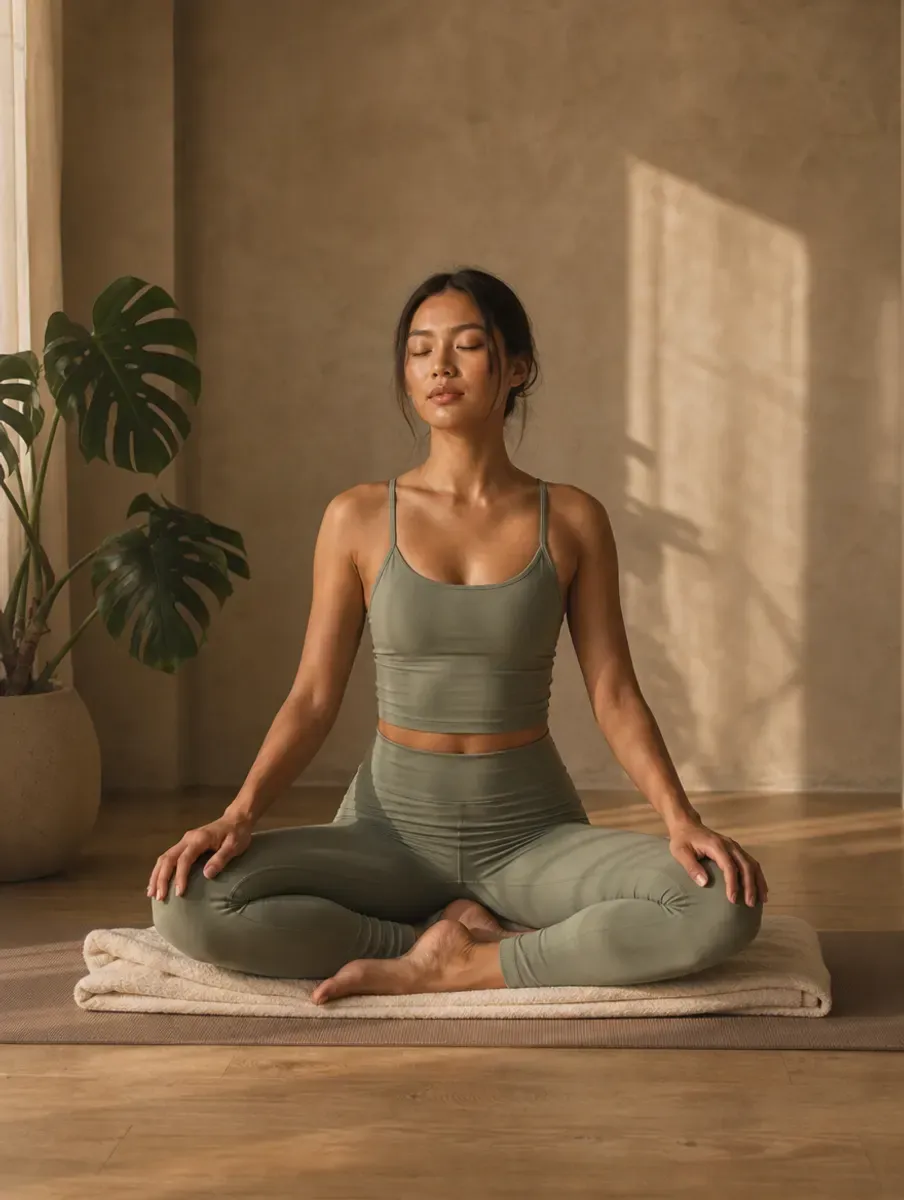
Easy Pose
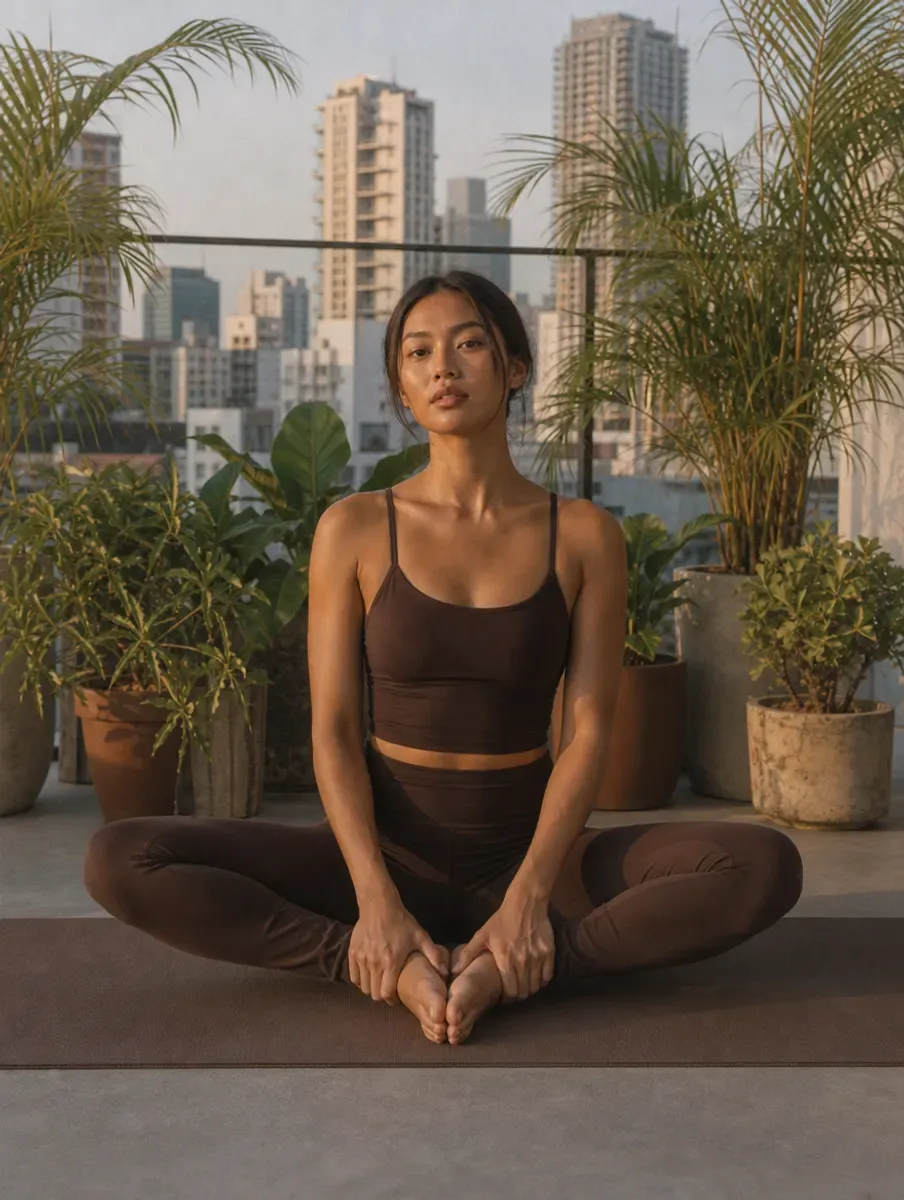
Butterfly Pose
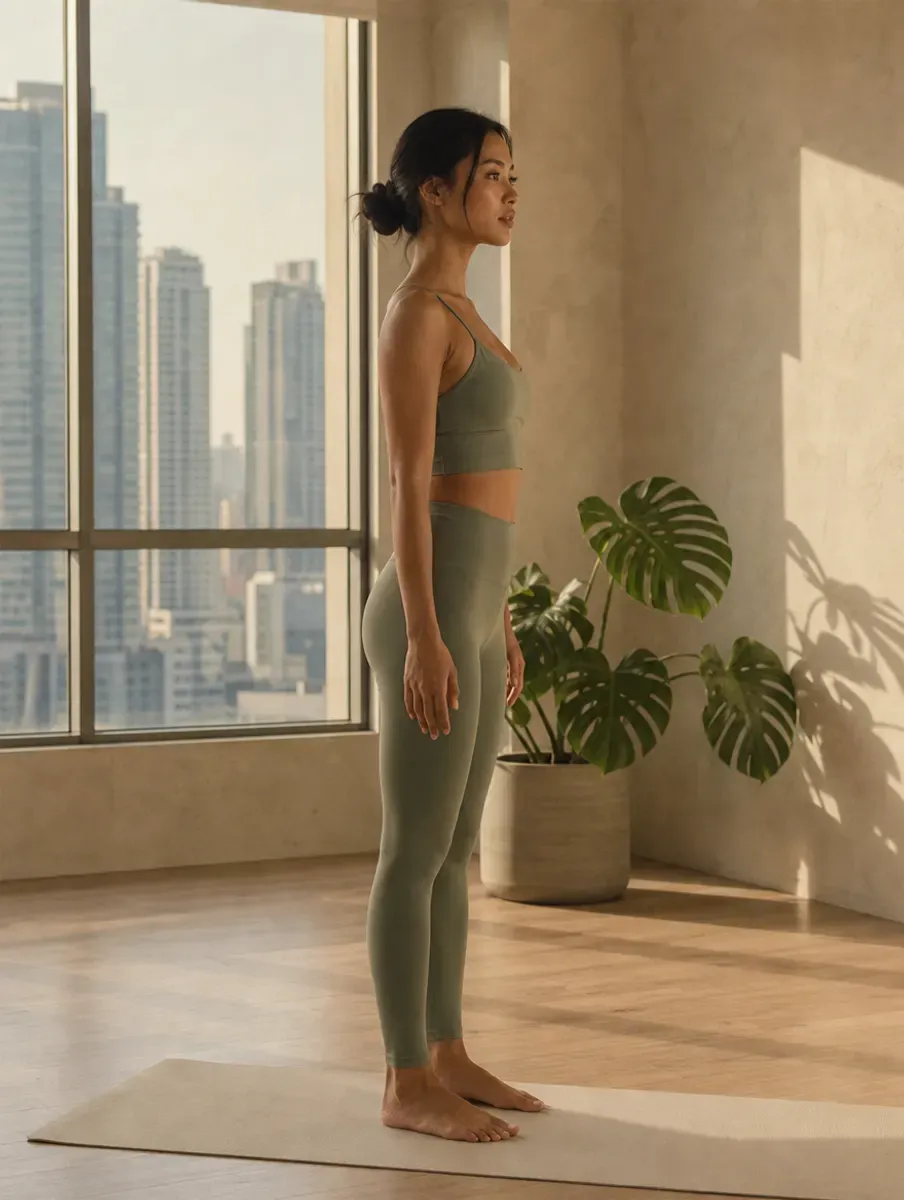
Mountain Pose
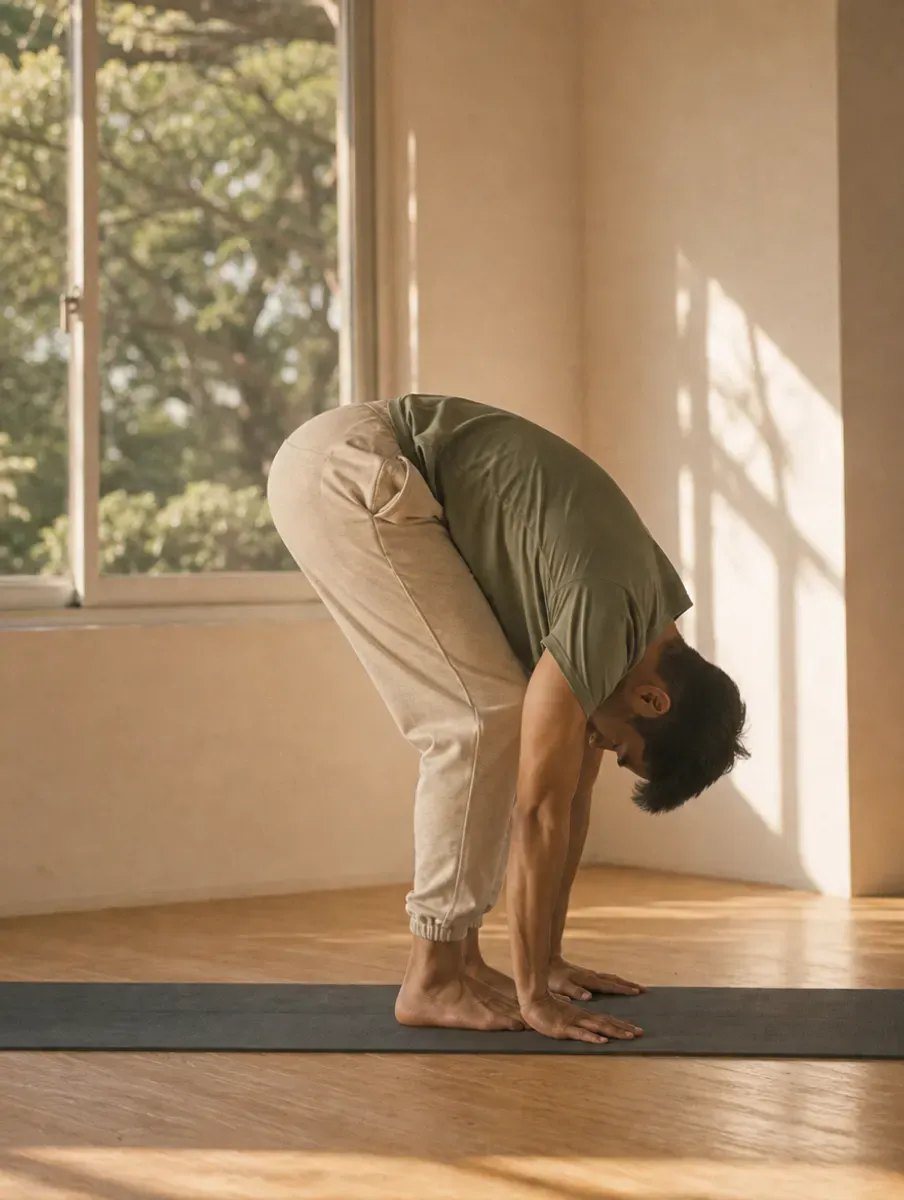
Standing Forward Bend
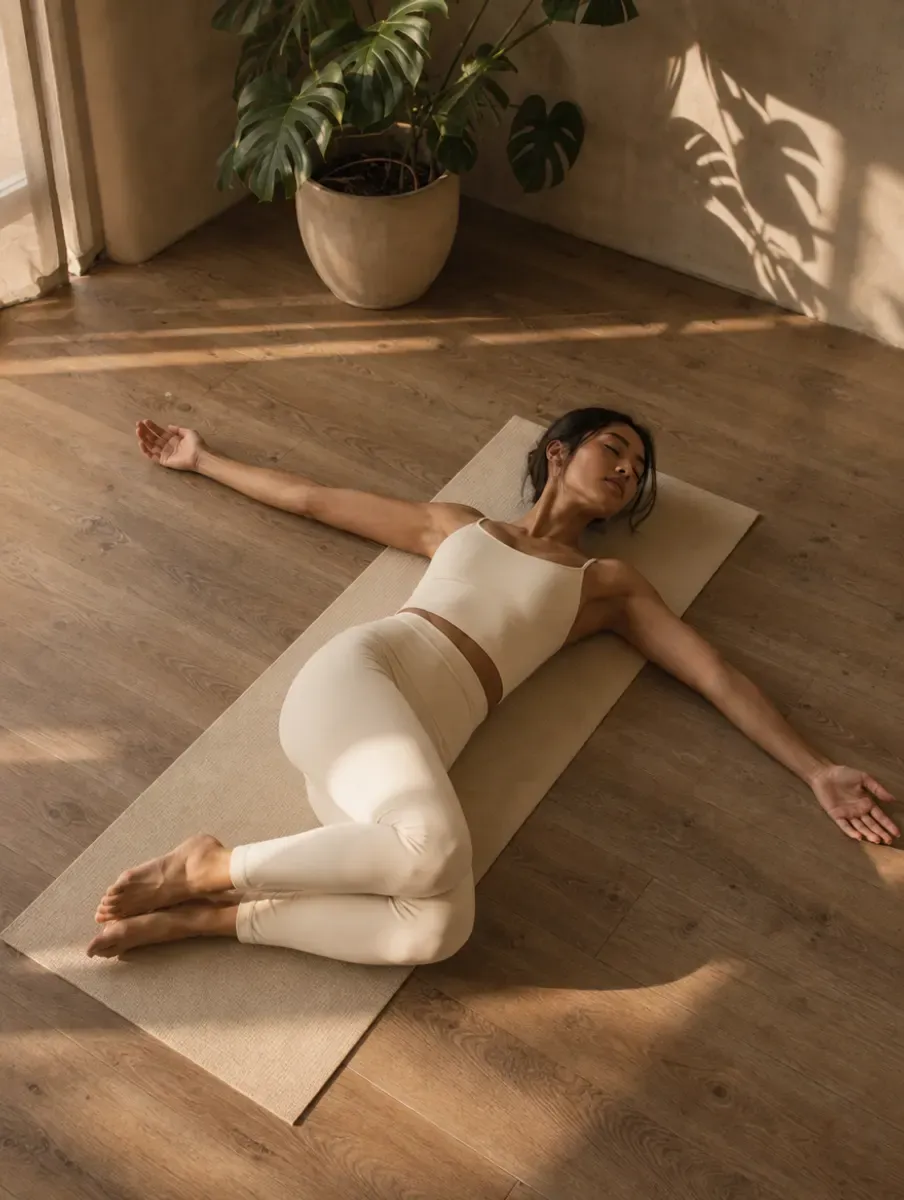
Supine Twist
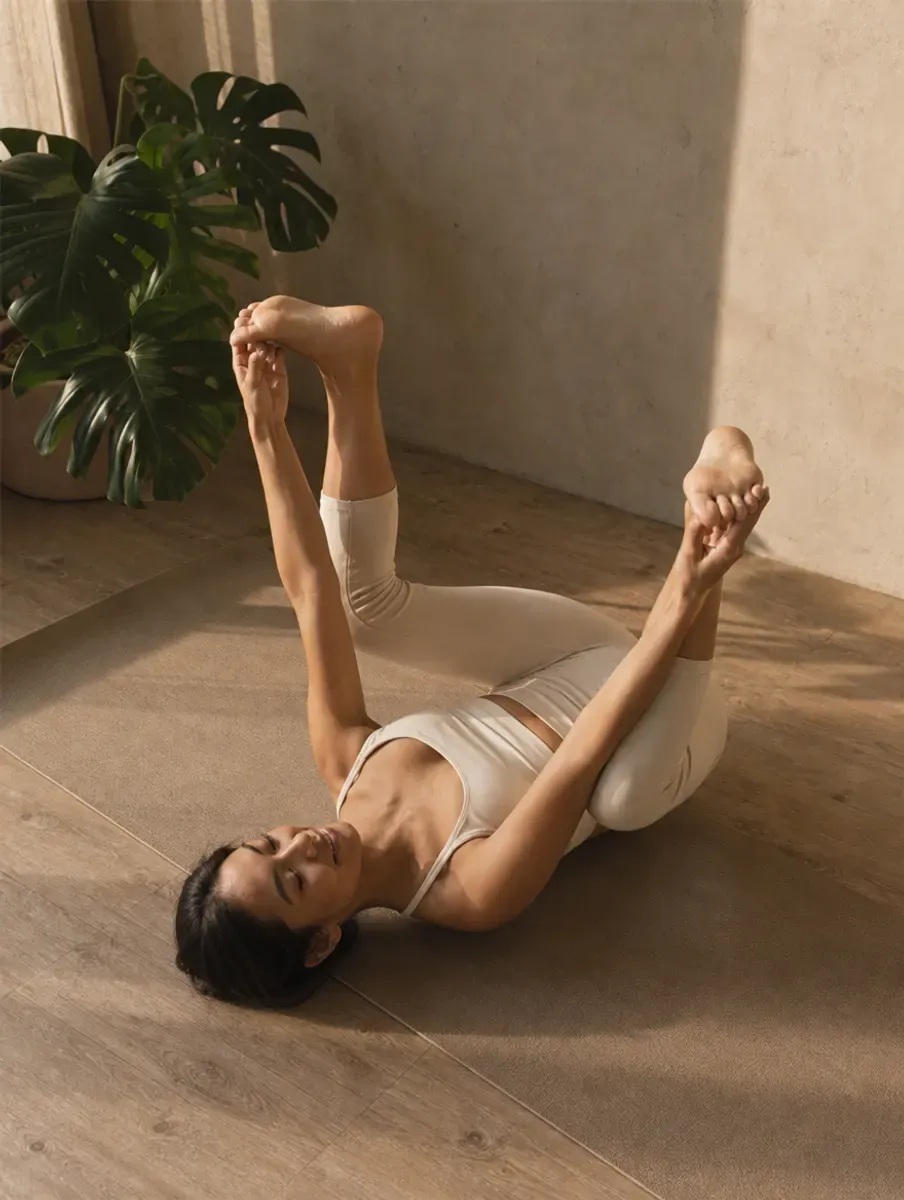
Happy Baby Pose
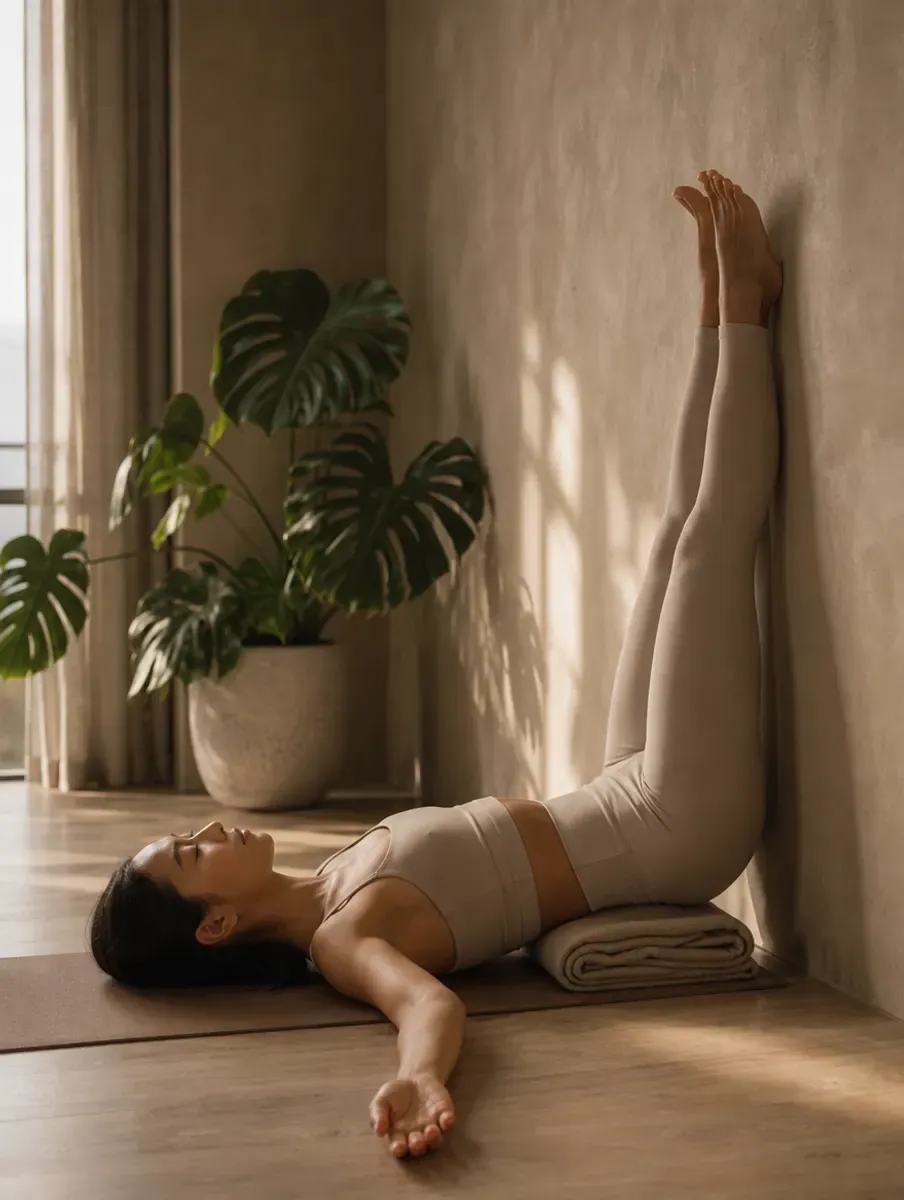
Legs Up the Wall
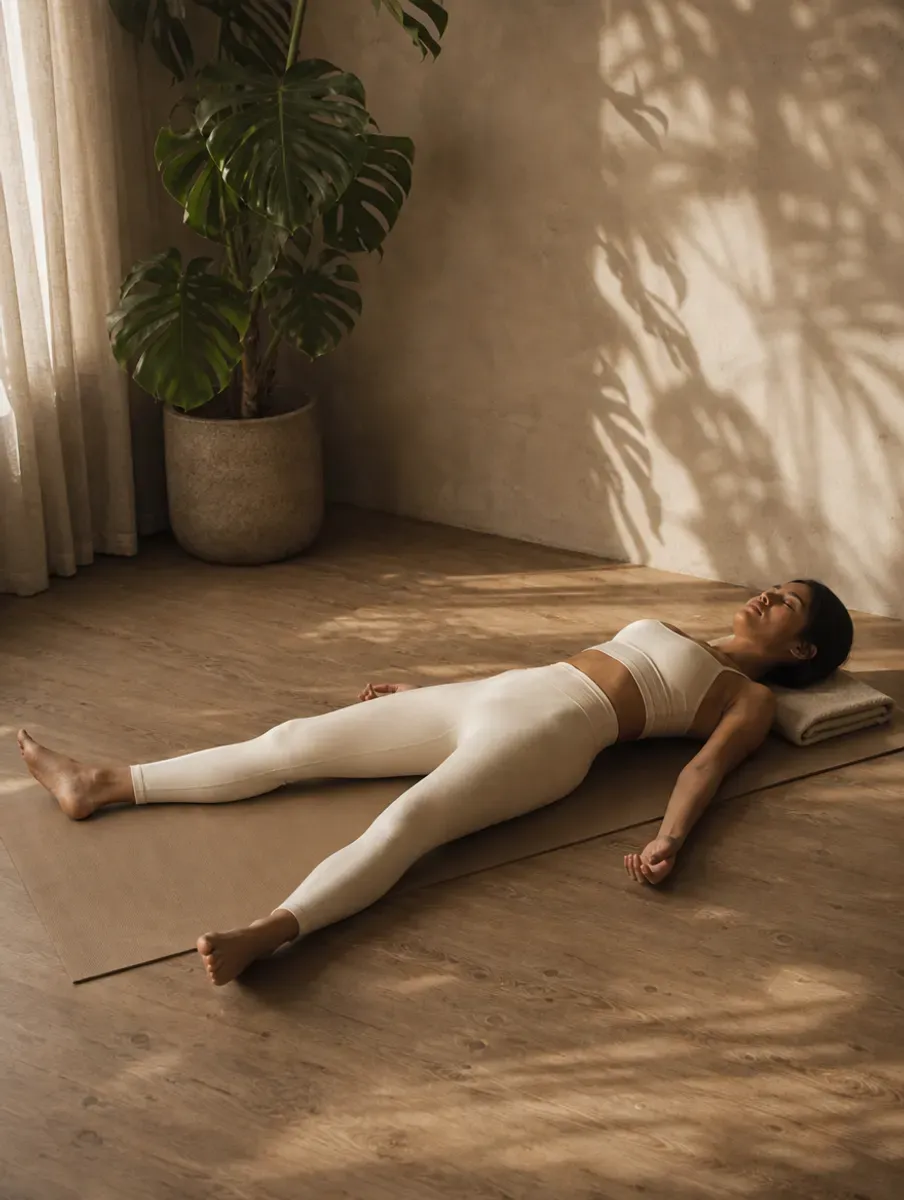
Corpse Pose
These easy yoga poses ask for no balance, no strength and no flexibility you do not already have. Most of them happen on the floor, where there is nowhere to fall, and every one can be made softer with a cushion, a folded blanket or a wall.
They are chosen for days when you feel stiff, tired or simply new to all of this. New to yoga rather than just tired? Begin with the yoga poses for beginners. This page goes gentler still.
How do you put easy yoga poses together?
Work from the floor up and back down. Start in Child’s Pose, move to all fours for Cat-Cow and Puppy, lie on your front for Sphinx, then sit in Easy Pose or Butterfly for a minute of slow breathing. Stand for Mountain and a soft forward fold if you feel like it, then come down to your back for the twist, Happy Baby, Legs Up the Wall and a long rest.
Five slow breaths in each shape gives you a session of fifteen to twenty minutes. On a short day, choose four poses and stay longer in each.
The seated shapes have their own page of seated yoga poses you can do on a cushion or a chair, and when you are ready to spend more time on your feet, the standing yoga poses, one card each, are the natural next set.
Which easy poses suit which kind of day?
| How you feel | Try | Why it suits |
|---|---|---|
| Stiff back after sitting | Cat-Cow, Sphinx, supine twist | Moves the spine in three directions without effort |
| Heavy, tired legs | Legs Up the Wall, Happy Baby | The legs rest above or level with the hips |
| Wired before bed | Child’s Pose, Butterfly, Savasana | Supported shapes with slow breathing |
| Tight shoulders from the phone | Puppy, Table Top shoulder rolls | Opens the arms and upper back |
| Want to feel more awake | Mountain, standing forward bend, Cat-Cow | Upright and moving, but still gentle |
A ten-minute morning set to print
- Child’s Pose, 1 minute.
- Table Top to Cat-Cow, 6 slow rounds.
- Puppy Pose, 5 breaths.
- Sphinx, 5 breaths.
- Easy Pose, 1 minute of slow breathing.
- Mountain Pose, 5 breaths.
- Standing forward bend, knees bent, 5 breaths, then roll up slowly.
No props? Use what is at home
A firm sofa cushion works as a block for Easy Pose and Butterfly. A rolled bath towel goes under the knees in Thunderbolt or behind the knees in Savasana. A folded blanket softens a tile floor for kneeling shapes, which matters in many Philippine homes where the floor is hard and cool. A pillow on a chair seat makes Child’s Pose easier if getting to the floor is difficult.
How long until these poses feel easier?
Most people find getting down to the floor and back up becomes smoother within a couple of weeks of practising a few times a week, and the floor shapes start to feel like rest rather than effort. Keep the same short set for a month before adding anything new.
What makes a pose feel easy?
Three things: your weight is supported, the breath stays slow, and nothing pinches. If any of the three goes, the pose has stopped being easy for you today, whatever it looks like on paper. Bend the knees more, add a prop or come out.
Gentle shapes can feel good for people who sit a lot, older bodies and anyone easing back after time away. For a calm evening version, the bedtime yoga sequence uses several of these in order, and on days when the belly feels full and tight, the gentle yoga poses for bloating pair the same shapes with slow breathing. To learn one pose a week instead, cut out the printable pose cards, each with a line drawing and two cues.
If a pose causes sharp pain, numbness or pain that stays afterwards, stop and see a doctor or physio before you continue.
Sources: Mayo Clinic, Fitness program: 5 steps to get started; NCCIH (US National Institutes of Health), Yoga: Effectiveness and Safety. Last reviewed 2 October 2026.
Questions
What is the easiest yoga pose of all?
Corpse Pose, Savasana, asks the least of the body: you lie on your back and let the floor hold you. Child's Pose comes a close second, and both are places to rest at any point in a practice.
Can easy yoga poses still be worth doing?
Yes. Gentle shapes move the spine and hips and give you time to breathe slowly, which is what many people want on a tired day. An easy session done often tends to be more useful than a hard one you avoid.
How do you make a yoga pose easier?
Bring the floor closer. Put a block under the hand, a cushion under the hips or a folded blanket under the knees, bend the knees in any fold, and shorten the time you stay. If it still feels strained, choose a different shape.
How many easy yoga poses should you do in one session?
Five to eight poses held for several slow breaths each make a calm 10 to 20 minute session. Start with something that moves the spine, such as Cat-Cow, add a few floor stretches, and finish lying down. A short session you enjoy is better than a long list you skip.
Can you do easy yoga poses before bed?
Yes. Slow floor poses such as Child's Pose, a lying twist, a supported butterfly and Legs Up the Wall suit the evening well. Keep the lights low, breathe slowly with a longer exhale, and leave out anything energising like deep backbends.
Are easy yoga poses suitable for seniors?
Many of them are, especially with a chair or wall for support and cushions under the knees or hips. Move slowly when getting up and down from the floor. If you have a heart condition, joint replacement or balance problems, check with your doctor first.
Updated