Pose library · Ananda Balasana · reviewed by a teacher
Happy Baby Pose (Ananda Balasana)
Ananda means bliss or joy and bala means child, so the name describes a contented baby lying on its back holding its feet. You do exactly that: lie down, draw the knees wide and hold on.
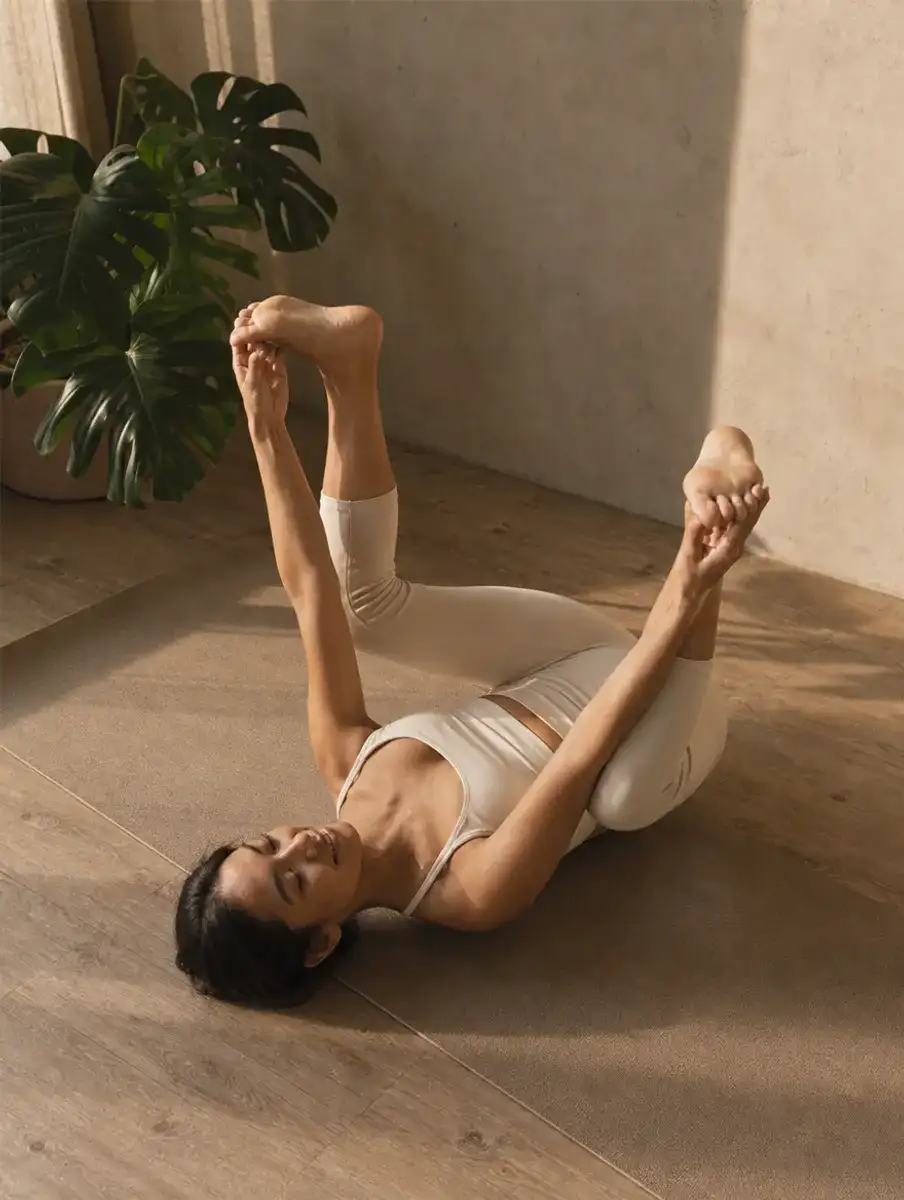
Happy Baby Pose (Ananda Balasana) is a pose on your back that opens the hips. Draw the knees wide toward the armpits, hold the outside edges of the feet, stack each ankle over its knee and gently draw the feet down for about a minute. Loop a strap around each foot if they feel out of reach.
Pronunciation and meaning
Ananda Balasana: uh-NUN-duh bah-LAHS-uh-nuh. In Ananda the stress falls on NUN, and in Balasana on LAHS.
Ananda means bliss or joy and bala means child, so the name describes a contented baby lying on its back holding its feet. You do exactly that: lie down, draw the knees wide and hold on.
How to do Happy Baby Pose
- Lie on your back with your knees bent and your feet on the floor, and take a breath to let your back settle.
- Draw both knees in toward your chest, then let them open wider than your ribs, toward your armpits.
- Reach for the outside edges of your feet, or hold your ankles or shins if the feet are far away.
- Stack each ankle above its knee so the shins point straight up and the soles of the feet face the ceiling.
- Gently draw the feet down, so the knees move toward the floor beside your ribs, while the back of the pelvis stays heavy on the mat.
- Stay for about a minute, or rock slowly from side to side, then let go of the feet and set them down one at a time.
Happy Baby Pose step by step

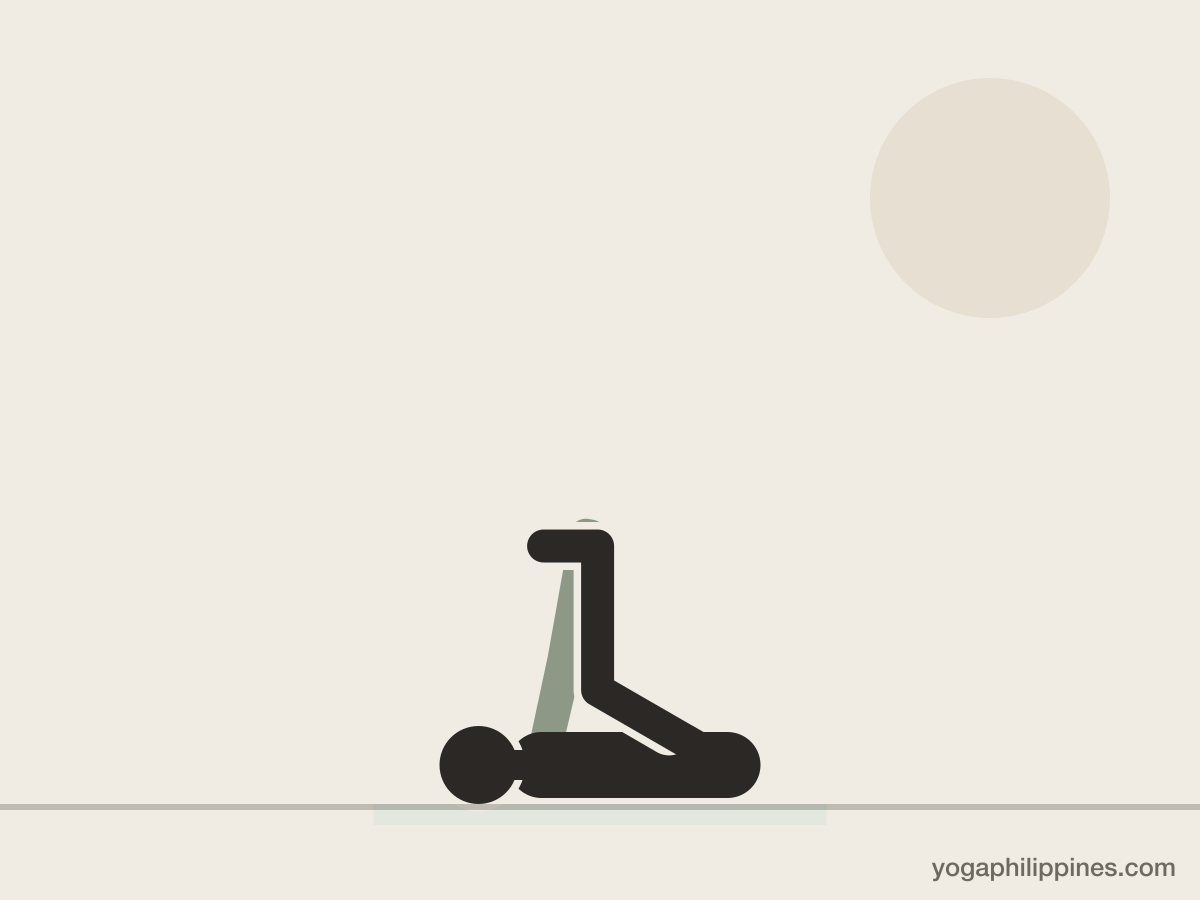
Drawings and video by YogaPhilippines.com, free to reuse under CC BY 4.0 with credit and a link: see the image licence for how to credit.
Happy Baby Pose appears in the 20-minute hip-opening sequence, which is printable with holds and cues. For other poses that work the hips, open the pose finder set to the hips.
Teacher's note from Joahnna Lee
“Keep your head on the floor. If you have to lift it to reach your feet, hold your shins or use a strap instead.”
“Let the tailbone stay grounded. I watch that spot, because it is the first thing to curl up when the hands pull too hard.”
“Pull down with your hands and press up gently into them with your feet, so the arms and legs meet in the middle.”
Make it easier
- Loop a strap around the arch of each foot, holding one strap in each hand, when the feet feel out of reach.
- Work one leg at a time, with the other foot on the floor and that knee bent. This is often called Half Happy Baby.
- Place a folded blanket under your head if your chin tips up toward the ceiling.
Pregnancy and after birth
Pregnancy. Adapt. In early pregnancy, take the knees wider than usual so the belly has room, and only stay if lying on your back feels comfortable. Later in pregnancy, lying flat on the back is usually best avoided, so recline on an incline over a bolster and hold the backs of the thighs, or rest on your side with the top knee drawn up on a pillow. Check with your OB or midwife before you start.
After birth. Adapt. Wait until your OB or midwife has cleared you to exercise, and after a caesarean birth until drawing the knees in feels comfortable around the scar. Start with one leg at a time and a very light grip, and stop if you notice heaviness or pressure in the pelvic floor.
For more on practising through pregnancy, see Joahnna Lee Yoga.
Common mistakes
- Letting the lower back and tailbone curl off the floor. Loosen your grip until the pelvis settles back down.
- Holding the feet with the knees tucked narrow over the belly. The knees go wide, beside the body, toward the armpits.
- Letting the feet drift in over the face, so the shins slope and the knees take a twist. Keep each ankle stacked over its knee.
Happy Baby is a playful hip opener done on your back, and it usually turns up near the end of a practice, after the standing work and before rest. It is easy to come into and easy to adapt, which makes it a friendly first pose for tight hips.
In a quiet Yin yoga practice it can be held for longer, with the hands on the backs of the thighs if the feet feel far away.
Afterwards, let both knees fall to one side into a Supine Twist, shoulders heavy on the mat.
Rocking from here with the knees toward the forehead is a soft preparation for Plow Pose, which takes the fold upside down. The open hips you find here are also the first stage of Compass Pose, an advanced seated stretch.
Prep poses for Happy Baby Pose
Poses that warm up the same body areas at a lower intensity, so Happy Baby Pose feels steadier when you get there.
- Reclined Butterfly (Supta Baddha Konasana) gentler work for the same area, beginner
Counter-poses for Happy Baby Pose
Shapes that move the body the other way or let it rest straight after Happy Baby Pose.
- Windscreen Wipers beginner
Poses that lead into Happy Baby Pose
In a sequence, Happy Baby Pose often follows these poses as their counter-pose or rest.
- Bridge Pose (Setu Bandha Sarvangasana) beginner plus
Props that help in Happy Baby Pose
- Strap: extends the arms when the hands do not reach the feet or each other yet.
- Blanket: supports the head or the back so the neck stays relaxed.
Programs and sessions that use Happy Baby Pose
- The 30-day yoga challenge 2 of its 30 sessions
- The 14-day flexibility plan 1 of its 14 sessions
- The 4-week beginner program 1 of its 12 sessions
- Sequences: 30-minute home flow, 45-minute slow yoga, sequence for the hips and flow that spares the wrists
- Practice app sessions: 30-minute practice and hip opener
- Generated example flows: 20-minute hip flow and 30-minute back-friendly session, no weight on the wrists
Sources: Mayo Clinic, Fitness program: 5 steps to get started; NCCIH (US National Institutes of Health), Yoga: Effectiveness and Safety; NHS, Exercise in pregnancy; CDC, Pregnant & Postpartum Activity: An Overview; Canadian Family Physician (Chan et al., 2014), via PubMed Central, Hot yoga and pregnancy: Fitness and hyperthermia. Last reviewed 2 October 2026.
Happy Baby Pose questions
Is it OK to rock in Happy Baby Pose?
Yes. Rocking slowly from side to side lets the back of the pelvis roll across the floor, and many people find it soothing. Keep the movement small and slow, and let the head stay down.
What is Happy Baby Pose good for?
Happy Baby Pose is a gentle hip opener on your back. With the knees drawn wide toward the armpits, it stretches the inner thighs, groin and hips while the floor supports the spine. Many people find it a calm, playful shape near the end of a practice, and it is easy to adapt with a strap.
What muscles does Happy Baby Pose stretch?
Happy Baby Pose mainly stretches the inner thighs and groin, the muscles around the hips and, as the feet draw down, the backs of the thighs. The lower back gets a mild release when the tailbone stays heavy on the mat. If the tailbone curls up, loosen your grip, or hold a strap or the shins instead of the feet.
Pairs well with
Updated