Pose library · Paschimottanasana · reviewed by a teacher
Seated Forward Bend (Paschimottanasana)
Paschima means west, which in yoga texts is the back of the body, and uttana means an intense stretch. The name describes the stretch along the whole back of the body, from the heels to the head.
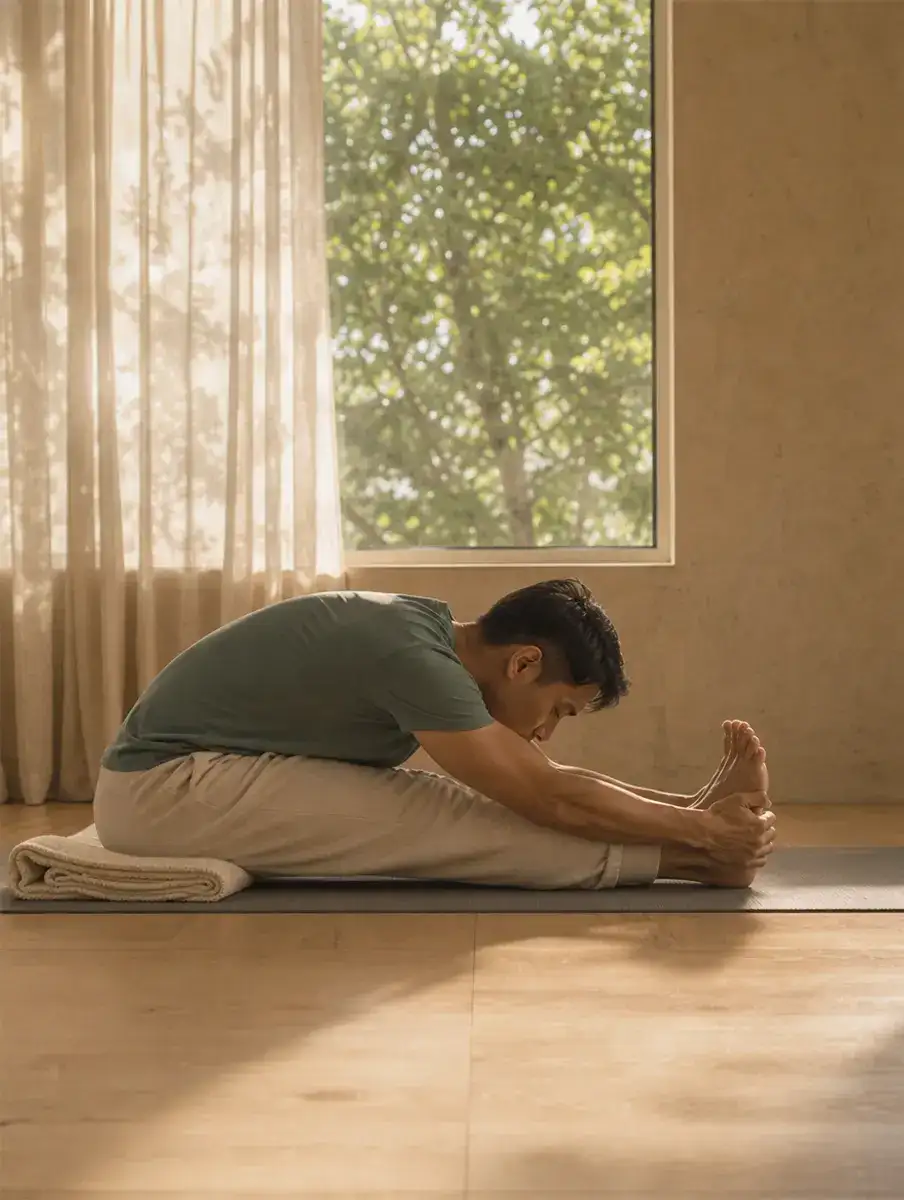
Seated Forward Bend (Paschimottanasana) is a fold over straight legs that stretches the whole back of the body. Sit tall with the feet flexed, lift the arms on an inhale, then fold from the hips leading with the chest for five to ten breaths. Sit on a blanket or use a strap rather than rounding the back to reach.
Pronunciation and meaning
Paschimottanasana: POSH-ee-moh-tan-AHS-uh-nuh. It sounds long, but it breaks down into paschima, uttana and asana.
Paschima means west, which in yoga texts is the back of the body, and uttana means an intense stretch. The name describes the stretch along the whole back of the body, from the heels to the head.
How to do Seated Forward Bend
- Sit on the mat with your legs straight in front of you and the feet flexed, toes pointing up. If your lower back rounds, sit on the edge of a folded blanket.
- Put your hands beside the hips and press down to sit tall, feeling both sitting bones on the floor.
- Breathing in, lift your arms overhead to lengthen the sides of the body.
- Breathing out, tip the pelvis forward and fold from the hips, leading with the chest rather than the head.
- Hold the shins, the ankles or the outer edges of the feet, wherever you reach without the back rounding hard, and let the head relax.
- Stay for five to ten slow breaths, then walk the hands back and roll up to sitting.
Seated Forward Bend step by step

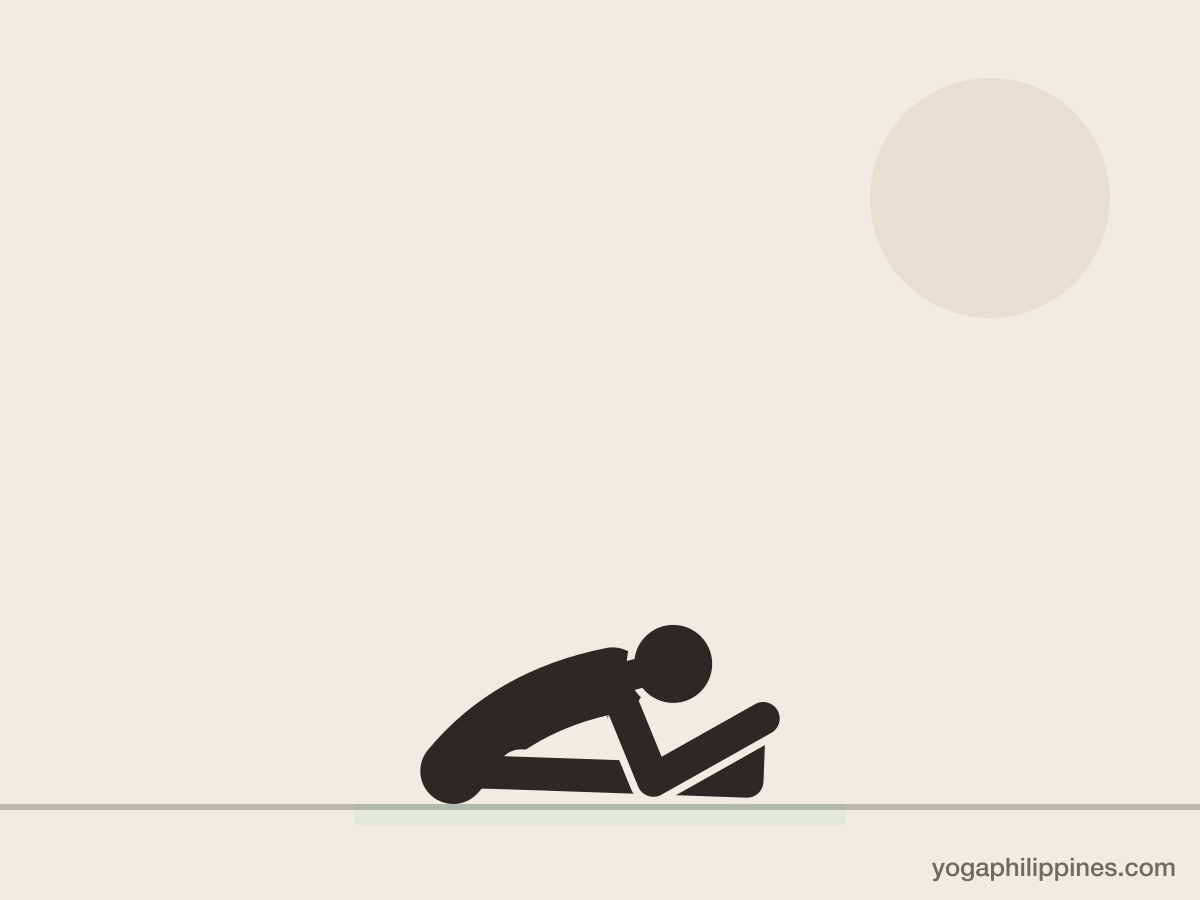
Drawings and video by YogaPhilippines.com, free to reuse under CC BY 4.0 with credit and a link: see the image licence for how to credit.
Seated Forward Bend appears in the Bikram 26 poses sequence and the 10-minute bedtime wind-down sequence, both printable with holds and cues. For other poses that work the hamstrings, open the pose finder set to the hamstrings.
Teacher's note from Joahnna Lee
“I want you to fold at the hip crease, not at the waist. Put your hands on your hip bones and feel them tip forward before the chest goes anywhere.”
“Bend your knees as much as you need to. With the knees soft, the belly can rest toward the thighs and the stretch moves to where it belongs.”
“Let each exhale take you a little further, and each inhale make a little more room. Never pull yourself down with your arms.”
Make it easier
- Sit on a folded blanket or a block so the pelvis can tilt forward more easily.
- Loop a strap around the soles of your feet and hold it with both hands, keeping the elbows soft.
- Rest a bolster or a pillow on your thighs and fold over it for a gentler, more supported version.
Pregnancy and after birth
Pregnancy. Adapt. Open the legs wide into a V so the belly has room, sit on a blanket, and fold only as far as the breath stays easy, using a strap or resting the forearms on a bolster. Do not compress the belly. Ask your OB or midwife before you start.
After birth. Adapt. After clearance from your doctor or midwife, keep the knees well bent and the fold gentle. After a caesarean, wait until the scar area is comfortable with folding and let your OB or midwife guide the timing.
Expecting or postpartum? See joahnnalee.com for the stage-by-stage guides.
Common mistakes
- Rounding the back to get the head to the knees. The stretch then moves into the spine instead of the backs of the legs.
- Locking the knees hard and straining the backs of the knees. A small bend keeps the stretch in the muscle, not the joint.
- Pulling on the feet with the arms to go deeper, which tenses the shoulders and the neck.
- Holding the breath. A forward fold should feel slow and quiet, so let the exhale lead.
Paschimottanasana is a quiet posture that often comes near the end of a practice, once the body is warm. It is tempting to measure it by how far you fold. It works better when you measure it by how easily you breathe.
Beginners do well to fold with bent knees and a strap at first, so the breath stays easy the whole way down, which is how yoga for first-timers usually teaches it. If the backs of your legs are the limit, the seven ways to ease tight hamstrings prepare them for this fold, Reclined Hand to Big Toe Pose offers the same stretch lying on your back with a strap, and the flexibility pose collection sets it among fourteen other shapes for the hips, spine and shoulders.
The same fold done on your feet, with gravity helping, is Standing Forward Bend, the version you meet in most flows.
Taken upside down with the shoulders supported, a similar fold becomes Plow Pose, best learned with a teacher. The fold begins from Staff Pose, the upright seat with straight legs, so it is worth sitting tall there first. It belongs with the other seated yoga poses you can do on a cushion, and three versions of it, A to C, form part of the Ashtanga primary series.
How long should you hold a seated forward bend?
Five to ten slow breaths is a good hold in a flowing class, about 30 seconds to a minute. In a slower or Yin-style practice, with the knees bent and a bolster on the thighs, you can stay for two or three minutes, as long as the breath stays easy and nothing pulls behind the knees. Come up slowly, rolling the spine, and sit in Staff Pose for a breath before you move on.
As for when the fold gets easier, there is no set date. The backs of the legs tend to respond to regular, patient practice over weeks and months rather than to one long, hard session. A few gentle minutes most days usually does more than forcing the fold once a week. Watch how far the pelvis tips forward, not how close the head comes to the knees.
Which variations of the fold can you try?
| Variation | What changes | Good for |
|---|---|---|
| Bent-knee fold on a blanket | Knees well bent, belly toward the thighs | Tight hamstrings or a stiff lower back |
| Head-to-Knee Pose | One leg straight, the other foot against the inner thigh | Working one side at a time |
| Wide-Legged Forward Bend | Done standing with the feet wide | When sitting on the floor is uncomfortable |
| Supported fold over a bolster | Forehead and arms rest on a bolster or chair seat | A quiet, restful hold at the end of practice |
Practising in a warm, humid room
In Philippine heat, hands slip on sweaty shins and feet, and grabbing harder only tenses the shoulders. A dry towel or a strap looped around the soles gives a steady hold without pulling. Wipe the mat under the sitting bones too, so the pelvis can tip forward without sliding.
Prep poses for Seated Forward Bend
Poses that warm up the same body areas at a lower intensity, so Seated Forward Bend feels steadier when you get there.
- Staff Pose (Dandasana) a direct preparation, beginner
Counter-poses for Seated Forward Bend
Shapes that move the body the other way or let it rest straight after Seated Forward Bend.
- Bridge Pose (Setu Bandha Sarvangasana) beginner plus
Poses that lead into Seated Forward Bend
In a sequence, Seated Forward Bend often follows these poses as their counter-pose or rest.
- Reverse Plank (Purvottanasana) intermediate
Props that help in Seated Forward Bend
- Blanket: lifts the hips a little so the spine can stay tall.
- Block: sits under the hips or supports a hand or knee that does not reach the floor.
- Strap: extends the arms when the hands do not reach the feet or each other yet.
- Bolster: supports the body so you can stay longer with less effort.
Programs and sessions that use Seated Forward Bend
- The 14-day flexibility plan 3 of its 14 sessions
- The one-month challenge 2 of its 30 sessions
- The 4-week beginner program 1 of its 12 sessions
- Sequences: short 10-minute practice, 30-minute yoga flow, 45-minute slow practice, primary series sequence, bedtime routine and 26-posture sequence
- Practice app sessions: 10-minute reset, 20-minute flow, 30-minute practice, evening wind-down and balance
This page is one of the sources behind the sit-and-reach flexibility test.
Sources: Mayo Clinic, Fitness program: 5 steps to get started; NCCIH (US National Institutes of Health), Yoga: Effectiveness and Safety; NHS, Exercise in pregnancy; CDC, Pregnant & Postpartum Activity: An Overview; Canadian Family Physician (Chan et al., 2014), via PubMed Central, Hot yoga and pregnancy: Fitness and hyperthermia. Last reviewed 2 October 2026.
Seated Forward Bend questions
Why can't I touch my toes in a seated forward bend?
Tight hamstrings and a pelvis that does not tip forward easily are very common, and sitting in chairs all day plays a part. Sit on a blanket, bend the knees and use a strap. Touching the toes is not the goal of the pose.
Should I bend my knees in Paschimottanasana?
Yes, as much as you need. Soft knees let you fold from the hips with a longer spine, which is the shape the pose is after.
What is a seated forward bend in yoga?
A seated forward bend, Paschimottanasana, is a fold over straight legs that stretches the whole back of the body, from the heels to the head. You sit tall with the feet flexed, then fold from the hips leading with the chest. It often comes near the end of a practice, once the body is warm.
What are the benefits of Paschimottanasana?
Paschimottanasana stretches the whole back of the body, especially the hamstrings, calves and the muscles along the spine. Done slowly with the exhale leading, many people find it a quiet, settling shape near the end of a practice. Bending the knees keeps the stretch in the legs rather than the spine.
Who should not do Paschimottanasana?
Check with your doctor or physio first if you have a lower back, hamstring or knee injury, since the fold loads all three. Stop if you feel a pull behind the knees or sharp pain in the back. Never pull yourself down with your arms: sit on a blanket, bend the knees and use a strap instead.
Updated