Pose collection · 15 poses
Yoga poses for flexibility, from the hips to the shoulders
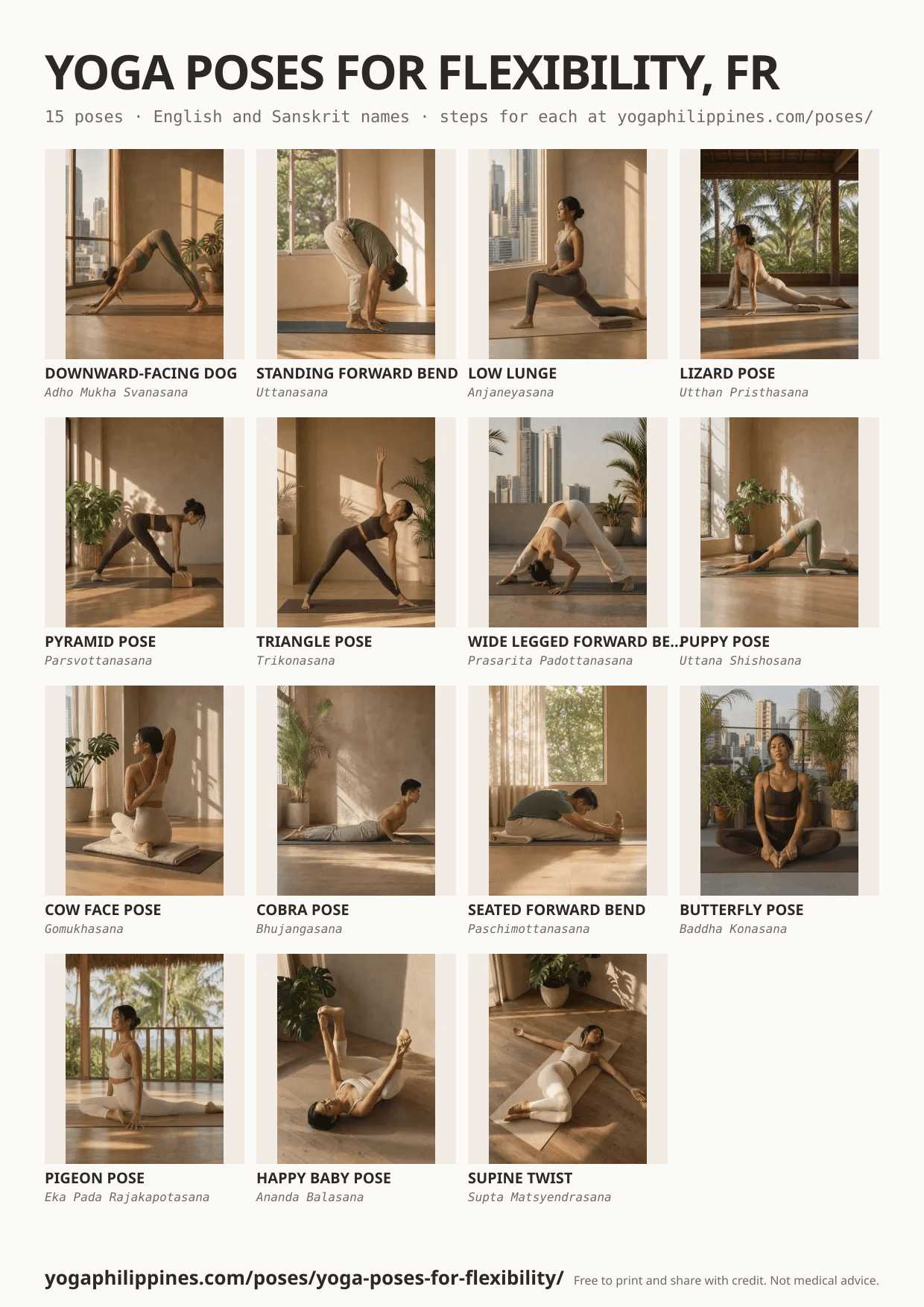
Good yoga poses for flexibility include Downward-Facing Dog, Low Lunge, Lizard, Pigeon, Seated Forward Bend, Butterfly, Puppy and a lying twist. Hold each for five to ten slow breaths once you are warm, ease in rather than push, and practise a few times a week, since range changes gradually.
Download the printable PDF PNG
Beginner
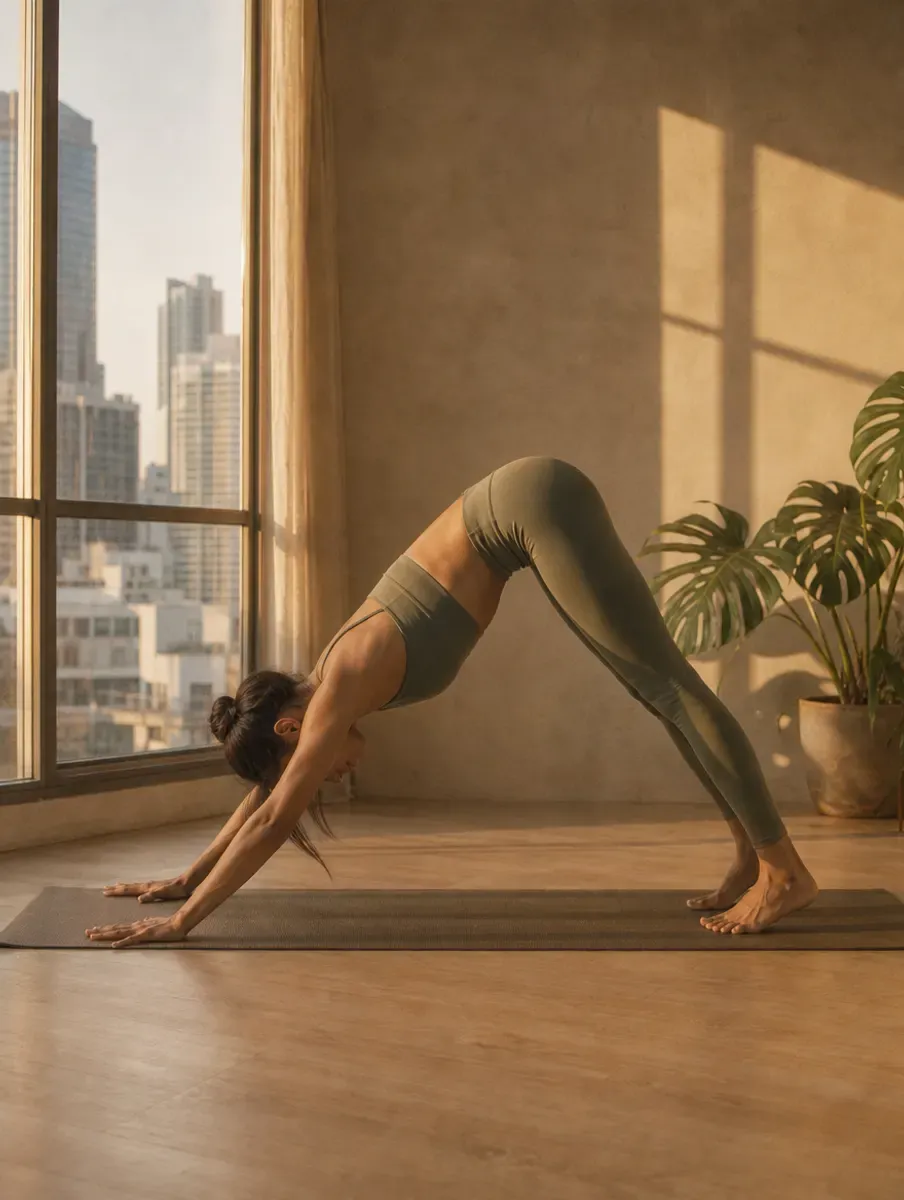
Downward-Facing Dog
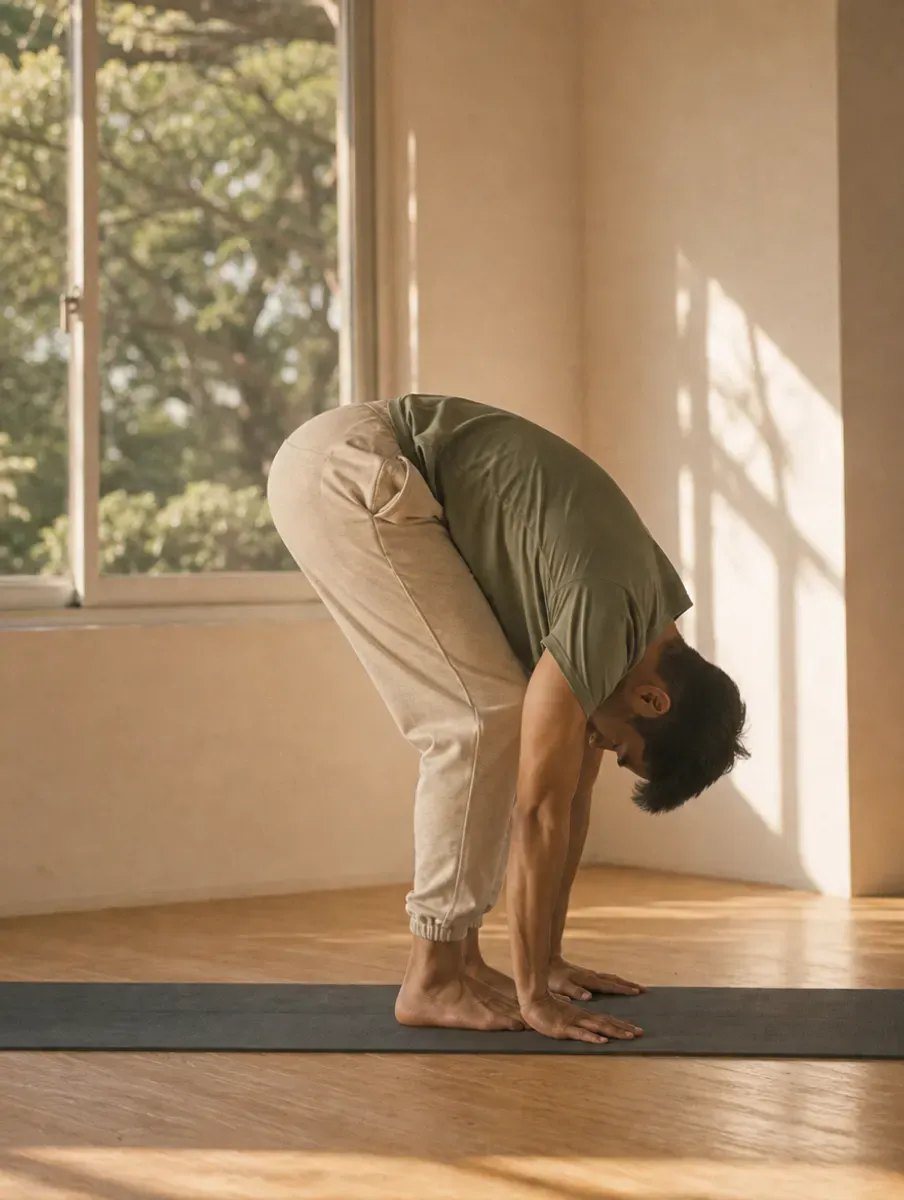
Standing Forward Bend
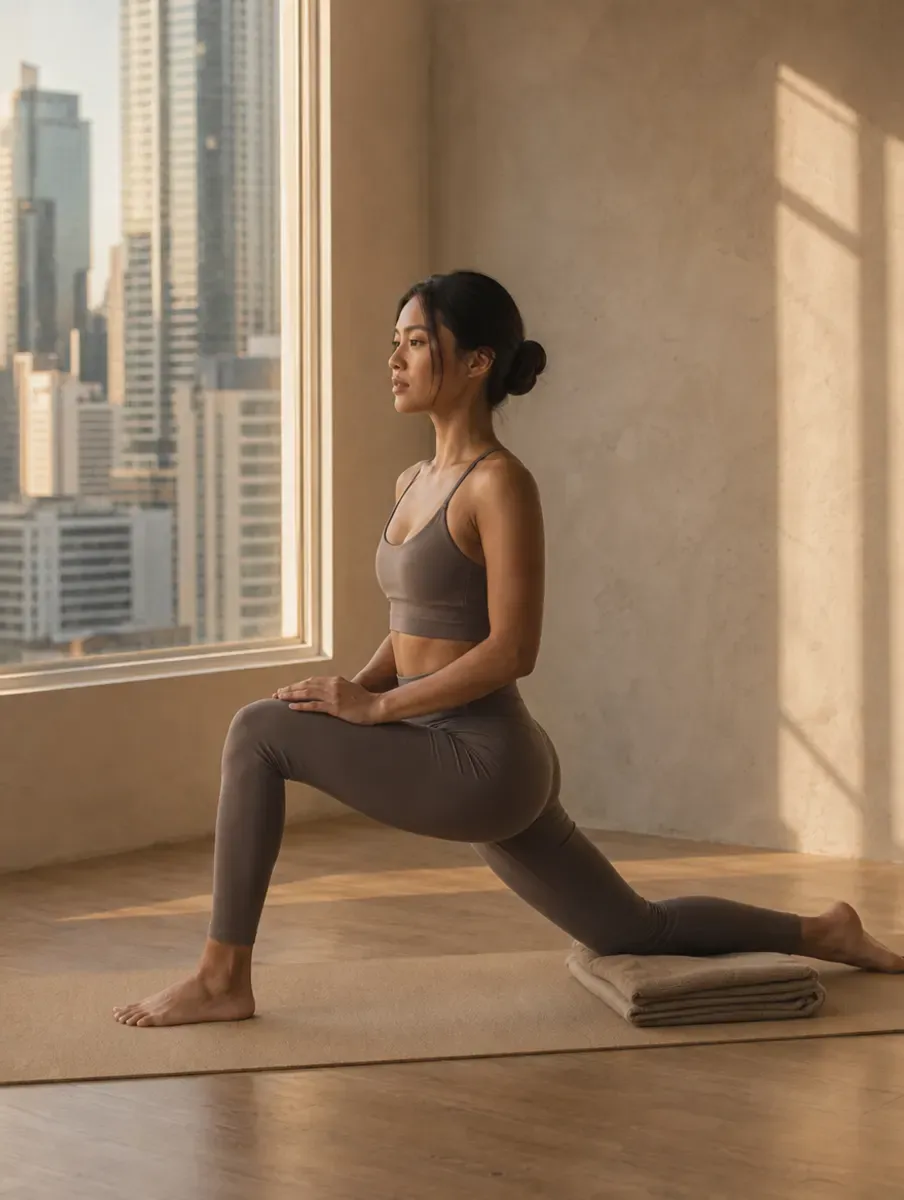
Low Lunge
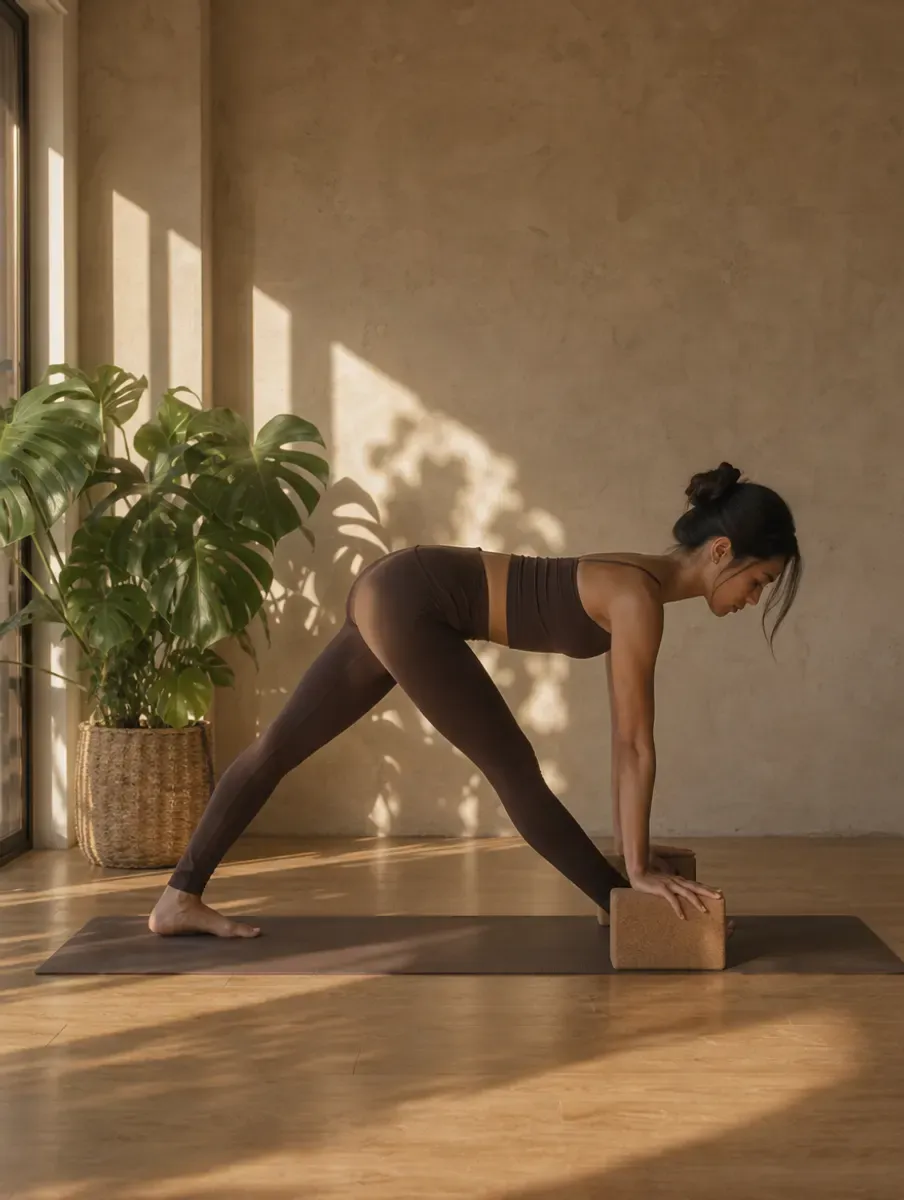
Pyramid Pose
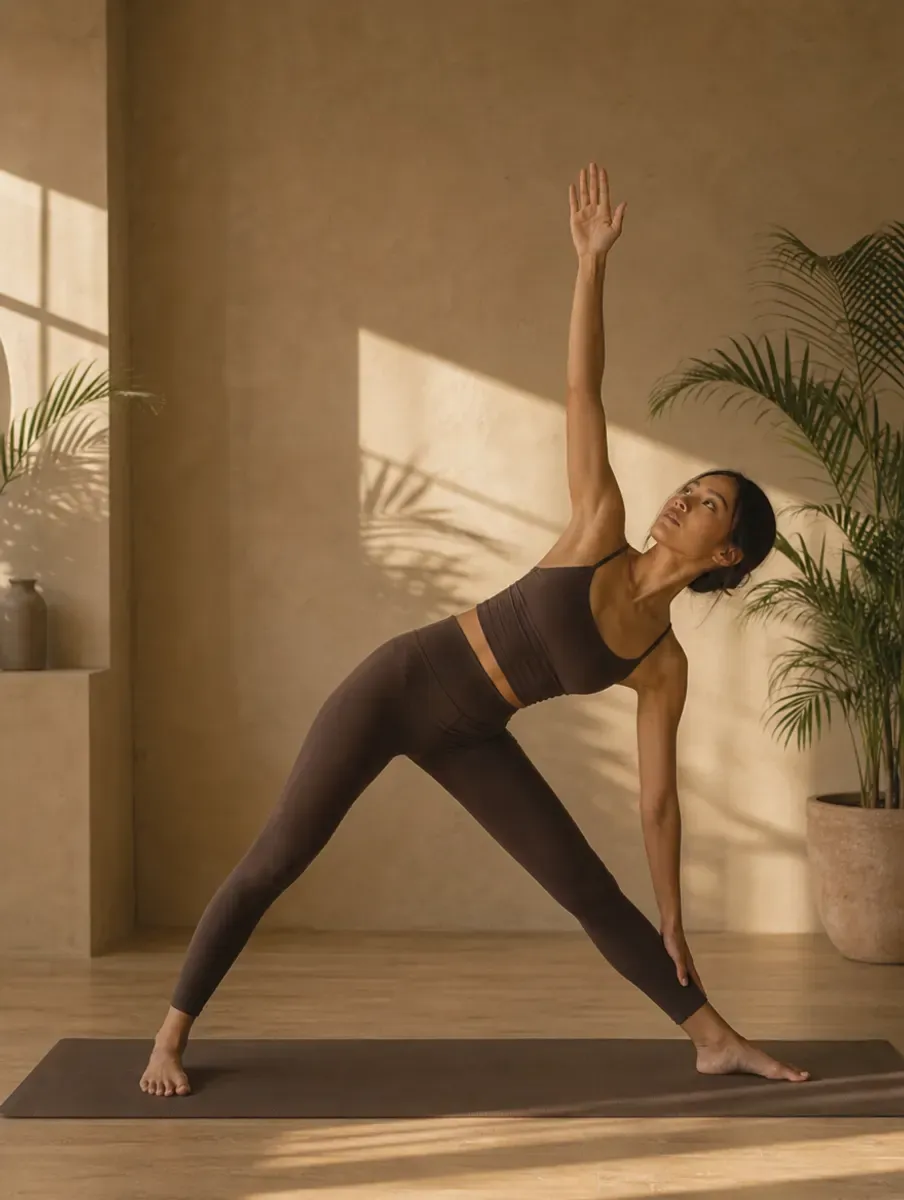
Triangle Pose
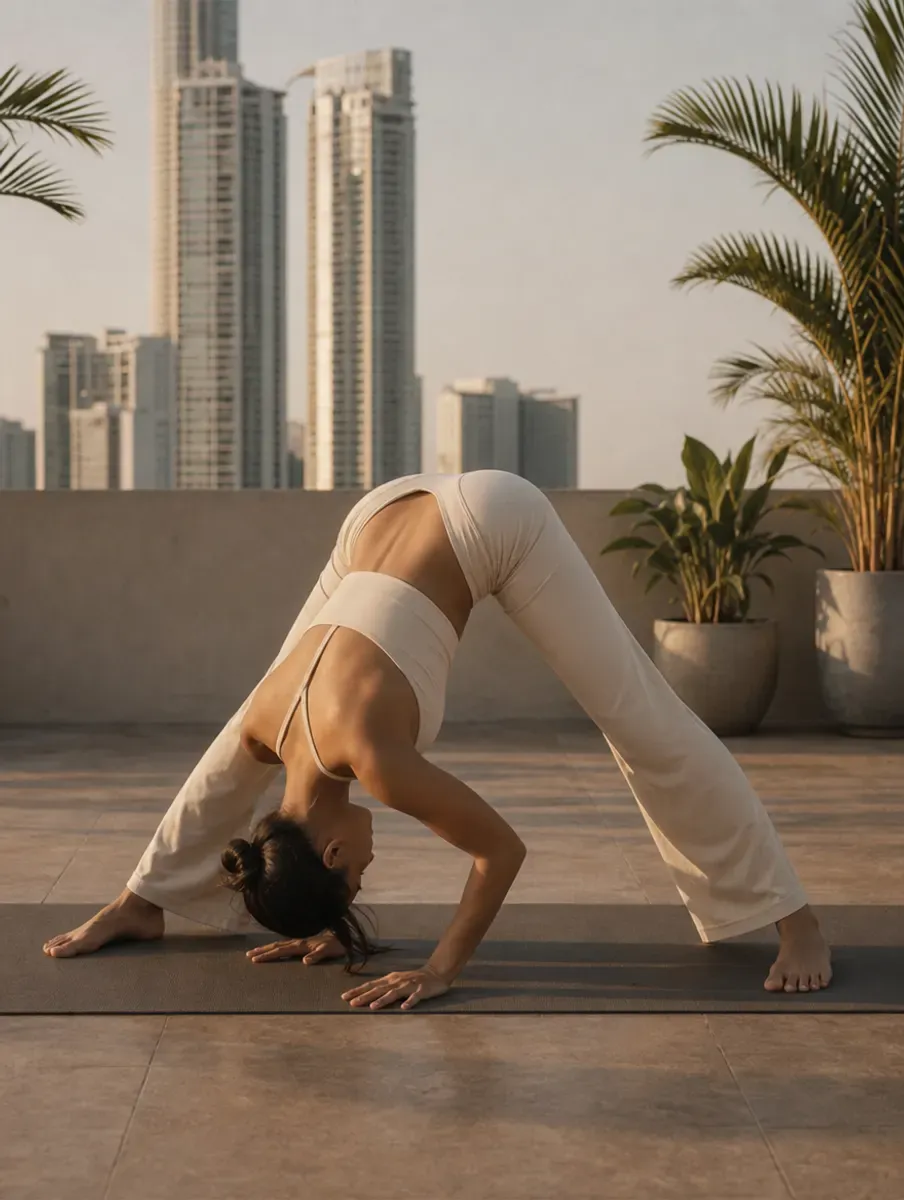
Wide Legged Forward Bend
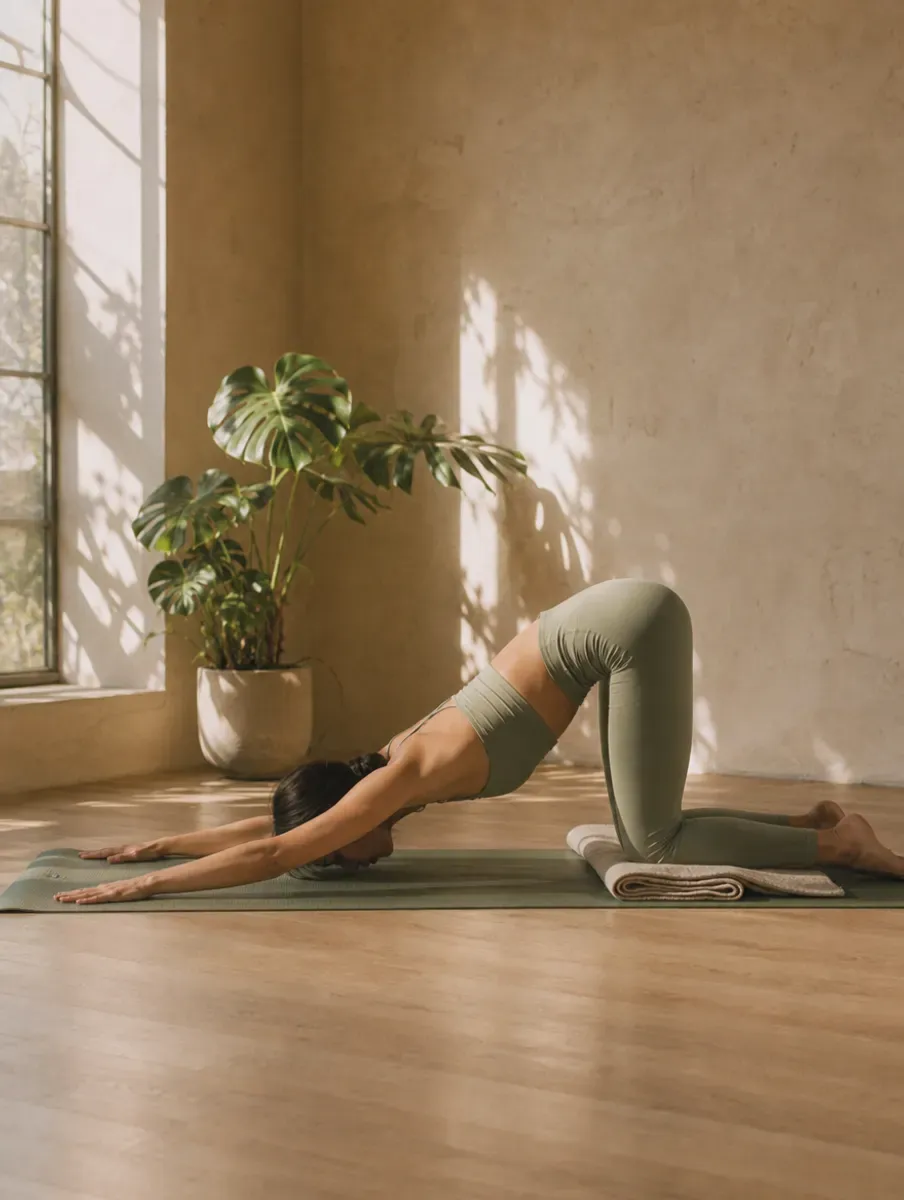
Puppy Pose
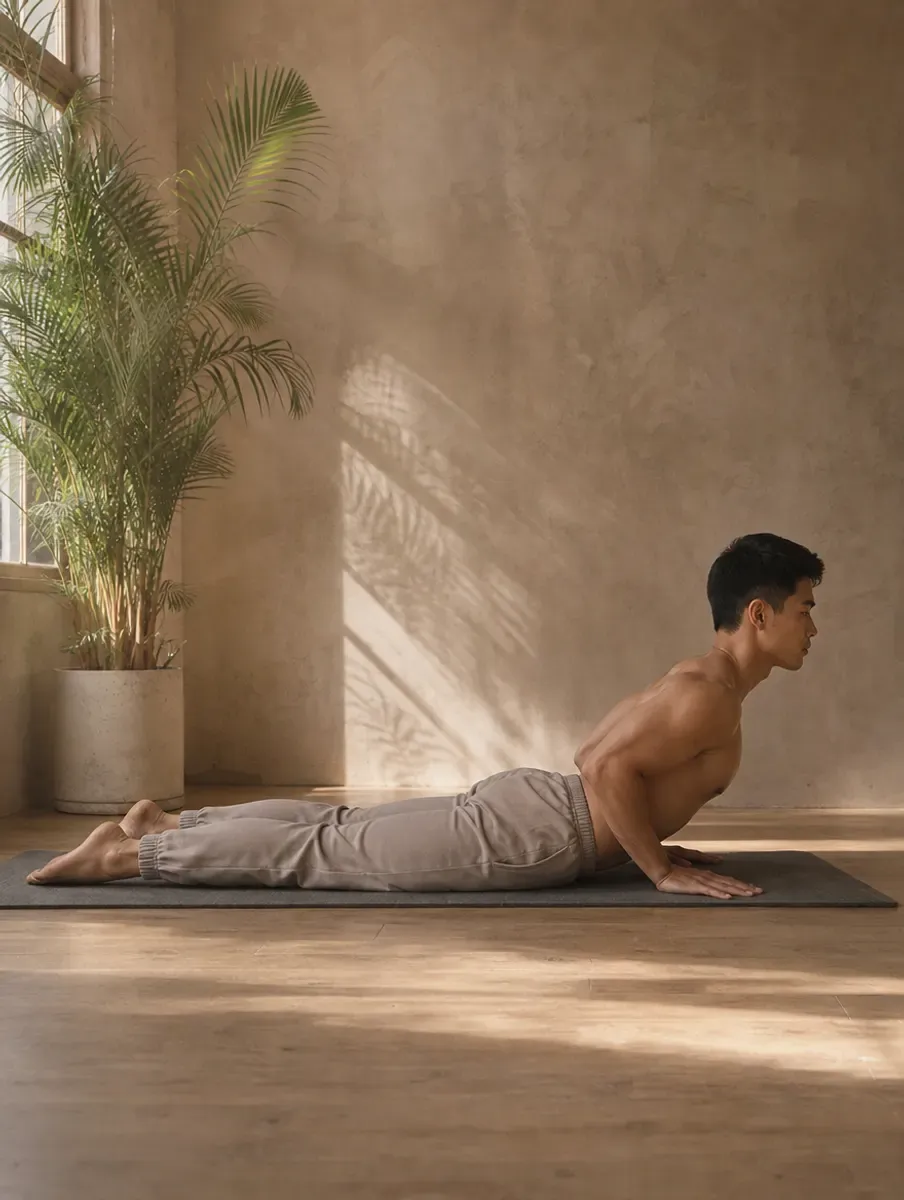
Cobra Pose
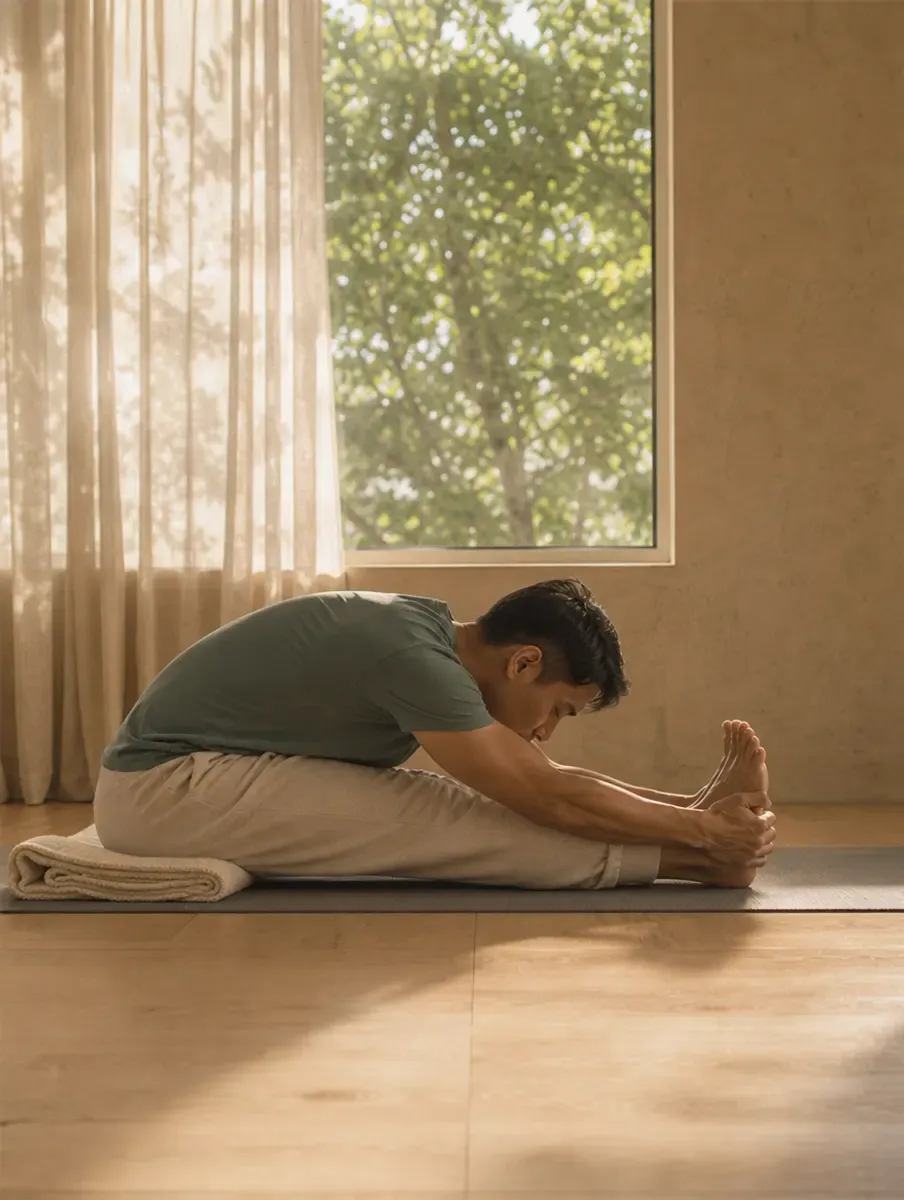
Seated Forward Bend
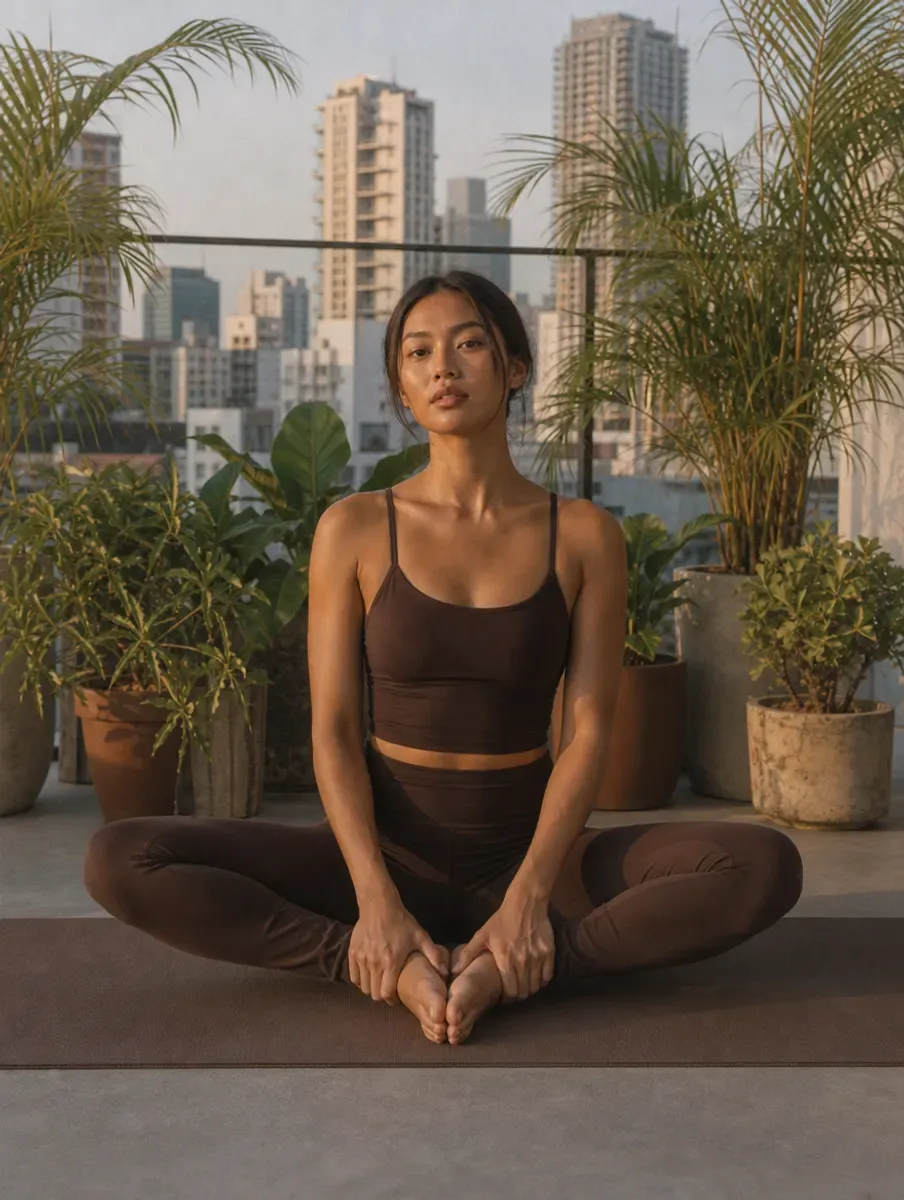
Butterfly Pose
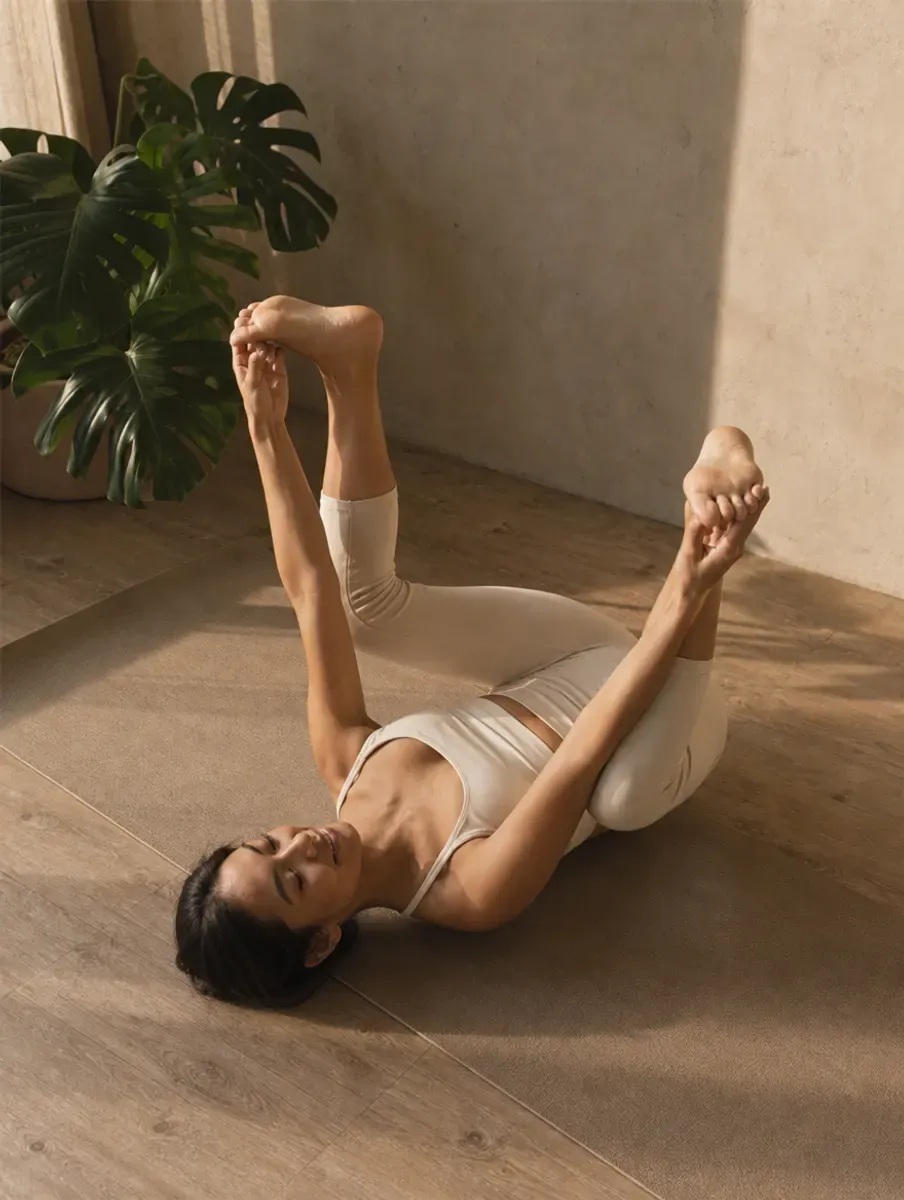
Happy Baby Pose
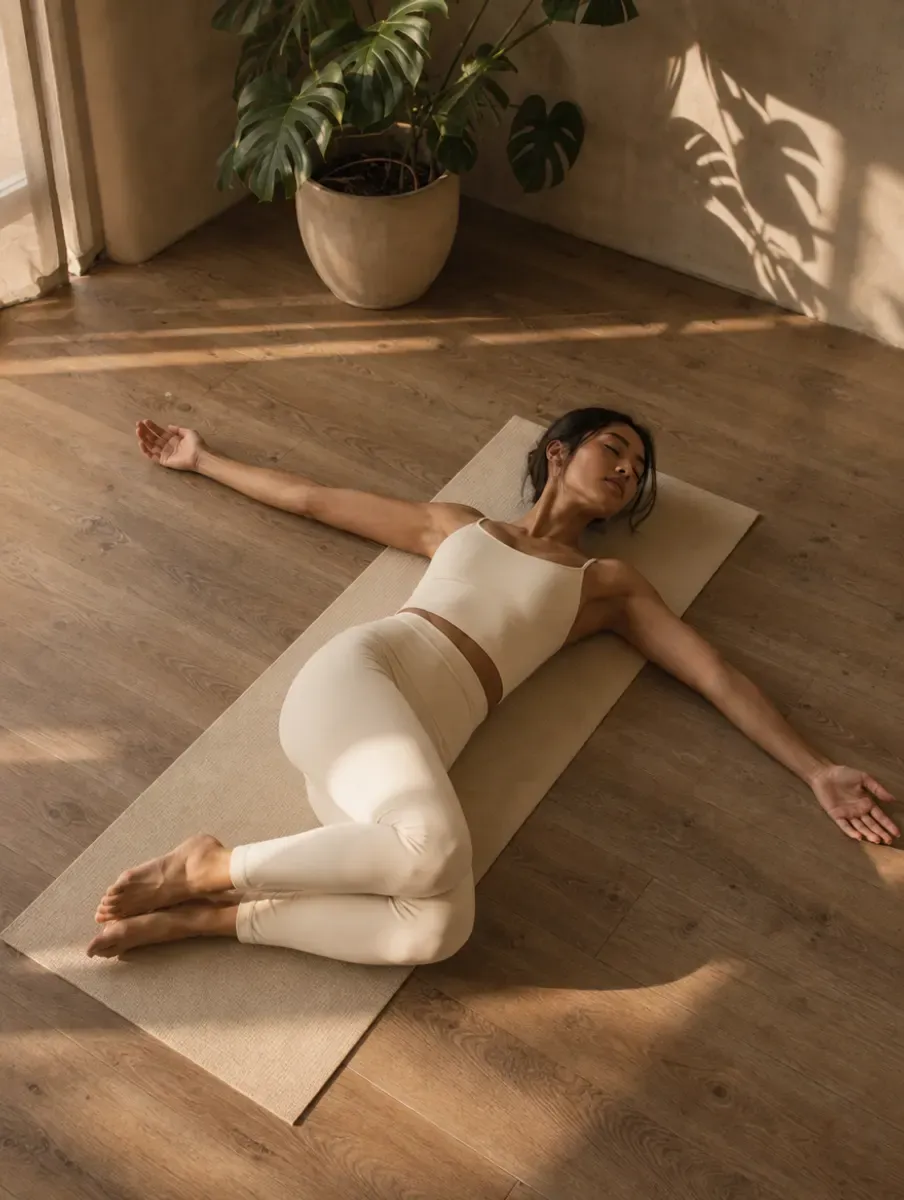
Supine Twist
Intermediate
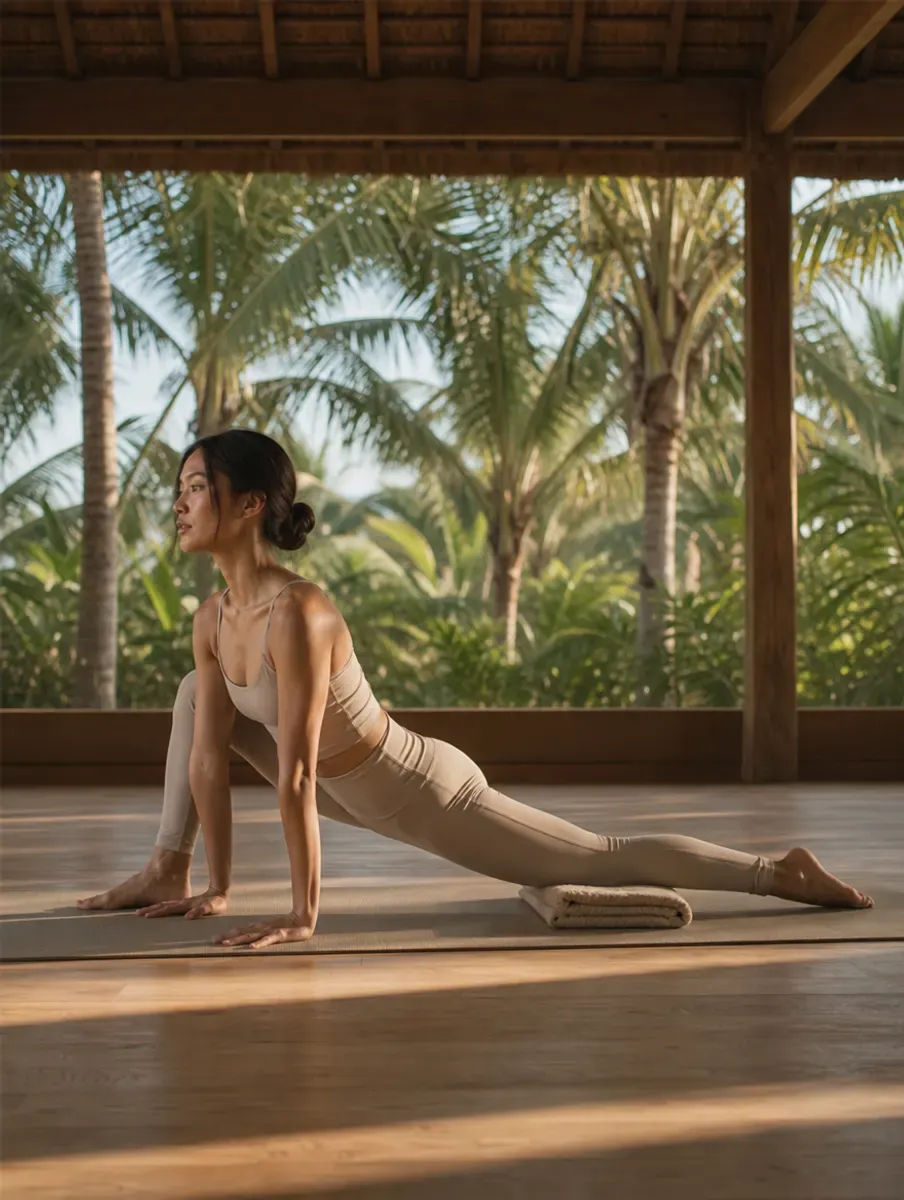
Lizard Pose
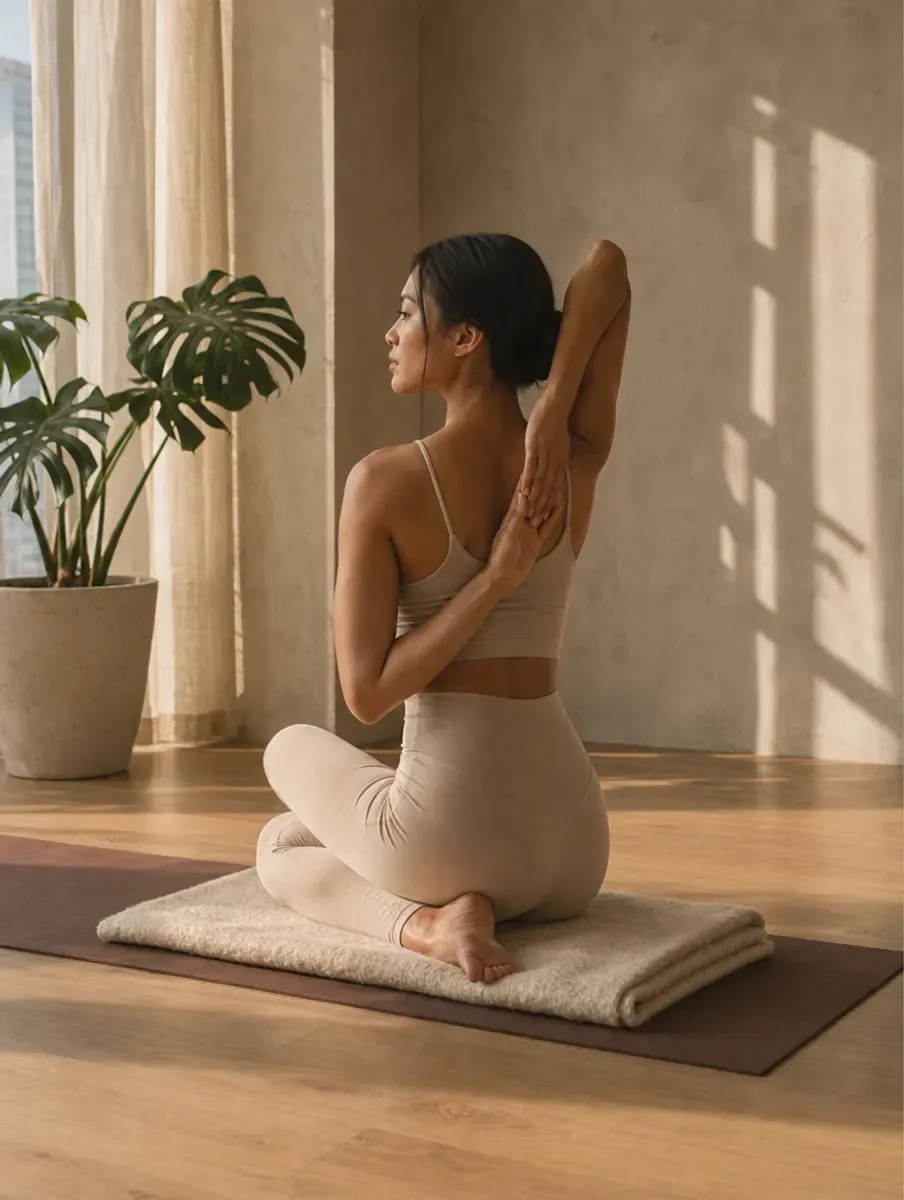
Cow Face Pose
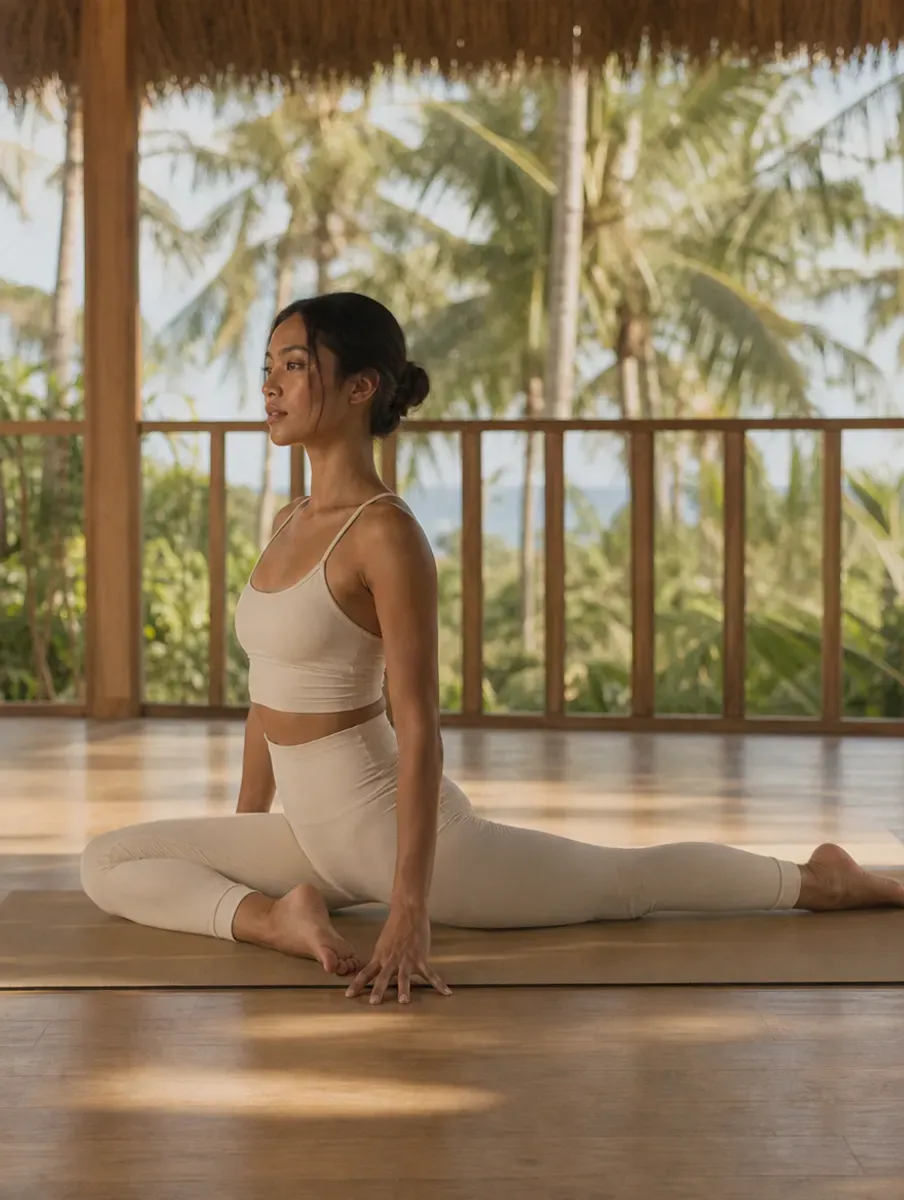
Pigeon Pose
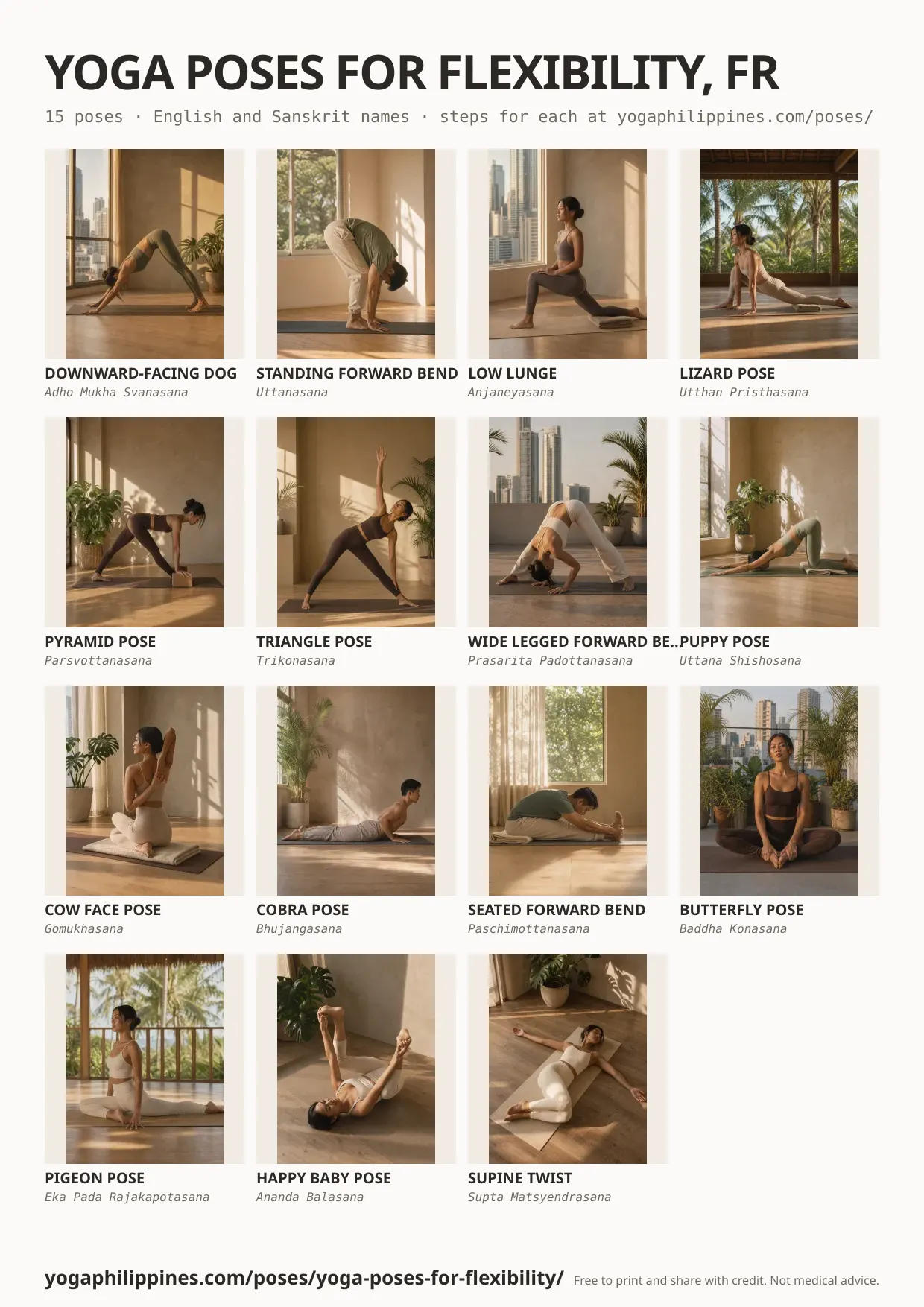
Chart licence: CC BY 4.0, free to reuse with credit to YogaPhilippines.com and a link. How to credit the chart.
Share or embed this chart
Free to print, share and embed with a link back. Copy this code:
<a href="https://yogaphilippines.com/poses/yoga-poses-for-flexibility/"><img src="https://yogaphilippines.com/print/yoga-poses-for-flexibility.png" alt="Yoga poses for flexibility, from the hips to the shoulders by YogaPhilippines.com" width="620"></a><br>Chart: <a href="https://yogaphilippines.com/poses/yoga-poses-for-flexibility/">YogaPhilippines.com</a>
Flexibility in yoga is less about touching your toes and more about moving through a fuller range without strain. These fifteen poses cover the places most people feel tight: the backs of the legs, the front and outside of the hips, the spine and the shoulders.
How your range changes, and how slowly, is explained in yoga for flexibility. This page is the pose list to practise from.
How long should you hold yoga poses for flexibility?
Five to ten slow breaths in each shape is a good start, roughly thirty seconds to a minute, once the body is warm. Breathe out as you ease a little deeper and stop where you feel a clear stretch, not pain. Longer holds of several minutes belong to Yin yoga, where the muscles stay relaxed on the floor.
Work in this order: standing shapes first, while you are fresh, then the hips, then the seated folds and the lying shapes at the end. Do both sides of every one-sided pose.
What should you avoid?
Bouncing, forcing a joint with your hands, and pulling hard on a rounded back in forward folds. Hamstrings in particular respond better to patience than to effort; seven ways to ease tight hamstrings adds a few non-yoga options if they are your main limit, and the yoga poses for tight hamstrings give a short practice for the backs of the legs alone. For drills you can do on days without a full practice, see flexibility exercises for the whole body.
Hypermobile bodies need the opposite advice: stop short of the end of the range and keep the muscles gently working. Sharp, pinching or nerve-like pain means come out of the pose; see a doctor or physio if it continues.
Where do these fit with other collections?
The sitting shapes are also on the page of seated yoga poses you can do on a cushion, and the gentlest of these appear among the easy yoga poses for slow days. If you would rather do the lying shapes in bed, the yoga poses lying down page shows how.
The printable card set has one card per pose, with the English and Sanskrit names.
Sources: Mayo Clinic, Fitness program: 5 steps to get started; NCCIH (US National Institutes of Health), Yoga: Effectiveness and Safety. Last reviewed 2 October 2026.
Questions
Which yoga pose stretches the most of the body at once?
Downward-Facing Dog works the backs of the legs, the calves, the shoulders and the spine together, which is why it appears in so many classes. Bend the knees as much as you need to keep the back long.
Should you warm up before flexibility poses?
Yes. A few rounds of Cat-Cow, a Sun Salutation or five minutes of walking makes the deeper shapes more comfortable. Long holds on a cold body tend to feel tight and are easier to overdo.
How often should you do yoga poses for flexibility?
Three or four sessions a week of fifteen to twenty minutes is a steady rhythm for many people. Regular, moderate practice tends to suit the body better than an occasional long, hard stretch.
Which style of yoga is best for flexibility?
Slower styles that hold poses tend to suit flexibility best. Hatha holds each shape for a few breaths, and Yin holds floor poses for several minutes with the muscles relaxed. Flowing Vinyasa moves through a wide range too, but spends less time at the end of it. Regular practice in any style matters more than which one you choose.
Can you increase flexibility with yoga?
Yes, for most people, though range changes gradually over weeks and months. Hold each pose for five to ten slow breaths once you are warm, ease in on the out-breath and stop at a clear stretch rather than pain. Practising a few times a week tends to suit the body better than an occasional long, hard session.
Updated