Pose library · Dandasana
Staff Pose (Dandasana)
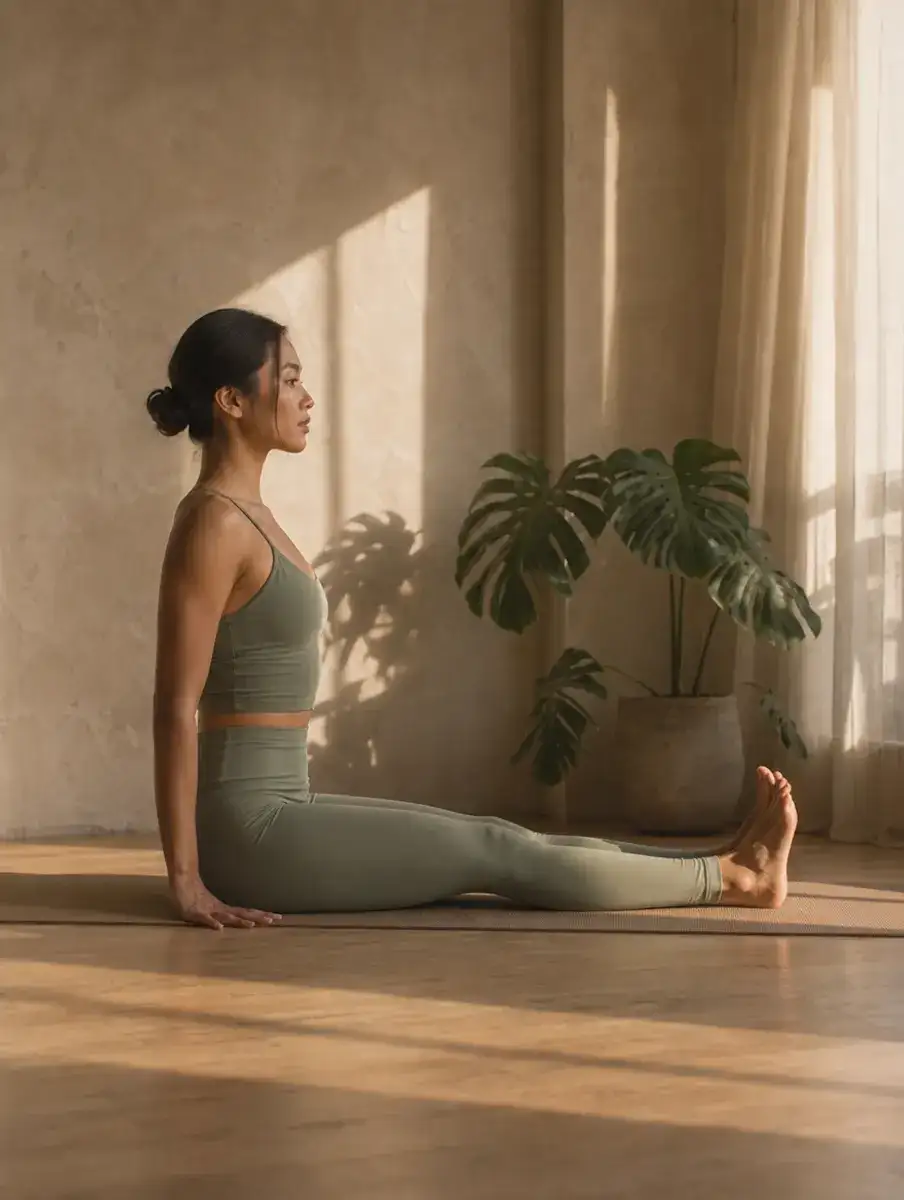
Danda means staff or stick and asana means posture. You sit with the legs straight out in front and the spine upright, as straight and steady as a walking staff. It is the starting point for most seated poses.
Staff Pose (Dandasana) is a seated pose with the legs straight and the spine upright, the starting point for most seated poses. Sit on the front of the sitting bones, press the hands down beside the hips, flex the feet and stay for five to ten breaths. Sit on a blanket if the lower back rounds.
Pronunciation and meaning
Dandasana: dun-DAHS-uh-nuh. Danda sounds like done-da, and the stress falls on DAHS.
Danda means staff or stick and asana means posture. You sit with the legs straight out in front and the spine upright, as straight and steady as a walking staff. It is the starting point for most seated poses.
How to do Staff Pose
- Sit on the mat with your legs straight out in front of you, feet together or hip-width apart.
- Reach under each buttock and move the flesh back a little so you sit on the front of your sitting bones rather than rolling back.
- Place your hands on the floor beside your hips, fingers pointing toward your feet, and press down to lift the chest.
- Flex your feet so the toes point up, press the backs of the legs gently toward the floor, and keep a soft bend in the knees if the hamstrings pull.
- Stack the shoulders over the hips, relax the shoulders away from the ears, and keep the chin level.
- Stay for five to ten breaths, breathing into the back of the ribs, then move into your next seated pose.
Staff Pose step by step

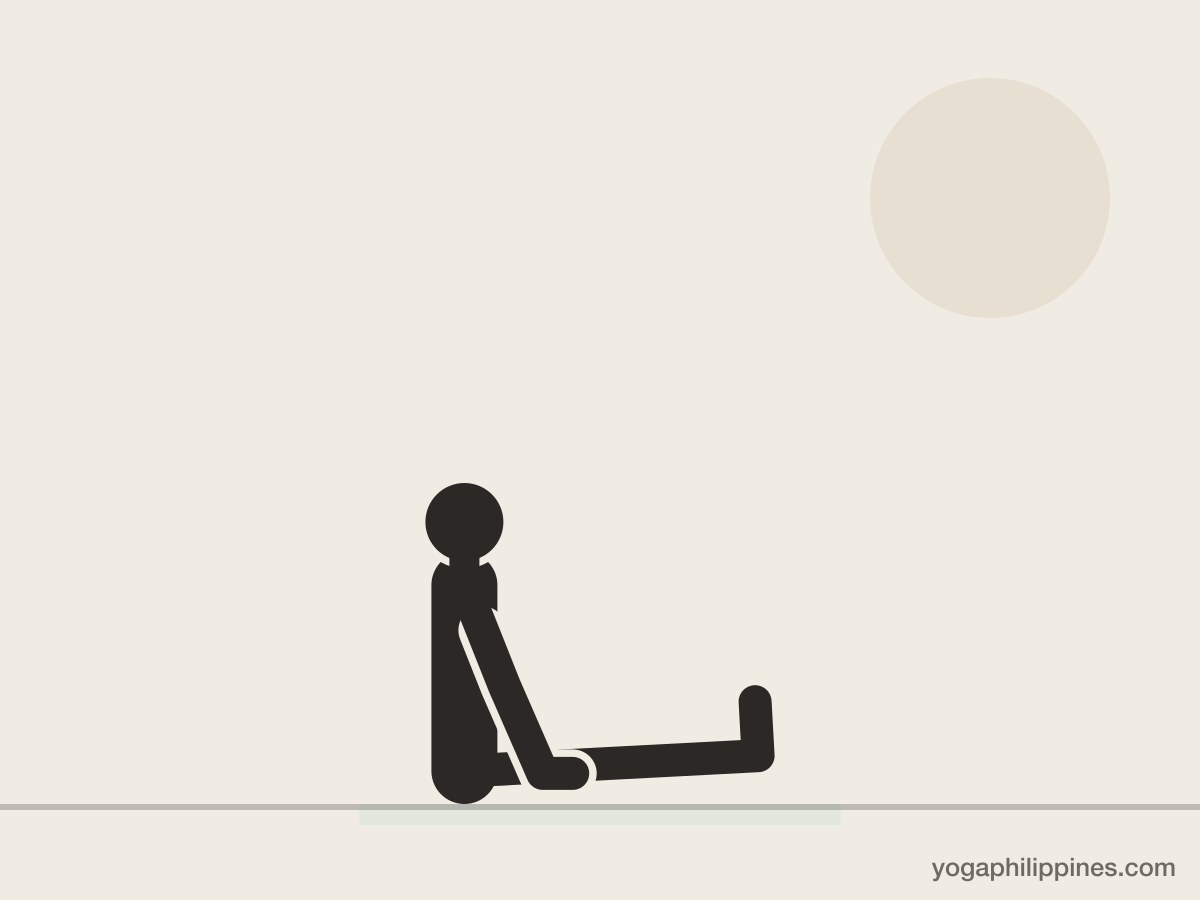
Drawings and video by YogaPhilippines.com, free to reuse under CC BY 4.0 with credit and a link: see the image licence for how to credit.
Staff Pose appears in the Ashtanga primary series, which is printable with holds and cues. For other poses that work the hamstrings, open the pose finder set to the hamstrings.
Make it easier
- Sit on a folded blanket or a block so the pelvis can tip forward and the lower back does not round.
- Bend your knees and rest them on a rolled blanket if the backs of the legs feel strained.
- Sit with your back against a wall to feel what an upright spine is like.
Pregnancy and after birth
Pregnancy. Adapt. Take the legs wider apart to make room for the belly, and sit on a blanket. Check with your OB or midwife.
After birth. Adapt. Once your doctor or midwife has cleared you, sit on a blanket and lean lightly on the hands. It is a gentle way to notice posture after long hours of feeding and carrying.
Expecting? Joahnna Lee Yoga has notes on adapting each trimester.
Common mistakes
- Slumping back onto the tailbone, which rounds the lower back.
- Locking the knees hard and hyperextending them.
- Lifting the shoulders up toward the ears while pressing the hands down.
Staff Pose looks like sitting still, but it is a working posture. It is the seated version of Mountain Pose, and most seated folds, twists and the Ashtanga seated series begin from it.
It suits everyone, and it is a clear way to find out how tight the backs of the legs are. If the lower back rounds, a blanket under the hips changes the whole pose.
What does staff pose prepare you for?
It sets up Seated Forward Bend, where the same long spine folds over the legs, and Head to Knee Pose, which folds over one leg at a time, and it is the base for Boat Pose, the seated core balance. The hamstring stretches routine is a good partner if sitting with straight legs feels hard.
How does staff pose show up in a class?
In a Hatha or Vinyasa class it is often the pose you return to between seated postures, a pause to sit tall and reset the breath before the next one.
Where to go next after Staff Pose
These poses list Staff Pose as a preparation, so they are a natural next step once it feels comfortable.
- Head to Knee Pose (Janu Sirsasana) beginner plus
- Seated Forward Bend (Paschimottanasana) beginner plus
- Boat Pose (Navasana) intermediate
- Reverse Plank (Purvottanasana) intermediate
Props that help in Staff Pose
- Blanket: lifts the hips a little so the spine can stay tall.
- Block: sits under the hips or supports a hand or knee that does not reach the floor.
- Wall: gives a steady point to lean on or press into for balance and alignment.
Programs and sessions that use Staff Pose
- Sequences: longer slow session and Ashtanga primary series
- Generated example flows: 10-minute beginner flow, 20-minute hip flow and 30-minute back-friendly session, no weight on the wrists
Sources: Mayo Clinic, Fitness program: 5 steps to get started; NCCIH (US National Institutes of Health), Yoga: Effectiveness and Safety. Last reviewed 2 October 2026.
Staff Pose questions
Why does the lower back round in staff pose?
Tight hamstrings pull the pelvis backward, which rounds the lower back. Sit on a folded blanket or a block and bend the knees a little. The spine usually lifts straight away.
Is staff pose a real pose or just a starting position?
Both. Teachers use it as the base for seated folds and twists, and it is also a posture in its own right that asks the legs, back and arms to work quietly together.
Where does the gaze go in staff pose?
Look straight ahead with the chin level, or soften the gaze down the line of the legs. The point is to keep the back of the neck long, not to drop the head.
Why is Staff Pose so hard?
It looks like sitting still, but it is a working posture. Tight hamstrings pull the pelvis back, so the back muscles must work to keep the spine upright while the legs press down and the hands lift the chest. Sitting on a folded blanket and softening the knees makes it much easier.
What are the benefits of Dandasana?
Dandasana teaches you to sit tall, with the legs, back and arms working quietly together. It shows how tight the backs of the legs are, and it sets up Seated Forward Bend, Head to Knee Pose and Boat Pose. In a class it is also a pause to reset the breath between seated poses.
Who should not do Dandasana?
Most people can do it with props. If you have a hamstring or lower back injury, or knees that tend to lock back, sit on a blanket, bend the knees over a rolled blanket and lean lightly on the hands. If sitting with straight legs causes pain, stop and check with your doctor or physio first.
Updated