Pose library · Navasana · reviewed by a teacher
Boat Pose (Navasana)
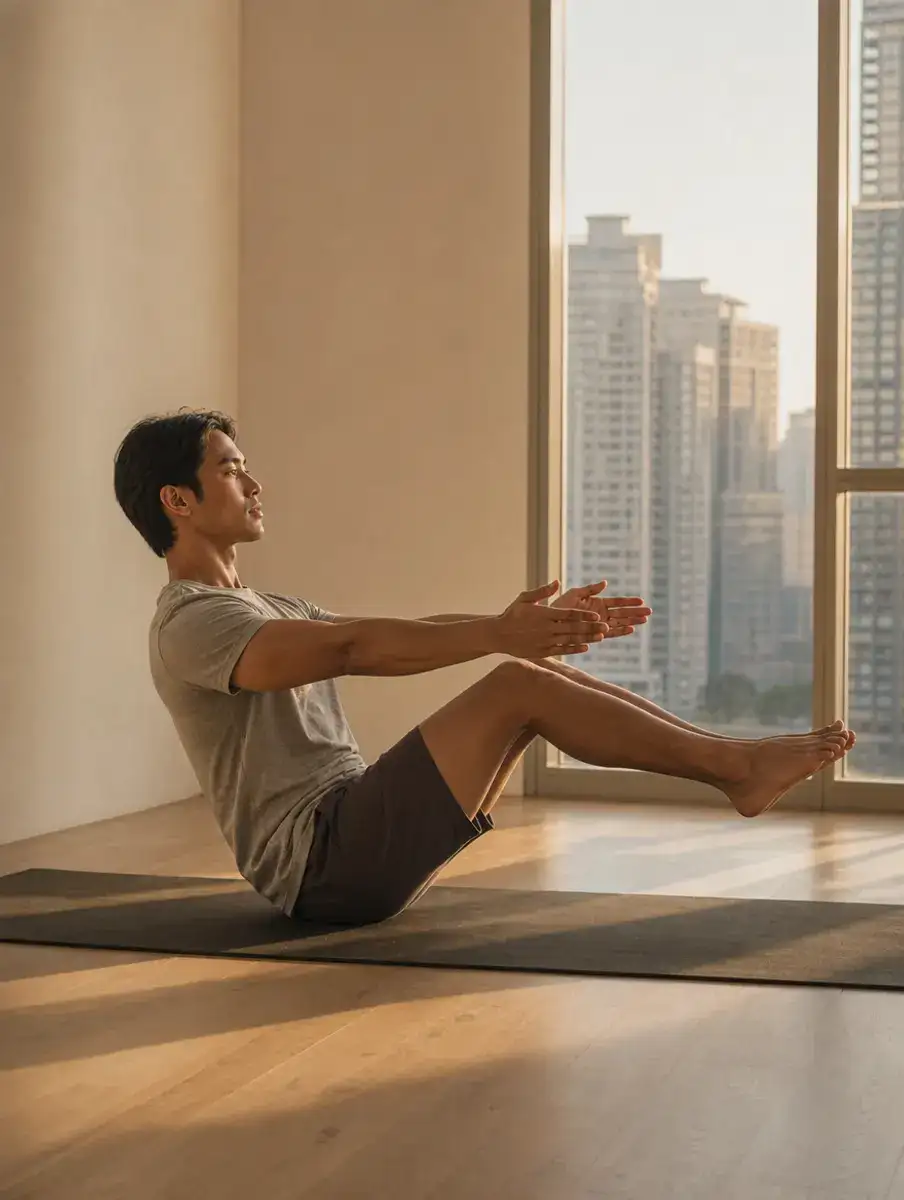
Nava means boat and asana means posture. Your body forms a V, balancing on the sit bones like a small hull with the legs and the chest as its two ends.
Boat Pose (Navasana) is a seated balance where the body forms a V on the sit bones, working the belly. Lean back with a long spine, lift the shins parallel to the floor, reach the arms forward and stay three to five breaths. Hold the backs of the thighs, or keep one foot down, if the lower back rounds.
Pronunciation and meaning
Navasana: nah-VAHS-uh-nuh. Say it evenly, leaning slightly on the middle syllable, VAHS.
Nava means boat and asana means posture. Your body forms a V, balancing on the sit bones like a small hull with the legs and the chest as its two ends.
How to do Boat Pose
- Sit on your mat with your knees bent and your feet flat on the floor, hands resting behind your thighs.
- Lean back a little, lengthening from your sit bones to the crown of your head, until you balance just behind the sit bones rather than on your tailbone.
- Lift your feet off the floor so your shins are parallel to it, knees still bent. Keep holding the backs of your thighs if you need to.
- When the spine stays long, let go and reach your arms forward alongside your legs, palms facing each other.
- If there is room, straighten the legs so your body makes a V, without letting the chest drop or the lower back round.
- Stay for three to five breaths, lower your feet, rest, and repeat once or twice.
Boat Pose step by step

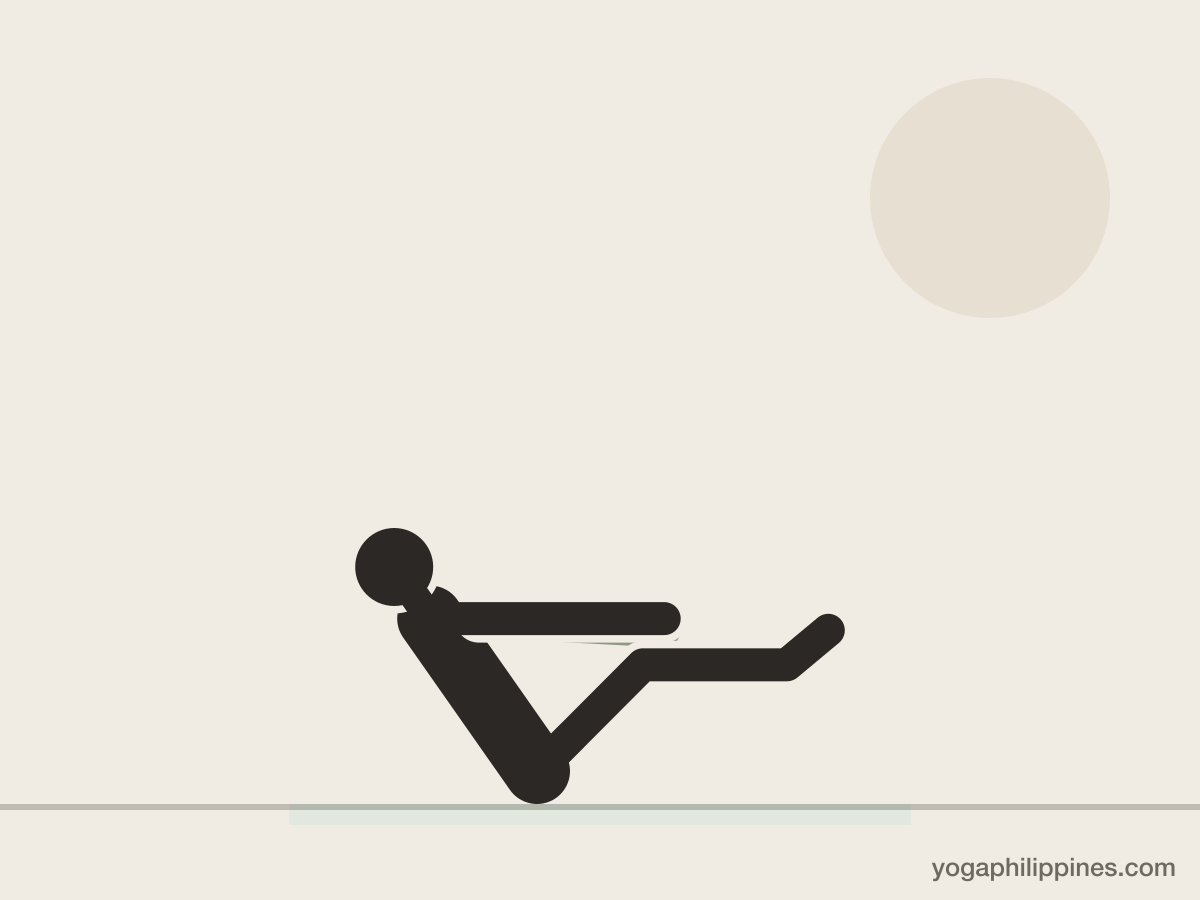
Drawings and video by YogaPhilippines.com, free to reuse under CC BY 4.0 with credit and a link: see the image licence for how to credit.
Boat Pose appears in the 34-pose Ashtanga primary series and the core strength sequence card, both printable with holds and cues. For other poses that work the core, open the pose finder set to the core.
Teacher's note from Joahnna Lee
“I care more about a long spine than straight legs. Bent knees with a lifted chest is the real pose; straight legs with a collapsed back is not.”
“Breathe into the back and sides of your ribs. If the breath stops, the pose has become too hard, so bend the knees more.”
“Spread the collarbones wide and let the shoulders slide away from your ears, as if you were sitting tall at the front of a small boat.”
Make it easier
- Keep your hands on the floor behind you, or around the backs of your thighs, for support.
- Keep one foot on the floor and lift only the other, then switch sides.
- Loop a strap around the soles of your feet and hold it with both hands to help the chest stay lifted.
- Sit on a folded blanket if the sit bones feel bony on a thin mat.
Pregnancy and after birth
Pregnancy. Avoid. Boat Pose loads the front of the abdomen strongly, which is not a good fit during pregnancy. Choose gentle seated work instead, and ask your OB or midwife which kinds of core exercise suit you.
After birth. Avoid. Leave Boat Pose out in the early months after birth, whether you gave birth vaginally or by caesarean. Bring it back only once your OB or midwife has cleared you and you can breathe and lift without the belly doming or bulging along the midline, starting with the feet on the floor.
Read Joahnna Lee's notes on yoga in pregnancy and after birth.
Common mistakes
- Rolling back onto the tailbone and rounding the lower back to keep the legs up.
- Straightening the legs too soon, which usually pulls the chest down with them.
- Holding the breath and gripping the belly hard.
- Tensing the neck and pushing the chin forward. Keep the back of the neck long.
Boat Pose is a balance and a strength pose at the same time, which is why it sits well beside balance exercises for steadier feet. In a Vinyasa class it often shows up near the end, before the seated forward folds. It rewards patience far more than force.
Build it slowly: bent knees and a long spine first, straight legs much later. A patient Vinyasa yoga practice gives the pose that time, and a strap around the feet helps on the way.
For the sides of the waist rather than the front, Side Plank, which works the obliques on one hand is the natural next shape to try.
Boat starts from Staff Pose, sitting tall with the legs straight. The core lift learned here also helps in Firefly Pose, an arm balance with the legs out wide. For trunk work with reps, Boat toe taps are one of the core exercises built on yoga poses.
Bent-knee Boat or Full Boat?
Navasana is taught in more than one version. Bent knees with a long spine is the version to learn first; straight legs come much later.
| Compare | Bent-knee Boat | Full Boat |
|---|---|---|
| Position | Seated, balancing just behind the sit bones | Seated, balancing just behind the sit bones |
| What it works | core, hips and spine | core, hips and spine |
| Level | The starting version | Later, once the spine stays long |
| Key difference | Knees bent, shins level with the floor, hands behind the thighs or reaching forward, spine long. | Legs straighten so the body makes a V, without the chest dropping or the lower back rounding. |
Prep poses for Boat Pose
Poses that warm up the same body areas at a lower intensity, so Boat Pose feels steadier when you get there.
- Staff Pose (Dandasana) a direct preparation, beginner
- Table Top Pose (Bharmanasana) gentler work for the same area, beginner
- Tree Pose (Vrksasana) gentler work for the same area, beginner
- Crescent Lunge (Ashta Chandrasana) gentler work for the same area, beginner plus
Counter-poses for Boat Pose
Shapes that move the body the other way or let it rest straight after Boat Pose.
- Bridge Pose (Setu Bandha Sarvangasana) beginner plus
- Supine Twist (Supta Matsyendrasana) beginner
Props that help in Boat Pose
- Strap: extends the arms when the hands do not reach the feet or each other yet.
- Blanket: lifts the hips a little so the spine can stay tall.
Programs and sessions that use Boat Pose
- The one-month challenge 1 of its 30 sessions
- Sequences: 30-minute yoga flow, primary series sequence and core-strength session
- Practice app sessions: 30-minute practice
Sources: Mayo Clinic, Fitness program: 5 steps to get started; NCCIH (US National Institutes of Health), Yoga: Effectiveness and Safety; NHS, Exercise in pregnancy; CDC, Pregnant & Postpartum Activity: An Overview; Canadian Family Physician (Chan et al., 2014), via PubMed Central, Hot yoga and pregnancy: Fitness and hyperthermia. Last reviewed 2 October 2026.
Boat Pose questions
Why do I roll back in Boat Pose?
Usually because the legs are asking for more than the spine and hip flexors can hold yet. Bend the knees, hold the backs of the thighs and find the balance just behind your sit bones first. The legs can straighten later.
Is Boat Pose a core exercise?
It asks the muscles along the front and sides of the trunk and the hip flexors to work together to hold you upright. Whether it suits you right now depends on your body: after pregnancy or an abdominal operation, ask your doctor first.
What is Boat Pose good for?
Boat Pose builds strength in the muscles along the front and sides of the trunk and in the hip flexors, which work together to hold you upright on the sit bones. It also trains balance and a long spine. In a Vinyasa class it often comes near the end, before the seated forward folds.
Why is Boat Pose so hard?
It asks the belly, hip flexors and back to hold you balanced on the sit bones, and most people try to straighten the legs before the spine can stay long. The chest then drops and you roll back. Bend the knees, hold the backs of the thighs and keep breathing; straight legs can come much later.
What is the difference between Naukasana and Navasana?
Both names mean boat pose, since nauka and nava are both Sanskrit words for boat. Some Indian schools use Naukasana for a version lying on the back, lifting the head, arms and legs together, or for the seated V itself. Navasana usually names the seated balance on the sit bones described on this page.
Pairs well with
Updated