Pose library · Dhanurasana
Bow Pose (Dhanurasana)
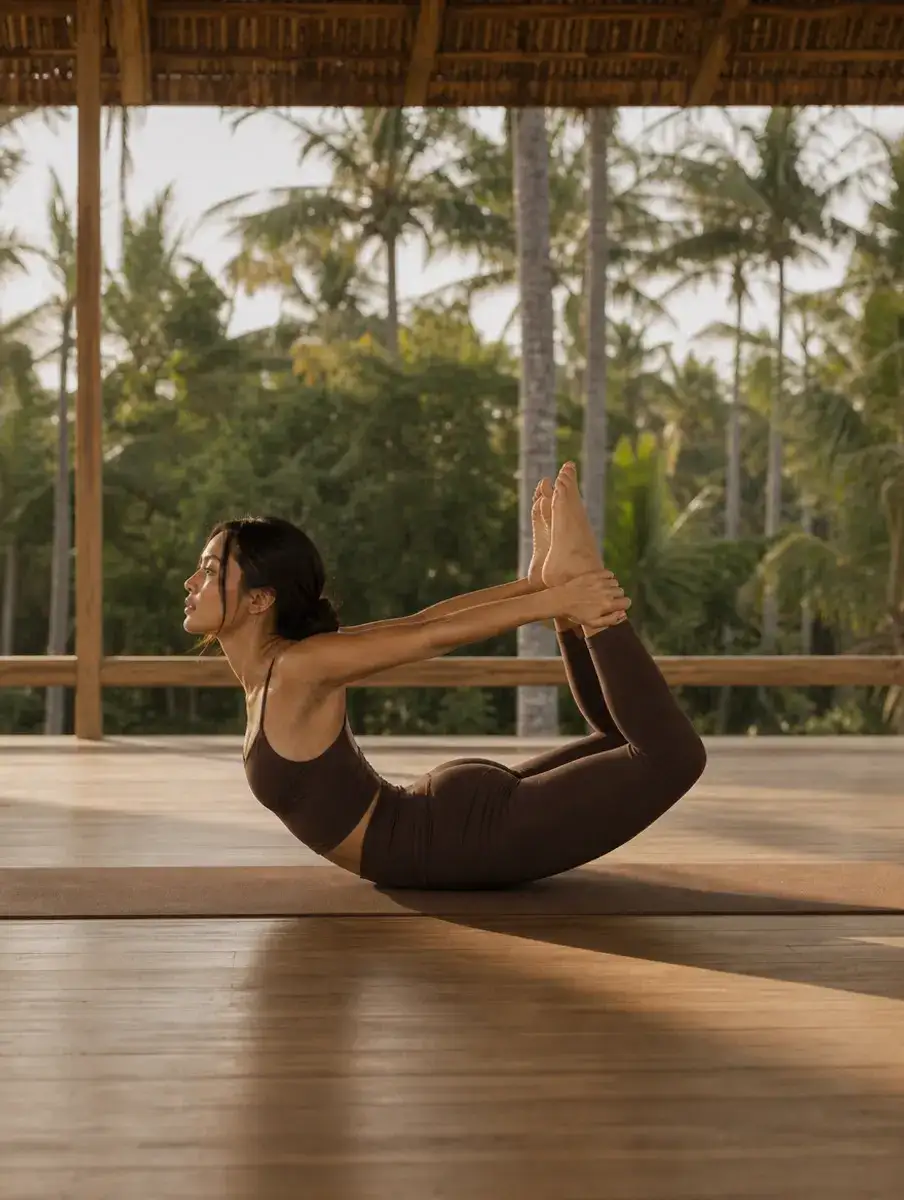
Dhanu means bow and asana means posture. Lying on the belly, you hold your ankles and lift the chest and thighs, so the body curves like a bow with the arms as its string.
Bow Pose (Dhanurasana) is a belly-down backbend that opens the front of the body. Lie on your belly, reach back for the outsides of the ankles, then press the ankles into the hands to lift the chest and thighs for three to five breaths. Keep the knees hip-width, and use a strap if the ankles feel far away.
Pronunciation and meaning
Dhanurasana: dah-noo-RAHS-uh-nuh. Dhanur rhymes loosely with honour, and the stress falls on RAHS.
Dhanu means bow and asana means posture. Lying on the belly, you hold your ankles and lift the chest and thighs, so the body curves like a bow with the arms as its string.
How to do Bow Pose
- Lie on your belly with your forehead on the mat, legs hip-width apart and arms by your sides.
- Bend both knees and reach back to hold the outsides of your ankles, right hand to right ankle and left hand to left ankle. Keep the knees no wider than the hips.
- Inhale and press your ankles back into your hands. Let that kick lift your thighs and chest off the floor, rather than pulling with the arms.
- Keep the back of the neck long and the gaze slightly forward. Let the shoulders roll back and the chest broaden.
- Stay for three to five breaths, breathing into the belly and ribs. The breath will feel shorter here, and that is normal.
- Exhale and lower slowly, release the ankles, and rest with one cheek on the mat for a few breaths.
Bow Pose step by step

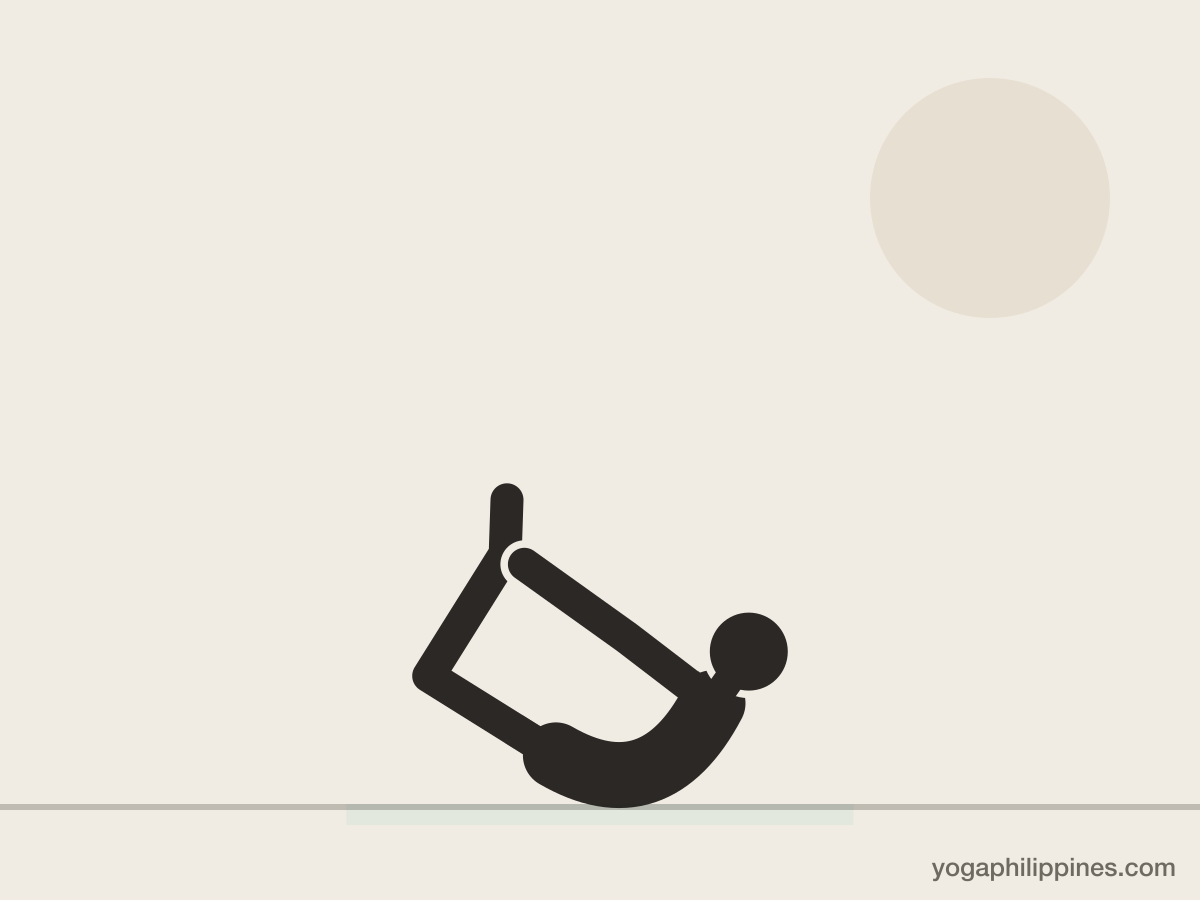
Drawings and video by YogaPhilippines.com, free to reuse under CC BY 4.0 with credit and a link: see the image licence for how to credit.
Bow Pose appears in the Bikram 26 poses sequence, which is printable with holds and cues. For other poses that work the chest, open the pose finder set to the chest.
Make it easier
- Practise Half Bow: hold one ankle at a time, with the opposite forearm on the floor for support.
- Loop a strap around the fronts of both ankles and hold the ends if you cannot reach the ankles comfortably.
- Place a folded blanket under the hip bones if lying on them is uncomfortable.
Pregnancy and after birth
Pregnancy. Avoid. Bow Pose puts your weight on the belly. Try a gentle backbend on hands and knees, such as Cow, instead. Check with your OB or midwife.
After birth. Adapt. Wait until your doctor or midwife has cleared you and lying on the belly feels comfortable, which can take longer after a caesarean birth or while breastfeeding. Start with Half Bow and short holds.
Pregnancy and postpartum notes are kept by Joahnna Lee, who is certified in prenatal and postnatal yoga.
Common mistakes
- Letting the knees splay wide, which squeezes the lower back. Keep them roughly hip-width.
- Pulling hard with the arms instead of pressing the legs back into the hands.
- Throwing the head back and shortening the back of the neck.
Bow Pose is a belly-down backbend that usually comes after Cobra and Locust in a class, once the back has warmed up. It works the back of the body and stretches the front of the hips, the chest and the shoulders at once.
Because it asks for a lot at the front of the body, it tends to feel very different from day to day. On a stiff morning Half Bow is plenty. It is a natural step up from Cobra Pose, the first belly-down backbend, and a cousin of Camel Pose, the kneeling backbend.
How does bow pose prepare you for deeper backbends?
It teaches the legs to drive a backbend while the arms stay calm, which is the same pattern used in Wheel Pose. It also opens the front of the hips, which many people find tight from sitting. The hip flexor stretches routine is a useful partner on days off the mat.
Come out slowly and give the back a quiet moment before moving on.
Prep poses for Bow Pose
Poses that warm up the same body areas at a lower intensity, so Bow Pose feels steadier when you get there.
- Locust Pose (Salabhasana) a direct preparation, beginner plus
- Cobra Pose (Bhujangasana) a direct preparation, beginner
- Upward-Facing Dog (Urdhva Mukha Svanasana) gentler work for the same area, intermediate
- Sphinx Pose (Salamba Bhujangasana) gentler work for the same area, beginner
Counter-poses for Bow Pose
Shapes that move the body the other way or let it rest straight after Bow Pose.
- Balasana (Child's Pose) beginner
- Supine Twist (Supta Matsyendrasana) beginner
Props that help in Bow Pose
- Strap: extends the arms when the hands do not reach the feet or each other yet.
- Blanket: pads the hips and the front of the pelvis on a hard floor.
Programs and sessions that use Bow Pose
- Sequences: 26-posture sequence
Sources: Mayo Clinic, Fitness program: 5 steps to get started; NCCIH (US National Institutes of Health), Yoga: Effectiveness and Safety. Last reviewed 2 October 2026.
Bow Pose questions
Why is it hard to lift the thighs in bow pose?
The lift comes from kicking the feet back into the hands, which takes strength in the backs of the legs and openness at the front of the hips. Start with the chest lifting more than the thighs, and use a strap. The shape grows with practice.
Should the knees be together in bow pose?
Roughly hip-width is a good guide. Very wide knees tend to pinch the lower back, and squeezing them together can make it hard to lift. Find the width where the back feels long.
What is a good counterpose after bow pose?
Rest flat on the belly for a few breaths, then take a gentle forward shape such as Child's Pose. Moving slowly from a backbend to a fold gives the spine time to settle.
What is Bow Pose good for?
Bow Pose works the back of the body and stretches the front of the hips, the chest and the shoulders at once. It builds strength in the backs of the legs and teaches the legs to drive a backbend while the arms stay calm, which many people find useful before deeper backbends such as Wheel Pose.
Why is Bow Pose so difficult?
Bow Pose asks for several things at once: openness at the front of the hips, chest and shoulders, strength in the backs of the legs, and the coordination to kick the ankles into the hands instead of pulling with the arms. The breath also feels shorter on the belly. Half Bow or a strap makes it easier.
Who should not do Bow Pose?
Skip Bow Pose or check with your doctor or physio first if you have a back, neck, shoulder or knee injury, or recent abdominal surgery, since your weight rests on the belly. If lying on the hip bones hurts, pad them with a folded blanket, and choose Half Bow on stiff days. Stop for any sharp pain.
Updated