Pose comparison · Anjaneyasana and Ashta Chandrasana
Low Lunge vs High Lunge (Crescent Lunge)
In Low Lunge the back knee rests on the floor, so it is a steady kneeling stretch for the front of the back hip. In High Lunge, also called Crescent Lunge, the back knee lifts and the back leg works, so it becomes a standing balance that builds strength. Start with Low Lunge, then lift the knee.
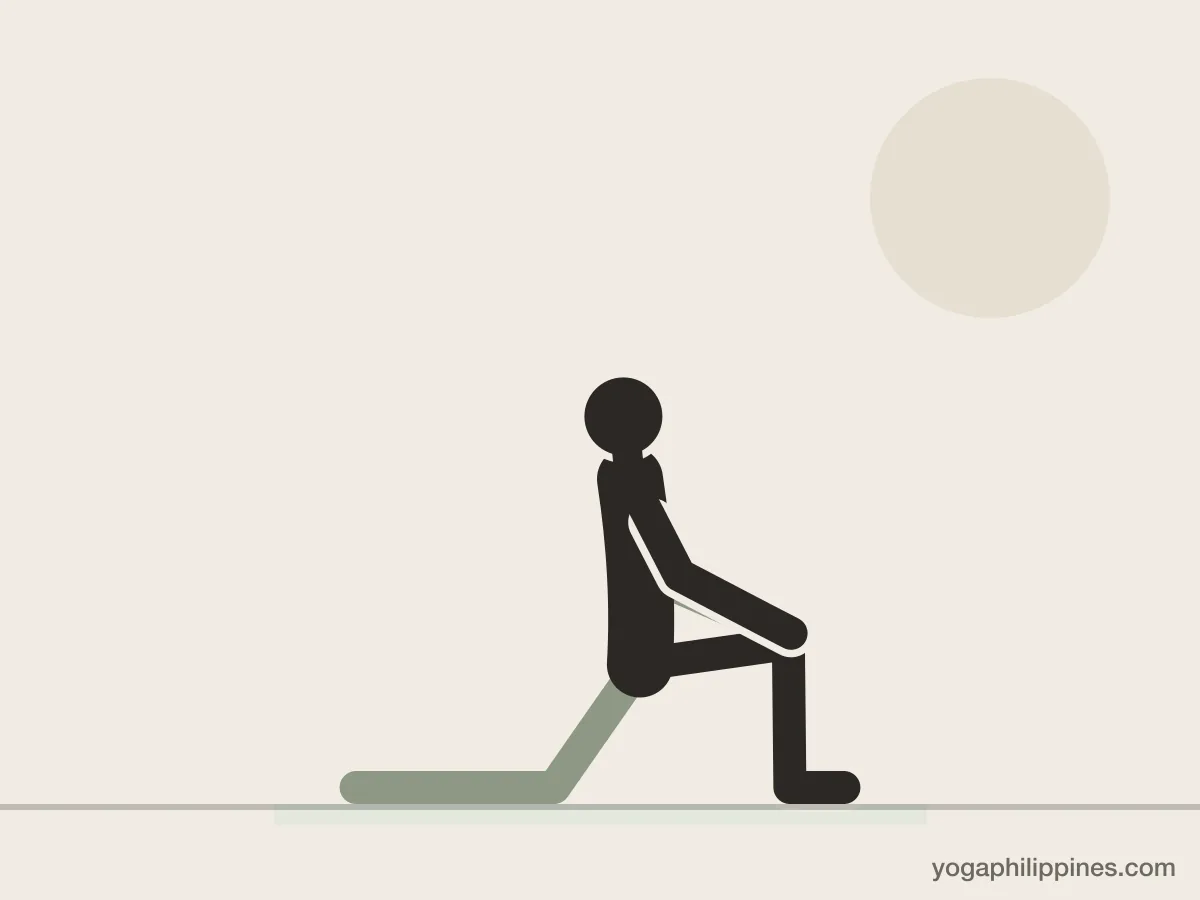
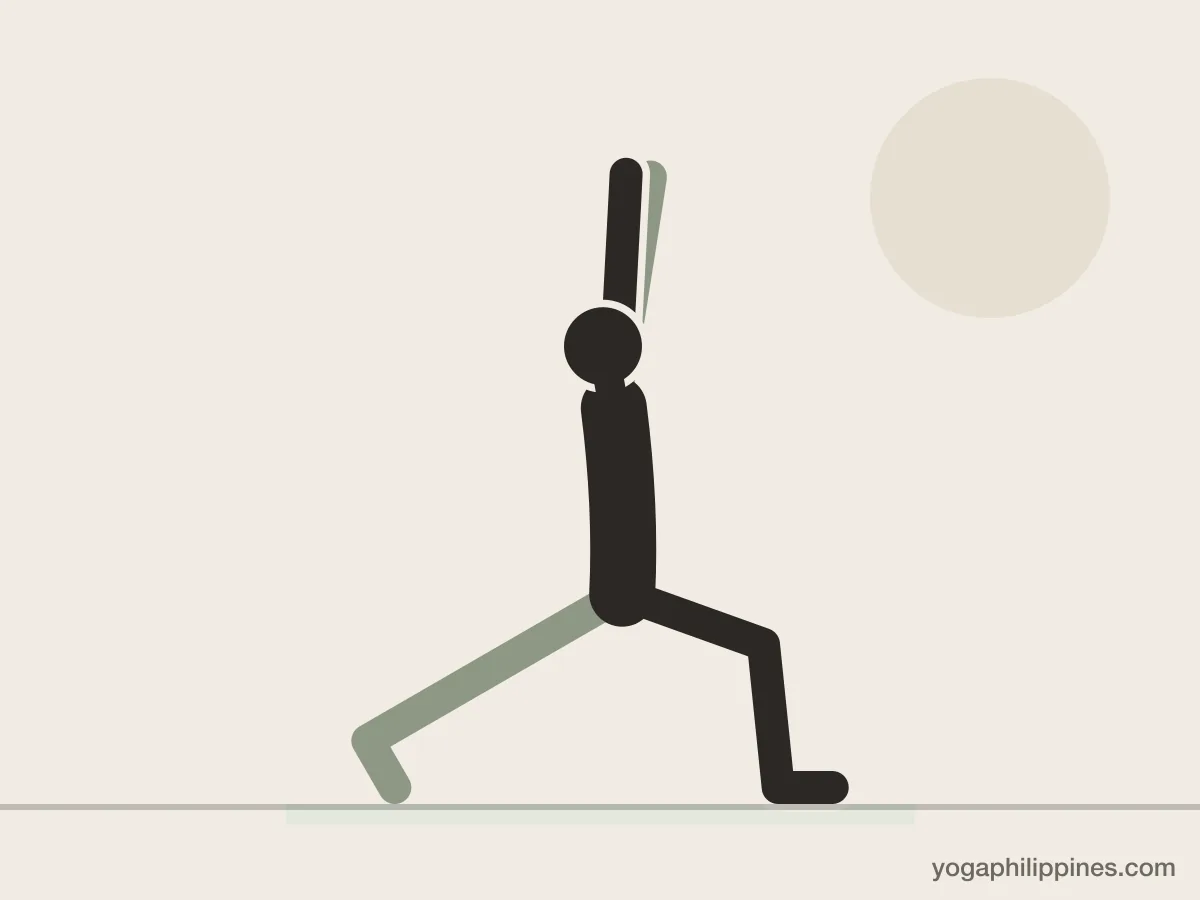
What is the difference between Low Lunge and Crescent Lunge?
| Compare | Low Lunge | High Lunge (Crescent Lunge) |
|---|---|---|
| Back knee | Down on the mat, on a folded blanket | Lifted; you stand on the ball of the back foot with the heel reaching back |
| Back leg | Rests, so the stretch is felt at the front of the back hip and thigh | Long and strong from heel to hip, and it does much of the work |
| Balance | Steady, with the back knee and shin as a third point on the floor | A standing balance on two feet in a long stance |
| Arms | On the front thigh or on blocks, or reaching up once you feel steady | On the hips at first, then overhead, shoulder-width apart |
| Front knee | Over the ankle, not beyond it | Over the ankle, tracking over the second toe |
Both work the hips and fronts of the thighs. Crescent Lunge adds the glutes, core and shoulders. Low Lunge is the easier of the two in our pose library.
A note on the names
The names are not used the same way in every class. Most teachers treat High Lunge and Crescent Lunge as the same pose, though some say High Lunge for the version with the hands on the hips or the floor and Crescent for the arms overhead. The kneeling Anjaneyasana is sometimes called a low crescent lunge, so if a teacher says crescent, check whether the back knee is up or down.
Low Lunge and Crescent Lunge at a glance
| Compare | Low Lunge | Crescent Lunge |
|---|---|---|
| Position | Kneeling | Standing |
| Level | Beginner | Beginner plus |
| Effort | Gentle | Moderate |
| What it works | Hips and fronts of the thighs | Hips, fronts of the thighs, glutes, core and shoulders |
| Props that help | Block, blanket and chair | Block |
| Typical hold | About 30 seconds a side at a steady pace | About 25 seconds a side at a steady pace |
| Where it sits in a class | Warm-up and building heat | Building heat |
| Take care with | Sore knees and getting down to the floor | Standing for long, sore knees, shaky balance and a sore lower back |
From the pose library's own data: level, effort, body areas, props and hold times are the same figures the pose finder and the practice app use.
Which one should you choose?
Choose Low Lunge when
- You want a calm stretch for the front of the hip, for example after a day of sitting.
- You are new to yoga, or your balance or legs are tired today.
- Kneeling is comfortable once the back knee is padded.
Choose High Lunge (Crescent Lunge) when
- You want the legs to work and the practice to build heat, as in a Vinyasa flow or Sun Salutation B.
- Kneeling presses uncomfortably on the back knee even with padding: lifting it takes the weight off.
- You are building toward Warrior I, II and III, which use the same strong legs.
How do you move from Low Lunge to Crescent Lunge?
- From Low Lunge with the right foot forward, bring the hands to the floor or to blocks either side of the front foot.
- Tuck the back toes under so you can press through the ball of the left foot.
- Exhale and press the back thigh up to lift the back knee, reaching the left heel back.
- Inhale and rise, hands to the hips, shoulders over the hips. Stay for five breaths.
- To return, bring the hands down and lower the back knee onto the blanket with an exhale.
How to do Low Lunge
- From Downward-Facing Dog or hands and knees, step your right foot forward between your hands.
- Lower the left knee onto a folded blanket and slide it back until the right knee sits over the right ankle.
- Rest the top of the back foot on the mat, or tuck the toes if that is kinder to the knee.
- Bring your hands to the right thigh or to blocks, and lift the chest so the shoulders sit over the hips.
- Let the hips ease forward and down until you feel the front of the left hip. Reach the arms up if that feels steady.
- Stay for five breaths, then step back and repeat on the other side.
Watch for: letting the front knee drift inward, which loads the knee from the side; dumping into the lower back to lift the arms higher. Bring the arms down and lengthen the tailbone instead.
Full cues, props and pregnancy notes: Low Lunge (Anjaneyasana) step by step.
How to do Crescent Lunge
- From Downward-Facing Dog, step your right foot forward between your hands, with the right knee over the right ankle.
- Keep the back knee lifted. Stand on the ball of the left foot, heel reaching back, and press the back thigh up so the back leg is long and strong.
- Inhale and rise up, lifting the chest and bringing the shoulders over the hips. Hands can rest on the front thigh or on the hips at first.
- Reach the arms overhead, shoulder-width apart, and draw the tailbone gently down so the lower back stays long.
- Stay for five breaths, keeping the front knee tracking over the second toe and the hips level.
- Exhale, bring the hands down beside the front foot, step back to Downward-Facing Dog, and repeat with the left foot forward.
Watch for: letting the front knee drift past the ankle or cave inward; bending the back knee and sinking, so the back leg stops working.
Full cues, props and pregnancy notes: Crescent Lunge (Ashta Chandrasana) step by step.
Where they show up in a practice
Sequence for the hips (Low Lunge), Chandra Namaskar (Low Lunge), morning yoga sequence (Low Lunge) and recovery sequence for runners (Low Lunge) use these poses, each printable with holds and cues.
Sources: Mayo Clinic, Fitness program: 5 steps to get started; NCCIH (US National Institutes of Health), Yoga: Effectiveness and Safety; NHS, Knee pain. Last reviewed 2 October 2026.
Low Lunge vs Crescent Lunge: questions
Which lunge is easiest on the knees?
Neither suits every knee. Low Lunge rests the back knee on the floor, so pad it well; High Lunge takes the weight off the back knee but asks the front knee to hold a bend for longer. In both, keep the front knee over the ankle. If a knee hurts, stop and see a doctor or physio.
Should a beginner start with a low lunge or a high lunge?
Start with Low Lunge. The back knee on the floor makes it steadier and easier to hold, and it teaches the front knee to stay over its ankle. Lift the back knee into High Lunge once the kneeling version feels steady for five slow breaths on each side.
How long should you hold each lunge?
Five breaths on each side is the usual hold in a class for both. In a slower practice, Low Lunge is often held a little longer, around 30 to 45 seconds a side, while High Lunge is shorter because the back leg works the whole time.
Updated