Pose comparison · Vajrasana and Virasana
Virasana vs Vajrasana: Hero Pose and Thunderbolt Pose
Vajrasana (Thunderbolt Pose) and Virasana (Hero Pose) are both kneeling seats. In Vajrasana you sit back on your heels. In Virasana the feet move just outside the hips and you sit between them, usually on a block, which asks more of the knees and the fronts of the thighs. Learn Vajrasana first.
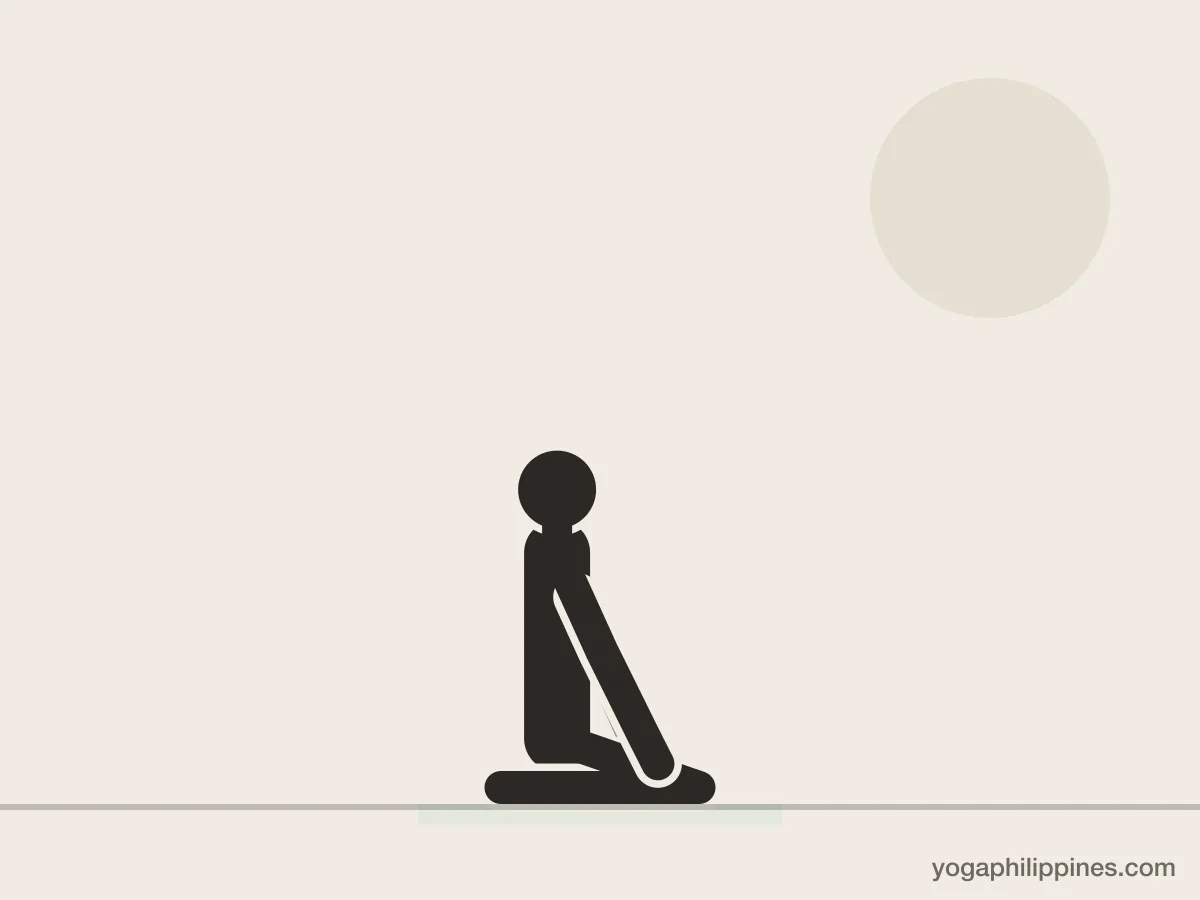
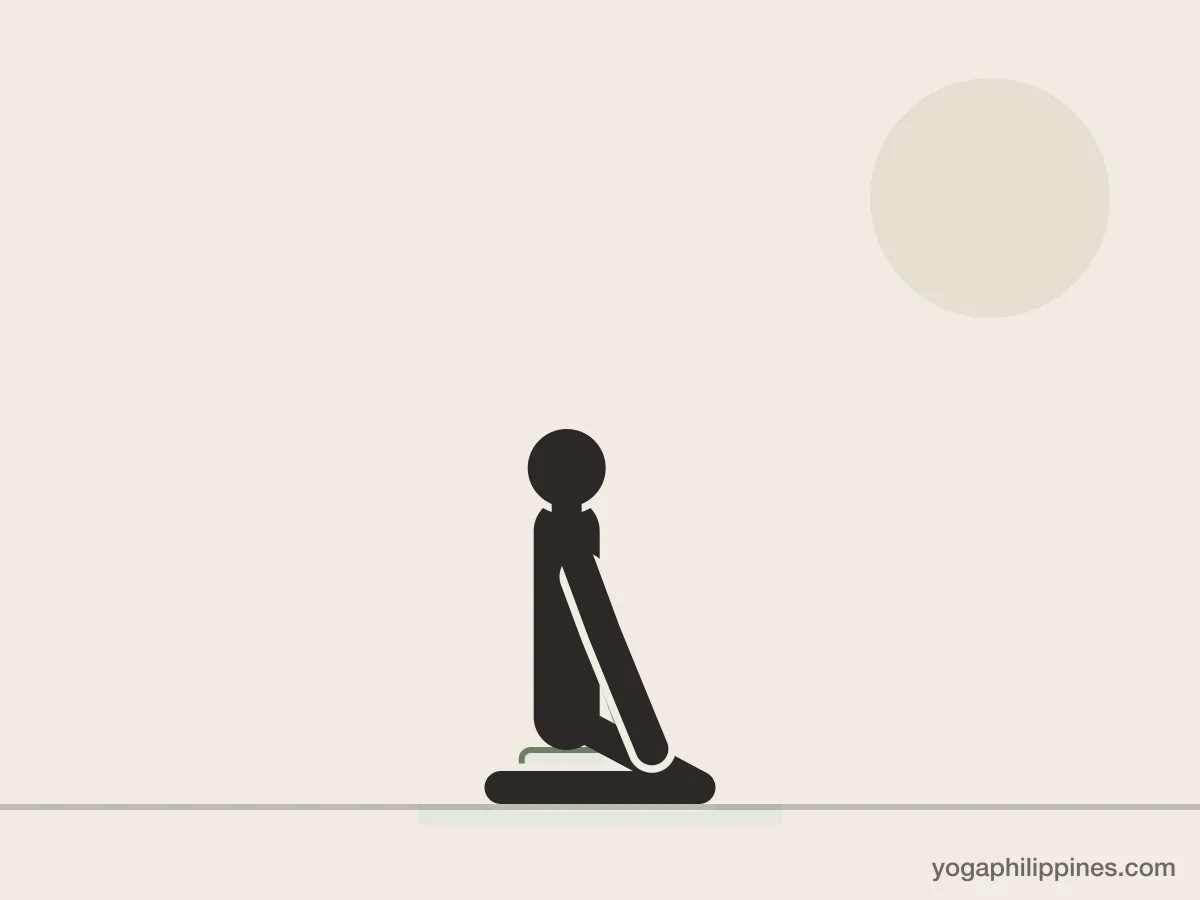
What is the difference between Thunderbolt Pose and Hero Pose?
| Compare | Vajrasana (Thunderbolt Pose) | Virasana (Hero Pose) |
|---|---|---|
| Where you sit | On your heels, big toes touching and heels slightly apart | Between your feet, usually on a block, with the feet just outside the hips |
| Feet | Tops of the feet flat on the mat under you | Each foot points straight back, toes not turned in or out |
| Main stretch | Tops of the feet and ankles, with the thighs resting on the calves | Fronts of the thighs and tops of the feet, with the hips lower between the heels |
| Getting in | Kneel and sit back slowly onto the heels | Roll the calf muscles outward with the hands, then sit back onto the block |
| Height to start | A block between the feet if the knees or ankles complain | A block every time, and more height if the knees speak at all |
Both work the ankles and fronts of the thighs. Thunderbolt Pose is the easier of the two in our pose library.
A note on the names
Vajra means thunderbolt and is also translated as diamond, so Vajrasana is sometimes called Diamond Pose. Vira means hero. The two are easy to mix up because both start from the same kneel: if the hips rest on the heels it is Vajrasana; if they sit on the floor or a block between the feet it is Virasana.
Thunderbolt Pose and Hero Pose at a glance
| Compare | Thunderbolt Pose | Hero Pose |
|---|---|---|
| Position | Kneeling | Kneeling |
| Level | Beginner | Beginner plus |
| Effort | Very gentle | Gentle |
| What it works | Ankles and fronts of the thighs | Fronts of the thighs and ankles |
| Props that help | Block and blanket | Block, blanket and bolster |
| Typical hold | About 60 seconds at a steady pace | About 60 seconds at a steady pace |
| Where it sits in a class | Warm-up and final seat or rest | Warm-up and cool-down |
| Take care with | Sore knees and getting down to the floor | Sore knees and getting down to the floor |
From the pose library's own data: level, effort, body areas, props and hold times are the same figures the pose finder and the practice app use.
Which one should you choose?
Choose Vajrasana (Thunderbolt Pose) when
- You are new to kneeling, or you want a short, simple seat for breathing.
- Sitting between the feet does not suit your knees.
- You are about to move into poses that start from a kneel, such as Camel or Child's Pose.
Choose Virasana (Hero Pose) when
- Sitting on the heels already feels easy and you want more stretch at the fronts of the thighs.
- You want a steady seat for a few minutes of breathing, with enough height under you that the spine rises without effort.
- You are working, slowly and with props, toward reclined kneeling shapes such as Reclined Hero Pose.
How do you move from Thunderbolt Pose to Hero Pose?
- From Vajrasana, lean forward a little and come up to a tall kneel.
- Move the feet apart until they sit just outside the hips, tops of the feet on the floor and each foot pointing straight back.
- Place a block between the feet, on its lowest or middle height.
- With your hands, roll the calf muscles outward and sit back onto the block.
- Breathe there for one to two minutes. To come out, lean forward onto your hands and lift the hips.
How to do Thunderbolt Pose
- Kneel on your mat with your knees together or slightly apart and the tops of your feet flat on the floor.
- Bring your big toes to touch and let your heels open slightly, making a small cradle for your hips.
- Sit back slowly onto your heels, or onto whatever support you have placed there.
- Rest your hands on your thighs and stack your shoulders over your hips.
- Lengthen through the spine and relax your shoulders and face.
- Stay for one to three minutes to start, then lean forward onto your hands and uncurl your legs one at a time.
Watch for: sitting through numb feet. Come out and add height under the hips; letting the feet splay out wide to the sides, which twists the knees.
Full cues, props and pregnancy notes: Thunderbolt Pose (Vajrasana) step by step.
How to do Hero Pose
- Kneel on a folded blanket with your knees together and your feet slightly wider than your hips, tops of the feet on the floor.
- Place a block between your feet, on its lowest or middle height.
- With your hands, gently roll the calf muscles outward and sit back onto the block.
- Check that each foot points straight back, toes not turned in or out, and the heels hug the sides of the hips.
- Sit tall with your hands on your thighs and breathe for one to two minutes.
- To come out, lean forward onto your hands, lift the hips and come back to hands and knees.
Watch for: sitting low without props while the knees ache. Knee pain means add height, every time; letting the feet splay out to the sides or turn in, which twists the knees.
Full cues, props and pregnancy notes: Hero Pose (Virasana) step by step.
Sources: Mayo Clinic, Fitness program: 5 steps to get started; NCCIH (US National Institutes of Health), Yoga: Effectiveness and Safety; NHS, Knee pain. Last reviewed 2 October 2026.
Thunderbolt Pose vs Hero Pose: questions
Which is harder on the knees, Virasana or Vajrasana?
Virasana usually asks more of the knees, because the hips drop between the feet instead of resting on them. That is why it starts on a block. If either seat brings knee pain rather than a mild stretch, add height or come out.
How long should you sit in Vajrasana or Virasana?
Start with one to three minutes in Vajrasana and one to two minutes in Virasana, as the pose pages suggest. Come out sooner if the feet go numb or tingle, shake the legs out and sit higher next time.
What are the downsides of sitting in Vajrasana?
It loads the knees and ankles, and the feet can go numb in a long sit. A block between the feet, a blanket behind the knees or a rolled towel under the ankles help. If it still hurts, sit cross-legged or on a chair, and ask a doctor or physio about your knees.
Updated