Meditation · reviewed by a teacher
How to meditate, starting with five quiet minutes
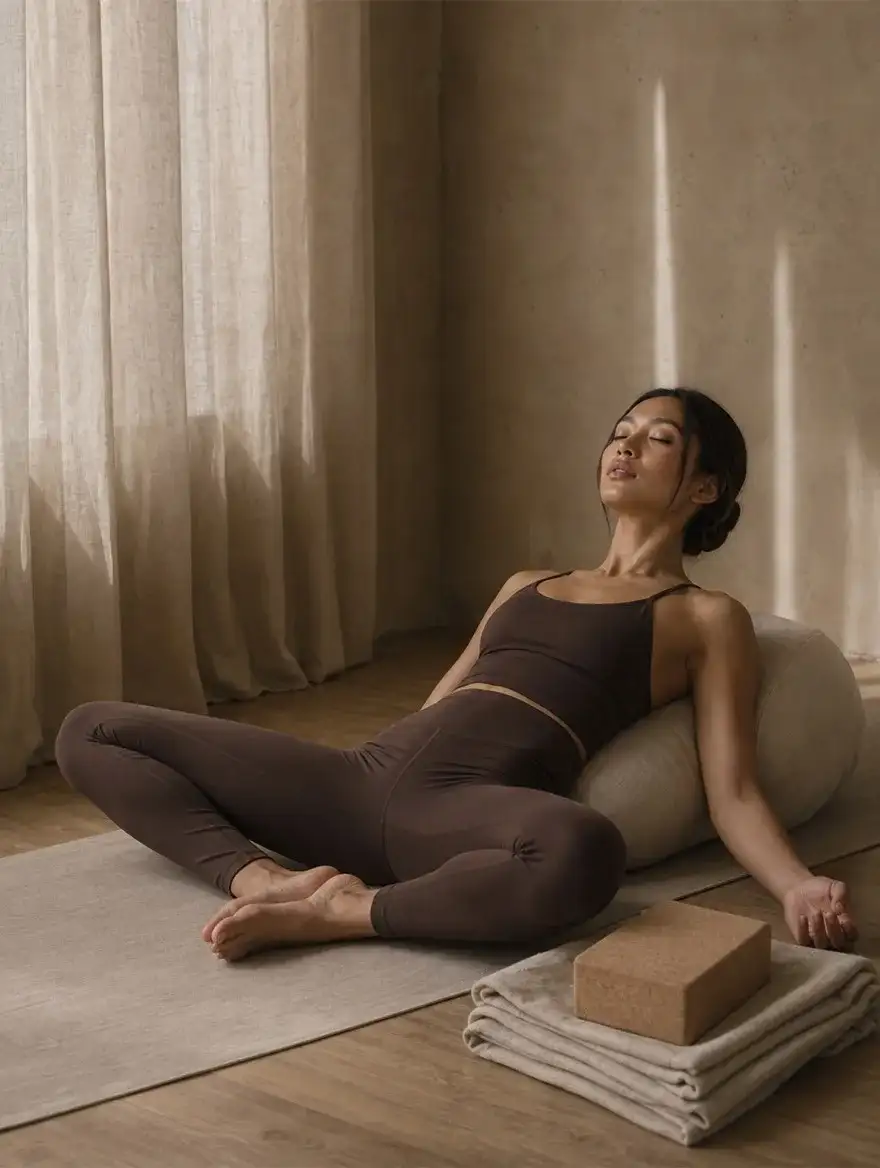
To meditate, sit comfortably, let your breath move on its own, rest your attention on it, and each time you notice your mind has wandered, bring it back without scolding yourself. Start with five minutes a day at a regular time; the returning, not a blank mind, is the practice.
Teacher's note from Joahnna Lee
“In 2024 I completed a 10-day Vipassana silent meditation retreat.”
“What I teach is simpler: how to sit comfortably, rest the attention and come back without judging yourself.”
Meditation sounds bigger than it is. You do not need a retreat, an app or an empty mind. You need a place to sit, a few minutes, and the willingness to notice where your attention goes and bring it back, again and again.
This guide covers how to sit, a five-minute practice written out in full, what a wandering mind means, and how to keep going on a busy Manila day. If stress is the reason you are here, a few quiet minutes on your own is a good start, and it is also where many teachers begin when working on yoga for stress and burnout.
One note before anything else. Meditation can sometimes bring up difficult feelings or memories. If it does, stop, open your eyes, look around the room and move. If you live with trauma, severe anxiety or depression, practise with the guidance of your doctor or therapist.
What is meditation, in plain words?
Meditation is the practice of resting your attention on one thing, noticing when it drifts, and returning. The NHS describes mindfulness meditation in much the same way: sitting quietly, paying attention to the breath, sounds or the body, and bringing your attention back whenever the mind wanders.
The breath is the easiest place to start: it is always with you, and it changes a little from moment to moment, which gives your attention something to follow. Some traditions use a silently repeated mantra instead, such as the Tibetan om mani padme hum. Breath and mantra are only two of the main types of meditation.
It is not the same as thinking about nothing, which almost no one can do. It is closer to training: small, repeated returns, like lifting a light weight many times. The Yoga Sutras call where it leads samadhi, complete absorption; you do not need it as a goal.
How should you sit?
Comfort first. A posture you can hold still for five minutes without pain is the right posture.
- On a cushion. Sit on the front edge of a firm cushion or folded blanket so your hips are a little higher than your knees. Easy Pose, the simple cross-legged seat, is the classic shape, with a block or rolled towel under each knee if they float.
- On a chair. Sit near the front of the seat, feet flat on the floor, hands resting on your thighs. Let the back of the chair catch you if you tire.
- Against a wall. Sit on a cushion with your back to a wall. This is the kind choice for a stiff or sore back.
Whichever you choose, let your spine be long but not rigid, your shoulders heavy, your jaw loose. For kneeling, Burmese and lotus seats in more detail, see meditation postures and how to set up each one.
A five-minute practice to start with
Set a gentle timer for five minutes so you are not checking the clock. A meditation timer with a soft bell works well for this.
- Arrive. Sit, close your eyes or lower your gaze, and notice three things you can feel: your weight on the seat, your feet, your hands.
- Find the breath. Notice where you feel it most clearly: the nostrils, the chest or the belly. Do not change it. Let it breathe itself.
- Rest there. Keep your attention lightly on that one place, breath after breath. If it helps, silently say “in” and “out”.
- Notice the drift. At some point you will realise you are planning dinner or replaying a meeting. That moment of noticing is the practice working.
- Come back. Without commentary, return to the breath. Do this as many times as you need.
- Close. When the timer sounds, take one fuller breath, open your eyes, and notice how you feel before you pick up your phone.
What do you do when your mind wanders?
You come back. That is the whole instruction, and it is harder than it sounds only because we tend to add a lecture to it: “I’m bad at this.” Leave the lecture out.
A wandering mind is not a sign that you are doing it wrong. If you return a hundred times in five minutes, you have practised a hundred times. Some days the mind is loud and some days it is quieter. Both count.
If the breath becomes a source of worry, move your attention to something outside you instead: the sounds in the room, or your feet on the floor. If sitting itself is the problem, try walking meditation, slow steps with full attention. For more structured ways of working with the breath, box breathing, 4-7-8 and the long exhale are written out step by step, with their safety notes.
How long, how often, and what time of day?
Five minutes a day is a real practice. It is better than thirty minutes once a week, because the point is the habit of returning, and habits are built by repetition.
Pick a time you already keep. Many people sit straight after waking, before the condo or the house gets busy. Others sit in the car before walking into the office, or when they get home and before they open the laptop again. A quiet morning is lovely if you can find one, before the day and the traffic start.
Manila has its own obstacles. If it is hot, sit near a fan. If there is construction or traffic noise, let it be one of the sounds you notice instead of an interruption. After a week or two, add a minute if you want to. If counting helps you stay with a repeated word, a mala of 108 beads keeps the count for you.
Ten days of silence
Some people go further and sit a 10-day Vipassana course, held in silence, with many hours of meditation each day. The technique taught there belongs to that course and is taught only within it, so it is not covered on this page.
What this guide offers is simpler: how to sit comfortably, rest the attention and come back without judging yourself. You do not need ten days to start, and if you would like a retreat setting later, the guide to yoga retreats in the Philippines is one place to look.
When meditation is not the right tool
Meditation is not a treatment for a mental health condition, and the NHS itself notes that it is not right for everyone and can make some people feel worse. Stop if it leaves you more anxious, low or unsettled, and try gentle movement instead.
Please speak to a doctor, psychologist or psychiatrist if low mood, worry or poor sleep has lasted for weeks or is affecting your daily life.
If you need help right now, because you are in crisis or thinking about hurting yourself, please reach out today. In the Philippines, the National Center for Mental Health crisis hotline is 1553. Outside the Philippines, your local crisis line or emergency number is the place to start.
Where to go next
Once five minutes feels familiar, try a guided body scan from feet to head, which gives the attention a slow path through the body, or loving kindness meditation with the metta phrases. If what you want is deep rest lying down, yoga nidra, guided rest is the next step.
If you would rather be talked through it, the free guided meditation library with a 7 day beginners’ course reads each practice aloud in your browser, one short session a day, and remembers which days you have done.
Put it into practice with the timer with interval bells, the paced breathing timer, the breathwork studio, the app's guided sessions and the ambience player, built on pages like this one.
Browse every breath and meditation page.
Sources: Mayo Clinic, Fitness program: 5 steps to get started; NCCIH (US National Institutes of Health), Yoga: Effectiveness and Safety; NHS, Exercise in pregnancy; CDC, Pregnant & Postpartum Activity: An Overview; Canadian Family Physician (Chan et al., 2014), via PubMed Central, Hot yoga and pregnancy: Fitness and hyperthermia; Cleveland Clinic, Hyperventilation Symptoms, Causes & Treatment. Last reviewed 2 October 2026.
Questions
Do I have to sit cross-legged to meditate?
No. A chair with your feet flat on the floor works just as well, and for many beginners it works better. What matters is that you can stay still without pain and without slumping. Cross-legged on a cushion is one option among several, not a requirement.
Is it okay to meditate lying down?
Yes, especially if sitting hurts. The only catch is that lying down makes sleep more likely. If you keep drifting off, bend your knees with your feet on the floor, or rest one forearm upright on its elbow, so you notice when you start to fade.
What if I fall asleep while meditating?
Then you were probably tired, and that is useful to know. Try sitting up, practising earlier in the day, or keeping your eyes slightly open.
Should I close my eyes when I meditate?
Only if it feels comfortable. You can lower your gaze to a spot on the floor a little in front of you instead. Many people find eyes open steadier and safer, especially when they are anxious or very tired.
What should you think about while meditating?
Nothing in particular. Rest your attention lightly on one thing, usually the breath where you feel it most clearly. Thoughts will still come, and that is normal. When you notice you are planning or replaying something, return to the breath without commentary. The noticing and returning, not a blank mind, is the practice.
Keep reading
Your yoga calendar
We track every yoga event, workshop and pop-up class so you don't have to.
Updated