Philosophy · reviewed by a teacher
What a mantra is
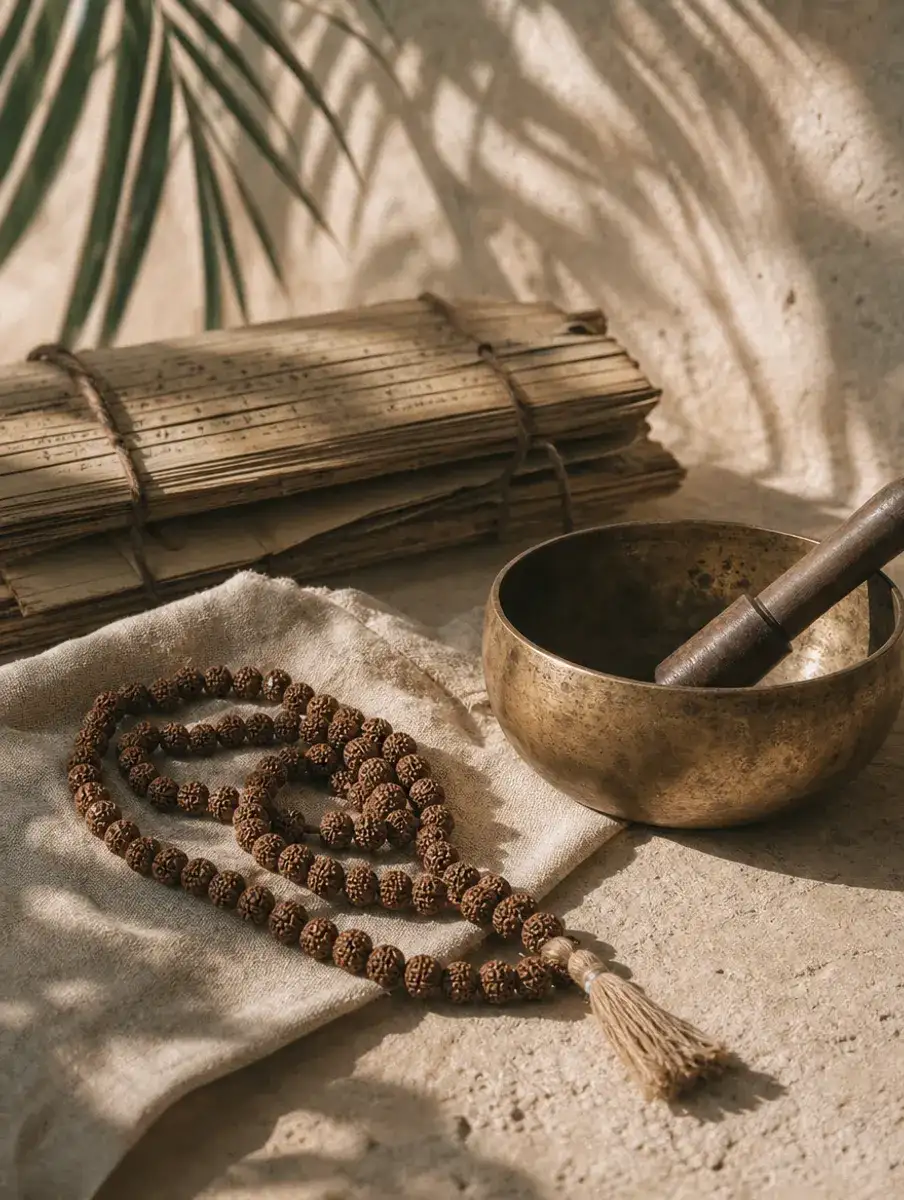
A mantra is a word, syllable or short phrase, usually in Sanskrit, that is chanted aloud, whispered or repeated silently as a focus for prayer or meditation. The word is often explained as an instrument of the mind, from manas (mind) and tra (a tool or a means).
Basahin sa Filipino: ang paliwanag sa Tagalog
Teacher's note from Joahnna Lee
“If you are curious, we can begin with a single om, and I can explain what it means before we try it.”
The word
Mantra is a Sanskrit word. The usual explanation splits it in two: man, from manas, the mind, and tra, a suffix for a tool or an instrument.
A mantra, read this way, is something the mind works with.
Some later teachers add a second reading, that tra comes from a root meaning to protect, so a mantra is what protects the mind. Both readings are traditional, and neither is the whole story.
What matters in practice is that a mantra is a fixed sound. It is not a sentence you make up on the day. It is repeated as it was taught, often many times, and the repetition is the point.
The long tones of a sound bath work on a similar principle: a steady sound gives a wandering mind somewhere to rest.
Where mantras come from
The oldest mantras are the hymns of the Vedas, the earliest Sanskrit texts. Priests memorised them with great care for pitch and rhythm, and passed them on by voice, teacher to student, long before they were written down.
The Gayatri mantra, a verse from the Rig Veda addressed to the sun as a source of light and understanding, is still recited every day by millions of Hindus.
The Upanishads gave special weight to one syllable, the meaning of om, as the sound that stands for the whole of reality.
Patanjali’s Yoga Sutras name om as the word for Ishvara and suggest repeating it while reflecting on its meaning.
Buddhism carried mantras across Asia. In Tibet, om mani padme hum, the six-syllable mantra of compassion, is carved on stones and printed inside prayer wheels.
In Japan, Shingon Buddhism is named after the word itself: shingon is the Japanese reading of the Chinese for mantra, true word. Sikh and Jain traditions have their own mantras too, each with its own meaning and setting.
Japa: repetition
The repetition of a mantra is called japa. It can be done aloud, in a whisper or silently, and many people count the repetitions on a mala, a string of beads, often 108, a number with its own meaning in yoga.
Repeating a sound in your head is harder than it sounds. The mind drifts, you notice, and you return to the sound. That noticing and returning is the practice, much as it is when you follow the breath.
Some mantras are short and are repeated through a whole sitting. Others are longer verses chanted once at the beginning or end of practice. Many end with a word of peace, as in the triple shanti that closes many chants.
What are some well-known mantras and where do they come from?
| Mantra | Tradition | Where you may hear it |
|---|---|---|
| Om | Hindu, Buddhist, Jain | The start and end of many yoga classes |
| Gayatri mantra | Hindu, from the Rig Veda | Morning recitation; some Hatha and Kundalini classes |
| Om namah shivaya | Hindu, Shaiva | Kirtan evenings and Kundalini classes |
| Om mani padme hum | Tibetan Buddhist | Prayer wheels, carved stones, meditation |
| Om shanti shanti shanti | Hindu | A closing chant at the end of class |
Each one belongs to a living tradition, so it is worth learning what a mantra means before you take it up as your own.
How do you choose a mantra?
In traditional settings you do not choose: a teacher gives a mantra to a student, sometimes in a short ceremony, and the student keeps repeating that one. Outside that setting, a reasonable approach is to start with something short and well known, such as om, and keep it for a few weeks rather than changing it every day. A mantra works through familiarity. Swapping it often turns the practice back into thinking about words.
How do you practise mantra meditation?
A ten-minute sitting is enough to begin.
- Sit on a cushion or a chair, spine tall, hands resting.
- Settle with five slow breaths through the nose.
- Begin aloud. Repeat the mantra softly for about two minutes, one repetition per out-breath.
- Whisper. Lower the voice to a whisper for the next two minutes.
- Go silent. Repeat it only in the mind for about five minutes. When you notice you have drifted, return to the sound without judging yourself.
- Rest. Let the mantra go and sit quietly for a minute before you get up.
A mala helps you keep count without watching a clock. In a small condo, early morning before the street noise builds is often the quietest window, and a fan on low gives a steady background hum that can make the silent stage easier.
How it shows up in a modern practice
In a studio class you are most likely to meet a mantra as a single om at the start or end, or a short Sanskrit verse sung together.
Chakra charts often tie chanting to vishuddha, the throat chakra, whose syllable in the tantric texts is ham. Kundalini classes chant much more, often including om namah shivaya, the mantra to Shiva, and kirtan evenings are built around call-and-response singing of mantras with music. Meditation apps often teach mantra meditation as one technique among several, and the guide on how to meditate covers the basics of sitting.
The word has also drifted into everyday English, where a mantra can mean any phrase someone repeats to themselves. That use is fine in conversation, but it is not what the texts mean.
How a mantra can come up in a class
In a one-to-one session there is no room of voices, so chanting is your choice. In a group class you can always listen rather than join in.
A teacher may begin with a single om and explain what it means before anyone tries it. If you would rather not use a Sanskrit sound, a slow count of the breath does a similar job of giving the attention one place to stay.
Some classes close with sound, and you are welcome simply to listen. Other words on this page are explained in the Sanskrit glossary.
Put it into practice with the meditation bell timer and the Sanskrit flashcard deck, built on pages like this one.
Browse all yoga philosophy pages.
Sources: Mayo Clinic, Fitness program: 5 steps to get started; NCCIH (US National Institutes of Health), Yoga: Effectiveness and Safety. Last reviewed 2 October 2026.
Questions
What is an example of a mantra?
Om is the shortest and best known. Longer examples include the Buddhist om mani padme hum, the Gayatri mantra from the Rig Veda, and the closing om shanti shanti shanti.
Can a mantra be in English?
In the classical sense a mantra is a set phrase in Sanskrit or another classical language, chanted as it was handed down. Many people today also use a short English phrase in the same way, as a point of focus. That is better called an affirmation or an intention than a mantra.
Do you have to believe in anything to repeat a mantra?
No belief is required to repeat a sound and notice what happens to your attention. If a mantra comes from a living faith, it is worth learning what it means before you use it.
What does mantra mean in everyday English?
In everyday English a mantra is a phrase someone repeats often because it sums up how they want to act or think, such as a coach's line about effort or a company's motto. This sense is borrowed from the Sanskrit one, where a mantra is a sound or phrase repeated in prayer or meditation.
What is the difference between a mantra and an affirmation?
A traditional mantra comes from a religious or yogic tradition, is often in Sanskrit, and is valued for its sound and repetition as much as its meaning; it may be given by a teacher. An affirmation is a modern idea: a positive statement about yourself, written in your own language, such as a line you repeat before a hard day.
Should a mantra be said aloud or silently?
Either works. Traditional teaching describes three ways to repeat a mantra: aloud, in a whisper, and silently in the mind, with the silent form often described as the subtlest. In a yoga class a mantra is usually chanted aloud together, while at home many people prefer a quiet or silent repetition.
Keep reading
Your yoga calendar
We track every yoga event, workshop and pop-up class so you don't have to.
Updated