Philosophy · reviewed by a teacher
Bhakti yoga
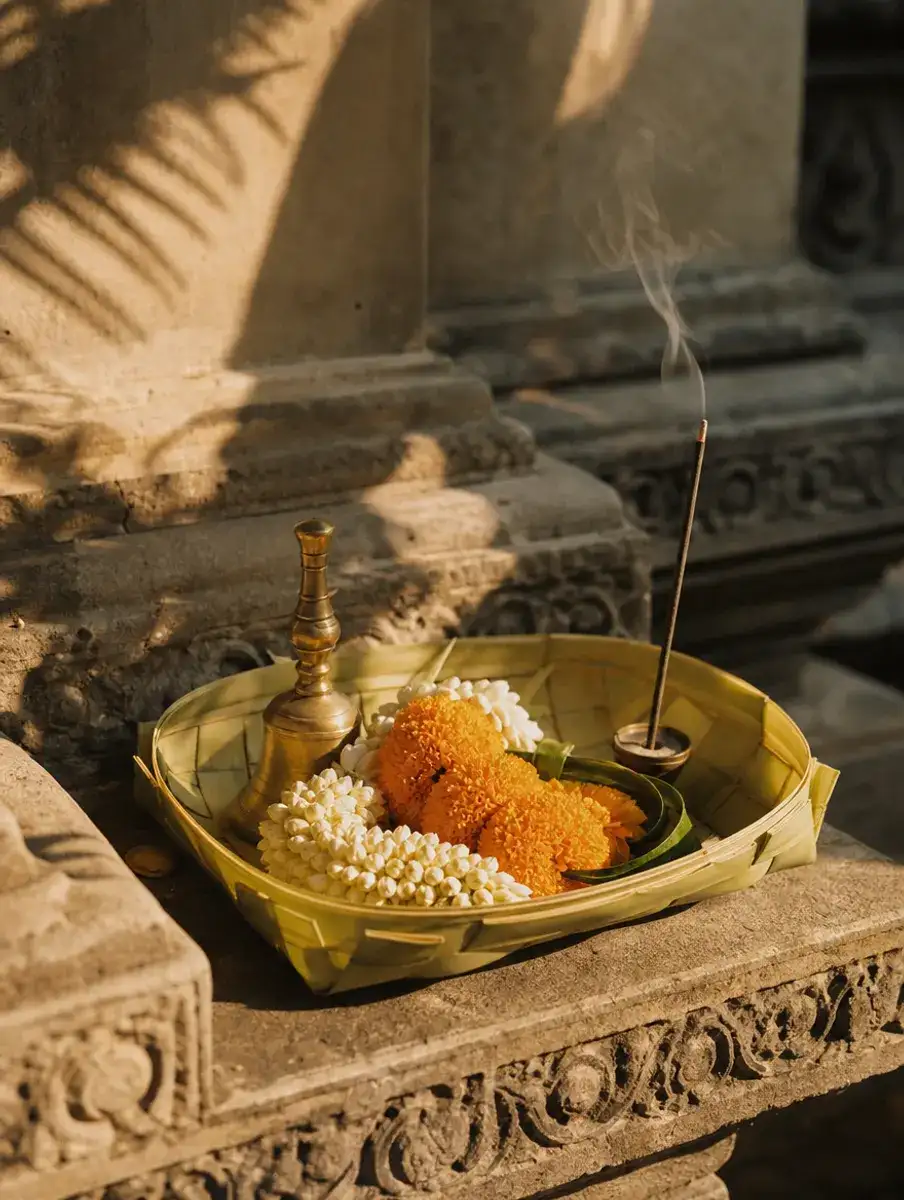
Bhakti yoga is the yoga of devotion, a path that turns love, gratitude and attention toward the divine or toward something held dearer than oneself. It is described in the Bhagavad Gita and practised through prayer, chanting, song and offering rather than through physical postures.
The word
Bhakti comes from the Sanskrit root bhaj, which carries the sense of sharing in, belonging to, or worshipping. Bhakti is usually translated as devotion, though “loving participation” is closer to the feeling of the word. Yoga here means a path or a discipline.
Bhakti yoga, then, is devotion practised as a way of life. It asks for attention rather than flexibility, so it can sit quietly inside a slow Yin yoga practice.
Origin and texts
The best known early statement of bhakti is the Bhagavad Gita, the dialogue between the prince Arjuna and Krishna, his charioteer, set in the epic Mahabharata.
The Gita describes several paths: action, knowledge, meditation and devotion. Its twelfth chapter, often titled Bhakti Yoga, speaks of devotion as a path open to anyone. In paraphrase, it says that whoever offers even a leaf, a flower, a little fruit or water with love has made a true offering.
Over the following centuries bhakti grew into a wide movement across India. Poet-saints wrote devotional songs in the everyday languages of their regions rather than in Sanskrit, and the practice spread among people of every background.
Later texts, such as the Narada Bhakti Sutras, set out the qualities of devotion in short aphorisms.
In the late nineteenth century, the teacher Swami Vivekananda presented bhakti as one of four main paths of yoga, alongside karma yoga, the yoga of action, jnana yoga, the yoga of knowledge and raja yoga. That four-part framing is the one most yoga students meet today.
What bhakti practice looks like
Traditional bhakti practice is simple and often communal:
- Singing and chanting, including kirtan and bhajan (devotional songs).
- Japa, repeating a name or a short phrase, often counted on a string of 108 beads, for reasons explained in the meaning of 108.
- Prayer and small offerings: a flower, a light, a moment of attention.
- Listening to and retelling stories of the divine.
None of these require flexibility or strength. What they ask for is attention and sincerity.
What are the nine forms of devotion?
The Bhagavata Purana, a Vaishnava text usually dated to the later first millennium CE, gives a list of nine ways of practising devotion, spoken by the boy devotee Prahlada. Teachers often use it as a map of bhakti practice.
| Sanskrit | Plain meaning | What it can look like |
|---|---|---|
| Shravana | Listening | Hearing stories, scripture or devotional songs |
| Kirtana | Singing | Kirtan, bhajan, chanting together |
| Smarana | Remembering | Keeping the divine in mind through the day |
| Pada-sevana | Serving | Service, close to karma yoga |
| Archana | Worship | Puja with flowers, light and food |
| Vandana | Bowing | Prostration or a simple bow |
| Dasya | Being a servant | Offering your will and work |
| Sakhya | Friendship | Relating to the divine as a close friend |
| Atma-nivedana | Self-offering | Giving the whole self |
Who were the poet-saints?
From around the sixth century CE, Tamil poet-saints called the Alvars, devoted to Vishnu, and the Nayanars, devoted to Shiva, sang hymns in Tamil that are still recited in South Indian temples. Over the following centuries the movement spread north. Among its best known voices are Mirabai, a Rajput princess who sang of Krishna; Kabir, a weaver in Varanasi whose verses are honoured by Hindus, Muslims and Sikhs; Tulsidas, who retold the Ramayana in Awadhi; and Chaitanya in Bengal, who led ecstatic group chanting. Their songs are why bhakti is so closely tied to music.
A five-minute devotional practice at home
- Sit somewhere quiet and light a candle or place a flower in front of you, if you like.
- Chant Om, or a name or phrase that matters to you, slowly for one or two minutes.
- Bring to mind someone or something you are grateful for, and stay with that feeling for a few breaths.
- Offer the day ahead, or the practice that follows, to that person or to whatever you hold dear.
- Sit quietly for a minute before you move on.
How it shows up in a modern practice
In most studios, bhakti arrives quietly. A class may open or close with a chanted Om, or a short Sanskrit verse. Some teachers invite students to set an intention at the start, or to dedicate the practice to someone they care about.
Kirtan evenings are popular in many cities, and people often come for the music before they know anything about its roots.
For people who do not share the religious background, the useful thread is gratitude and devotion in a broad sense: offering care and full attention to what you are doing, and to whom it is for. Many of the chants are mantras, set sounds repeated with attention, and the Sanskrit yoga glossary lists more of the terms you may hear.
Bhakti yoga in a class
A small class or one-to-one session leaves room to include this side of yoga, or to leave it out entirely. If a student is curious, the class can open with a single chanted Om, end with a quiet moment of thanks, or include a short explanation of a word that comes up.
Nothing is required, and no belief is assumed. The practice stays yours.
A slow, quiet style like Yin gives the most space for these small moments. If you are unsure which style suits you, the style quiz is a simple place to start.
Browse the yoga philosophy library.
Sources: Mayo Clinic, Fitness program: 5 steps to get started; NCCIH (US National Institutes of Health), Yoga: Effectiveness and Safety. Last reviewed 2 October 2026.
Questions
What is an example of bhakti yoga?
Kirtan is the most familiar one: a group sings short Sanskrit names or phrases back and forth with a leader, often with a harmonium and drums. Daily prayer, making a small offering, and repeating a name quietly on a string of beads are other traditional forms.
Do you have to be Hindu to practise bhakti yoga?
Bhakti grew up inside Hindu devotional life, and for many people it is inseparable from their faith. Outside India it is often met through kirtan or chanting, where people of many backgrounds take part. How you relate to it is your own choice, and it is worth approaching with respect for where it comes from.
What is the difference between bhakti yoga and karma yoga?
Bhakti yoga centres on devotion and love. Karma yoga centres on action: doing your work well without clinging to the reward. The Bhagavad Gita presents them side by side, and many readers see them as closely linked, since action can itself be offered as devotion.
What are the benefits of practising bhakti yoga?
Bhakti asks for attention and sincerity rather than flexibility or strength, so anyone can take part. Many people find that chanting, kirtan or a small daily offering gives the day a quieter, more grateful tone and a sense of connection with others. It also sits easily beside a physical practice, opening or closing it.
Your yoga calendar
We track every yoga event, workshop and pop-up class so you don't have to.
Updated