Philosophy
The Gayatri mantra
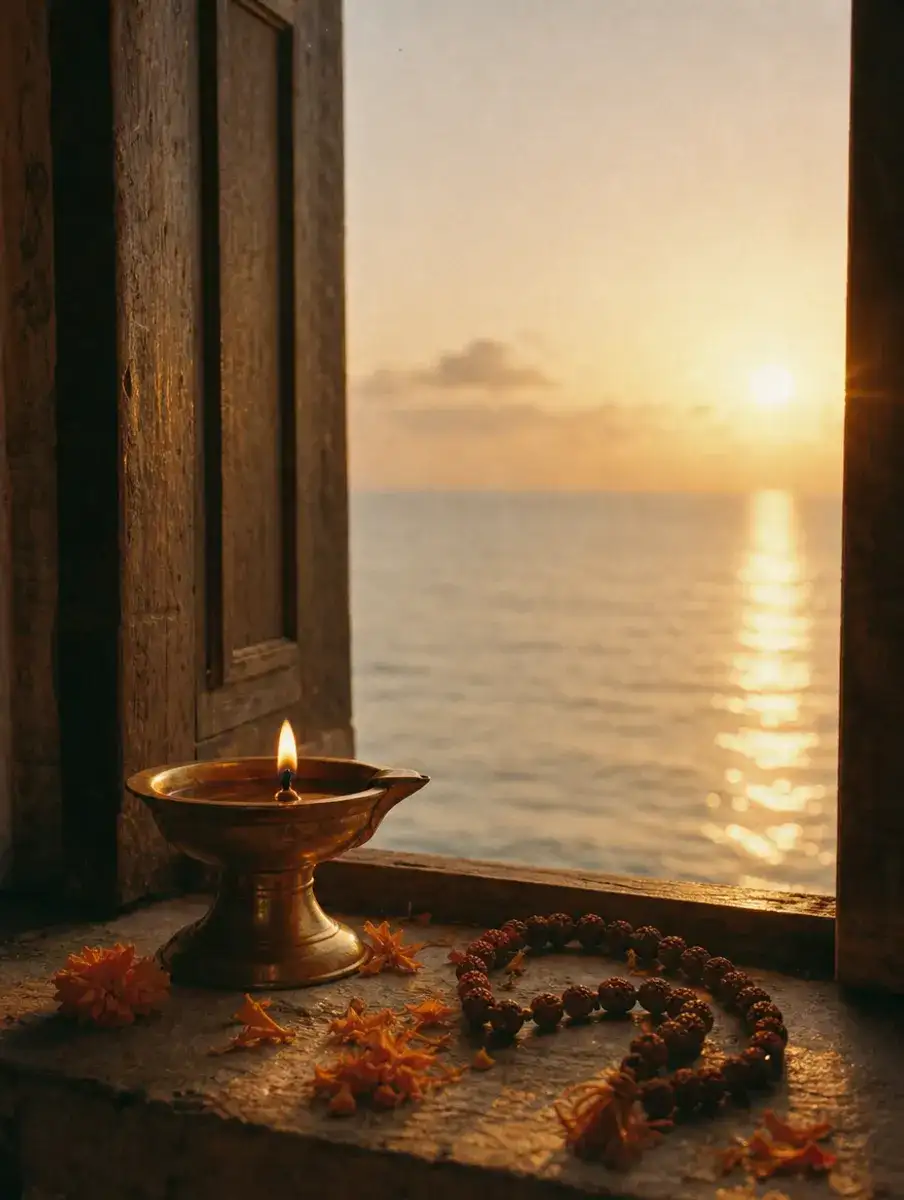
The Gayatri mantra is a verse from the Rig Veda (3.62.10), addressed to Savitr, the sun as the power that wakes and moves all things. In plain English it says: we meditate on the radiant light of the divine sun; may it inspire our minds. It is one of the most widely recited mantras in Hindu practice.
The Gayatri mantra is a single verse from the Rig Veda, the oldest of the Hindu scriptures. It is a prayer to Savitr, the sun understood as the power that rouses and moves the world, asking that this light stir and guide the mind.
It is recited every day by many Hindus, often at sunrise and sunset, and it is one of the best-known mantras in the world.
What are the words of the Gayatri mantra?
Here is the verse as it is usually chanted, in a simple transliteration:
om bhur bhuvah svah tat savitur varenyam bhargo devasya dhimahi dhiyo yo nah prachodayat
The Sanskrit text is many centuries old and is in the public domain. The first line is an opening added in later recitation. The other three lines are the verse from the Rig Veda.
What does the Gayatri mantra mean?
A plain translation reads: “Om. Earth, sky, heaven. We meditate on that excellent radiance of the divine Savitr. May it inspire our minds.”
Word by word, it breaks down like this:
| Sanskrit | Plain meaning |
|---|---|
| om | the opening syllable |
| bhur, bhuvah, svah | earth, the space between, the heavens |
| tat | that |
| savitur | of Savitr, the sun as the one who wakes and moves |
| varenyam | excellent, worth choosing |
| bhargo | radiance, brilliance |
| devasya | of the god, of the divine |
| dhimahi | we meditate on, we hold in mind |
| dhiyo | thoughts, minds, understanding |
| yo | who, which |
| nah | our |
| prachodayat | may inspire, may urge on |
Translators make different choices. Ralph Griffith’s 1896 translation ends “So may he stimulate our prayers”, reading dhiyah as prayers rather than thoughts. Both readings are fair. The word covers thought, insight and the inspired speech of a prayer.
Where does it come from?
The verse is Rig Veda 3.62.10. The Rig Veda is a collection of hymns composed in an early form of Sanskrit, usually dated to roughly the second half of the second millennium BCE. Tradition credits this verse to the seer Vishvamitra.
The opening line has its own history. Om, the syllable that begins most chants, and the three words bhur, bhuvah and svah were joined to the verse in later Vedic ritual. Together they name the three worlds before the verse addresses the light that moves through them.
The mantra also carries the name of its metre. Gayatri is a metre of three lines of eight syllables, and the Bhagavad Gita has Krishna say that among metres he is the gayatri. Later tradition went further and honoured Gayatri as a deity, the mantra itself in personal form.
How is the Gayatri mantra used today?
Traditionally the mantra was taught to a boy at upanayana, a coming-of-age rite, and repeated at the morning and evening prayers called sandhya. Many Hindus still recite it daily, often 108 times on a mala, a string of beads.
In the nineteenth and twentieth centuries, reform movements and many teachers encouraged everyone to learn it, regardless of caste or gender. It is now sung at temples, at home, in kirtan and on countless recordings.
In a yoga class you are most likely to hear it at the start or the end, chanted three times, or as part of a longer chant. You are welcome to listen rather than join in. If you chant, say it slowly and clearly. The repetition and attention matter more than speed, much as a repeated sound gives the mind one place to rest in a simple seated meditation.
Browse the yoga philosophy library.
Sources: Mayo Clinic, Fitness program: 5 steps to get started; NCCIH (US National Institutes of Health), Yoga: Effectiveness and Safety. Last reviewed 2 October 2026.
Questions
Why is it called the Gayatri mantra?
Gayatri is the name of a Vedic metre, three lines of eight syllables each, and the verse is composed in it. Over time the most famous verse in that metre took the metre's name. It is also called the Savitri mantra, after Savitr, the deity it addresses.
Who wrote the Gayatri mantra?
Tradition credits the verse to the seer Vishvamitra, and it sits in the third book of the Rig Veda, which is associated with his family. Vedic hymns were composed and passed down by voice for centuries before anyone wrote them down.
What does om bhur bhuvah svah mean?
Om is the opening syllable. Bhur, bhuvah and svah are three words for the earth, the space between earth and sky, and the heavens. They are called the vyahritis and come from later Vedic ritual. They are chanted before the verse but are not part of the original Rig Veda line.
Can anyone chant the Gayatri mantra?
Traditionally it was taught to boys of certain castes at a coming-of-age rite called upanayana. Many modern Hindu teachers and reform movements have opened it to everyone. If you join in at a class or a temple, listening first and chanting with care is a good way to show respect.
What happens when you chant the Gayatri mantra?
The verse is a prayer asking the light of the divine sun to inspire the mind, and many Hindus recite it daily at sunrise and sunset, often 108 times on a mala. Many people find that slow, careful repetition gives the mind one place to rest, much as in a simple seated meditation. Attention matters more than speed.
Is there more than one Gayatri mantra?
The verse usually meant is Rig Veda 3.62.10, addressed to Savitr, the sun. The opening line, om bhur bhuvah svah, was added in later Vedic ritual and is chanted with it. Because gayatri is also the name of a metre, other verses composed in it are sometimes called gayatris too, but Rig Veda 3.62.10 is the original.
Keep reading
Your yoga calendar
We track every yoga event, workshop and pop-up class so you don't have to.
Updated