Philosophy · reviewed by a teacher
What is yoga?
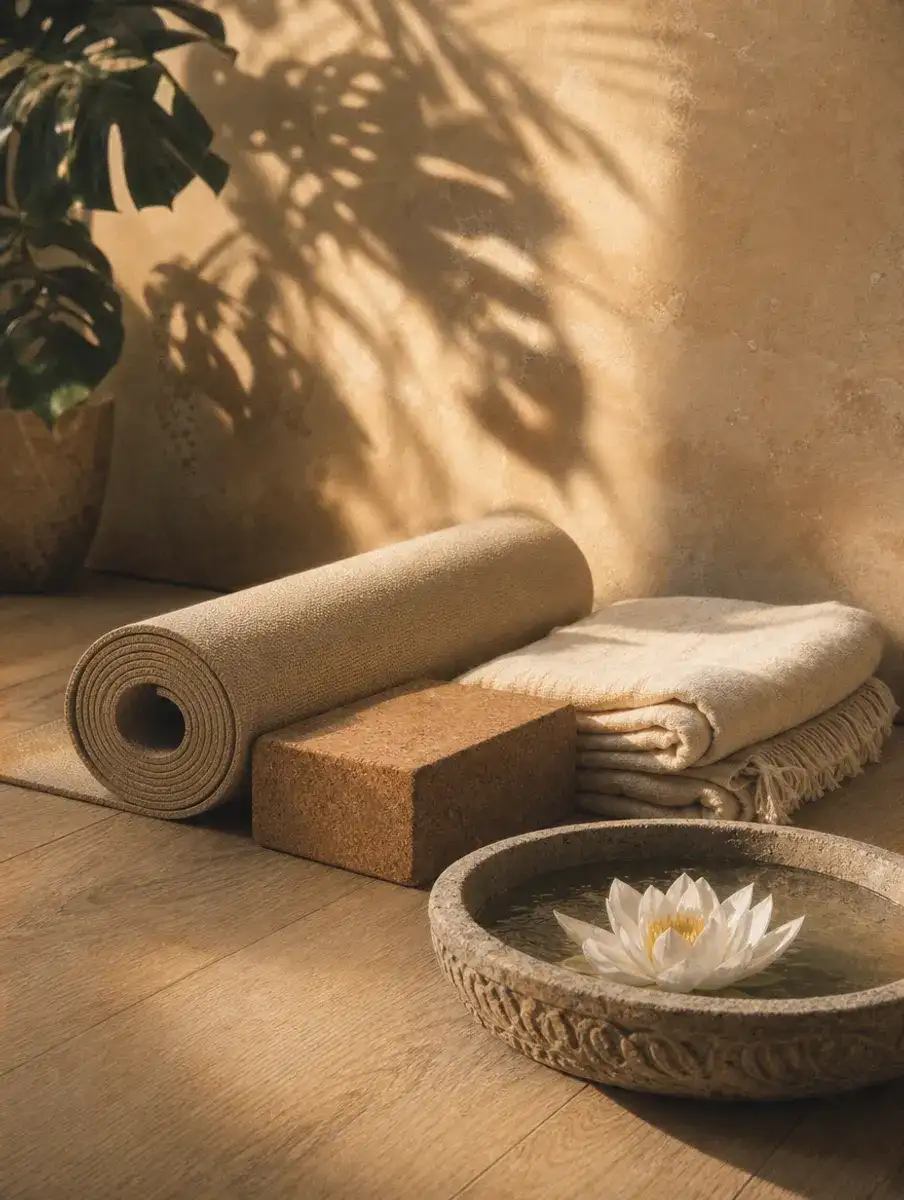
Yoga is a practice from India that brings together movement, breath and attention, and the word comes from the Sanskrit root yuj, meaning to yoke or to join. In the classical texts yoga is above all a discipline of the mind, while most modern classes reach it through postures and breathing.
Teacher's note from Joahnna Lee
“That is how I teach: the lesson starts from who you are that day.”
What the word means
Yoga is a Sanskrit word built on the root yuj, which means to yoke or to harness. In the oldest Sanskrit hymns it is used quite literally, for yoking horses to a chariot. Over centuries it took on a second meaning: harnessing the senses and the mind the way a driver holds the reins.
That second meaning is the one the yoga texts care about, and it is still what a first yoga lesson for beginners is really about: learning to steady your attention, not learning to touch your toes. “Union” is the translation you will hear most often in studios, and it is a fair reading, but the older sense of disciplined effort sits underneath it.
Where the idea comes from
The first clear descriptions of yoga as a practice appear in the Upanishads, philosophical texts from the later centuries BCE. The Katha Upanishad describes yoga as the steady holding of the senses, and the Shvetashvatara Upanishad talks about sitting upright and regulating the breath. The Bhagavad Gita then widened the word to cover action, devotion and knowledge as paths of their own, all set against Arjuna’s question about dharma, his duty.
The best known definition comes from Patanjali’s Yoga Sutras, a short collection of aphorisms usually dated to the early centuries CE. Its second sutra says, in Sanskrit, yogas chitta vritti nirodhah: yoga is the stilling of the movements of the mind. Posture gets only a few lines in the whole text, where the seat for meditation is described as steady and comfortable.
The long sequences of poses came later. Medieval hatha texts, such as the Hatha Yoga Pradipika from the fifteenth century, set out postures, breath control and seals as ways of preparing the body for meditation. You can follow the whole story in a short history of yoga. Yoga is often paired today with Ayurveda, the traditional medical system of India, but the two have separate texts and histories.
How it shows up in a modern practice
Most yoga taught today, in studios, gyms and homes, is posture-based. That is a twentieth century development, built on the hatha texts and shaped by teachers in India and abroad. It still carries the classical idea inside it. A good class asks you to notice your breath, to move with it, and to stay with a sensation rather than rush past it.
Different styles lean on different parts of that. Vinyasa links movement to breath in a steady flow. Yin holds quiet floor poses for several minutes. Restorative uses props so the body can rest completely. The types of yoga page sets them side by side, and the Sanskrit yoga glossary explains the words you will hear along the way.
What are the main parts of a yoga practice?
Patanjali lists eight limbs, and a modern class touches some of them more than others. This is roughly how they show up today.
| Part | Sanskrit | In a typical class |
|---|---|---|
| How you treat others and yourself | Yamas and niyamas | Rarely taught directly, though a teacher may theme a class around one |
| Posture | Asana | Most of the class |
| Breath work | Pranayama | A few minutes at the start or end, and ujjayi during a flow |
| Turning the senses inward | Pratyahara | Closing the eyes, the quiet of final rest |
| Concentration and meditation | Dharana, dhyana | A short sit, a body scan, or gazing at one point in a balance |
| Absorption | Samadhi | The goal of the texts, not something a class promises |
How do you start yoga in the Philippines?
You do not need flexibility, special clothes or a studio membership to begin. A simple first month might look like this:
- Try one beginner class. Look for “beginner”, “basics” or “hatha” on the timetable, and tell the teacher you are new.
- Practise ten minutes at home two or three times a week, in whatever space you have. A strip of floor beside the bed is enough.
- Choose a grippy mat. In humid weather a smooth mat gets slippery fast. The guide to the best yoga mats in the Philippines compares how different materials handle sweat.
- Pick your time around the heat and traffic. Early morning before the commute, or an evening class near the office instead of near home, is often easier to keep up.
- Try a second style. After a few weeks, a slower or faster class shows you which pace suits you.
When you are ready to look for a class, the studio directory lists places to practise across the country.
Seeing it for yourself
A slow class, a one-to-one lesson or a quiet home practice is a good place to see what yoga is, rather than just what a pose looks like. Without a room to keep up with, there is time to slow down, to notice what the breath is doing, and to adjust a posture to your body instead of forcing your body into a posture.
A good practice starts from who you are that day. If you are ready to try one, your first yoga class explains what to expect.
What does asana mean?
Asana means seat, from the Sanskrit root as, to sit. In the Yoga Sutras it is the third of the eight limbs of yoga, and the text gives it only a brief definition: sthira sukham asanam, a posture that is steady and comfortable. For Patanjali, the point was a seat you could hold for meditation without strain.
The meaning widened in the hatha texts. The Hatha Yoga Pradipika describes fifteen postures, and the Gheranda Samhita describes thirty two, many of them named after animals, sages and everyday objects. Modern yoga added many more, which is why asana now means any yoga pose, and why so many pose names end in it: Tadasana, Balasana, Savasana.
So the yoga meaning and the asana meaning point the same way. Yoga is the steadying of the mind, and asana began as the steady seat that made it possible. When a class talks about finding ease in a hard pose, it is drawing on that early definition.
Browse every philosophy guide.
Sources: Mayo Clinic, Fitness program: 5 steps to get started; NCCIH (US National Institutes of Health), Yoga: Effectiveness and Safety. Last reviewed 2 October 2026.
Questions
What is the literal meaning of yoga?
Yoga comes from the Sanskrit root yuj, to yoke, as you would yoke two oxen to a cart. From there it came to mean joining, harnessing or disciplined effort. The popular reading "union" is one interpretation of that root, not the only one.
Is yoga a religion?
Yoga grew up inside Indian religious and philosophical thought, and Hindu, Buddhist and Jain teachers all wrote about it. Some people practise it as part of their faith. A yoga class does not ask you to hold any belief: you can come to it as movement, breath and attention.
What is yoga in simple words?
Paying close attention to your body and breath while you move and while you are still, so that the mind settles. The postures are the part most people see, but the attention is the point.
Is yoga just exercise?
Not in its original sense. The early texts treat the postures as one part of a wider practice that includes ethics, breath, concentration and meditation. In a modern class the physical side is often what brings people in, and the attention you bring to it is where the rest begins.
What are the benefits of practising yoga?
Yoga brings movement, breath and attention together. Postures stretch and build strength in the legs, hips, back and shoulders, balances ask for steadiness, and slow breathing and rest give the mind a quieter pace. Many people find they feel more aware of their body and calmer after class. The classical texts saw this as preparation for a settled mind.
What is the main purpose of yoga in the classical texts?
In the classical texts the purpose of yoga is a steady, quiet mind. Patanjali's Yoga Sutras define yoga as the stilling of the movements of the mind, and postures, breath control and concentration are steps toward that. Modern classes lean on the physical side, but noticing the breath and staying with a sensation still points to the same aim.
Your yoga calendar
We track every yoga event, workshop and pop-up class so you don't have to.
Updated