Philosophy
The root chakra, Muladhara
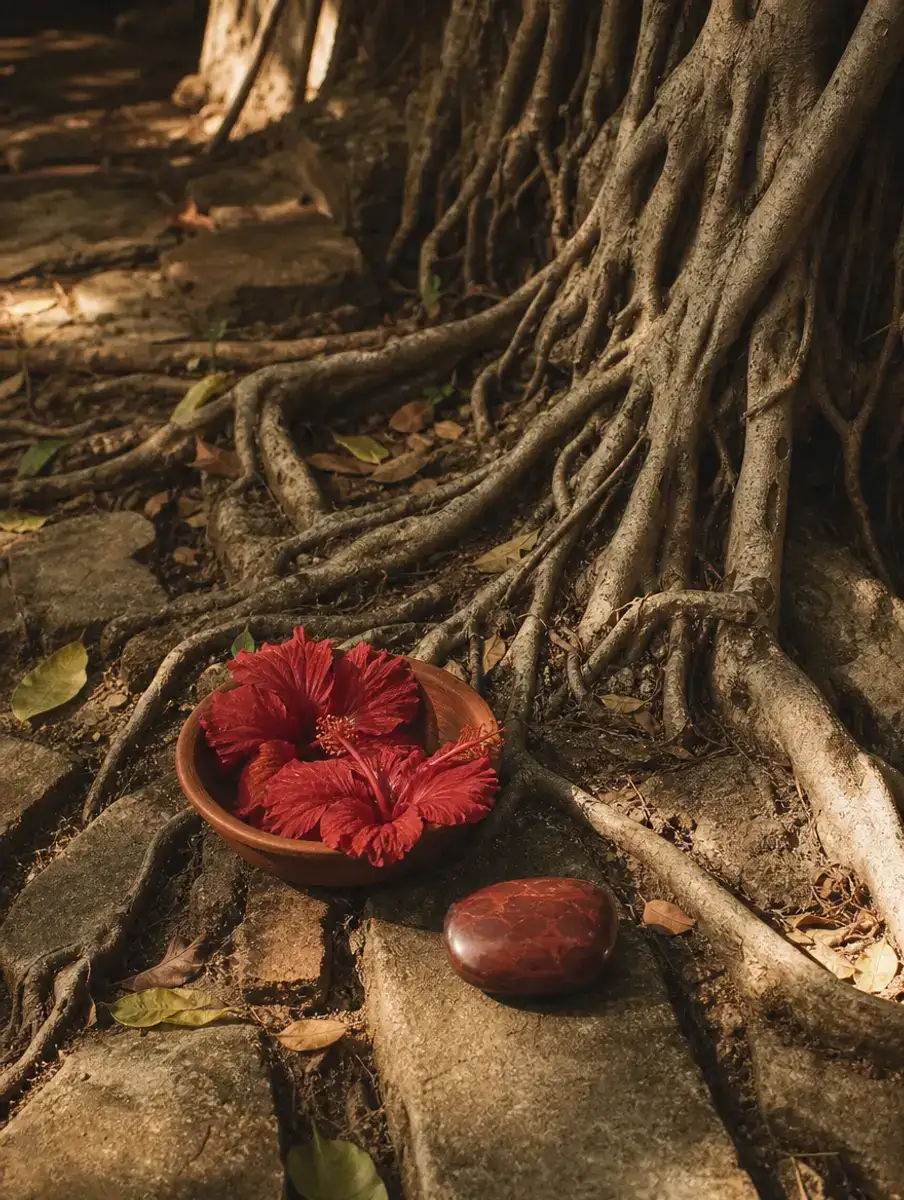
The root chakra is the English name for Muladhara, the first of the seven chakras in the modern system. Tantric texts place it at the base of the spine and picture it as a lotus of four petals around a yellow square of earth, marked with the syllable lam. The English name and the rainbow colour scheme are modern.
The root chakra is the modern English name for Muladhara, the first and lowest of the seven chakras in the system most studios use today. The texts place it at the base of the spine, between the anus and the genitals, and describe it as the seat of the element earth.
This page presents Muladhara as tradition and symbolism, set out in the texts that describe it. It makes no claim that chakras exist physically or that any practice acts on them. The wider history is on the page about the seven chakras.
How do the texts describe Muladhara?
The fullest classical description comes from the Sat-cakra-nirupana, a Hindu tantric text by Purnananda usually dated to 1577, translated into English by Sir John Woodroffe as The Serpent Power in 1919. In its account, Muladhara is:
- A lotus of four petals, deep red, each petal carrying one Sanskrit letter: vam, sham, shham and sam.
- The seat of earth, shown as a yellow square.
- Marked by the seed syllable lam, the bija of earth, seated on the elephant Airavata.
- Home to the deities Brahma and the shakti Dakini.
Inside the square the text places a downward-pointing triangle, and within it a linga around which kundalini lies coiled three and a half times, asleep. In the texts’ language, kundalini practice wakes this coiled power and leads it upward through the centres, as described on the page about Kundalini yoga.
Is the root chakra found in Buddhist traditions?
Not in the same form. Buddhist tantric systems describe their own maps of channels and centres, and many count four main centres, at the navel, heart, throat and crown, with some adding others. Muladhara as a four-petalled earth lotus belongs to the Hindu tantric texts, and later hatha yoga took it up from them.
What did modern writers add?
A good deal. The English name root chakra is a modern translation. The rainbow colour scheme, with red at the base, is a twentieth-century Western addition, as is the pairing of each chakra with a gland. The popular idea that Muladhara governs safety, survival or feeling grounded, and that it can be blocked or balanced, comes from modern writers rather than the Sanskrit sources.
Knowing that helps you read chakra charts and studio posters for what they are: a recent layer on an older symbolic system.
How does the root chakra show up in a modern class?
Usually as a place to rest attention. A teacher may ask you to notice the base of the spine in a seated pose, or the contact of the feet and sit bones with the floor. Hatha texts also describe mula bandha, the root lock, a light lift of the pelvic floor, which shares the word mula but is a separate practice.
Above Muladhara the texts place the six-petalled sacral chakra, Svadhisthana, and higher still the heart chakra, Anahata. The sixth centre, between the eyebrows, is described on the page about the third eye.
Browse every philosophy guide.
Sources: Mayo Clinic, Fitness program: 5 steps to get started; NCCIH (US National Institutes of Health), Yoga: Effectiveness and Safety. Last reviewed 2 October 2026.
Questions
What does Muladhara mean?
Muladhara joins mula, root, and adhara, support or base. It is the root support, the lowest of the centres on which the others rest in the texts' picture of the subtle body.
What is the bija mantra of the root chakra?
In the Sat-cakra-nirupana, the seed syllable of Muladhara is lam, the syllable of the earth element. The four petals carry four more Sanskrit letters, vam, sham, shham and sam.
What colour is the root chakra?
Modern charts make it red, the first step of a rainbow sequence. The sixteenth-century description gives its petals a deep red, its earth square yellow, and its other figures their own colours, so the single-colour scheme is a later simplification.
Which part of the body is the root chakra linked to?
The tantric texts place Muladhara at the base of the spine, between the anus and the genitals, and tie it to the element earth. Modern charts add a gland for each chakra, but that pairing is a twentieth-century addition. In class it usually means attention on the sit bones, feet and pelvic floor.
Can emotions block or balance the root chakra?
That idea comes from modern writers, not the Sanskrit sources. The texts describe Muladhara as a symbol: a four-petalled lotus with an earth square and the syllable lam. Links to safety, survival, fear or feeling grounded, and talk of blocking or balancing it, are recent additions, so read such claims as modern interpretation.
How do you find the root chakra in a yoga class?
Most teachers ask you to rest your attention at the base of the spine in a seated pose, or to notice the contact of the feet and sit bones with the floor. Some also mention mula bandha, a light lift of the pelvic floor, though that is a separate practice that only shares the word mula.
Keep reading
Your yoga calendar
We track every yoga event, workshop and pop-up class so you don't have to.
Updated