Philosophy · reviewed by a teacher
Karma: action, intention and result
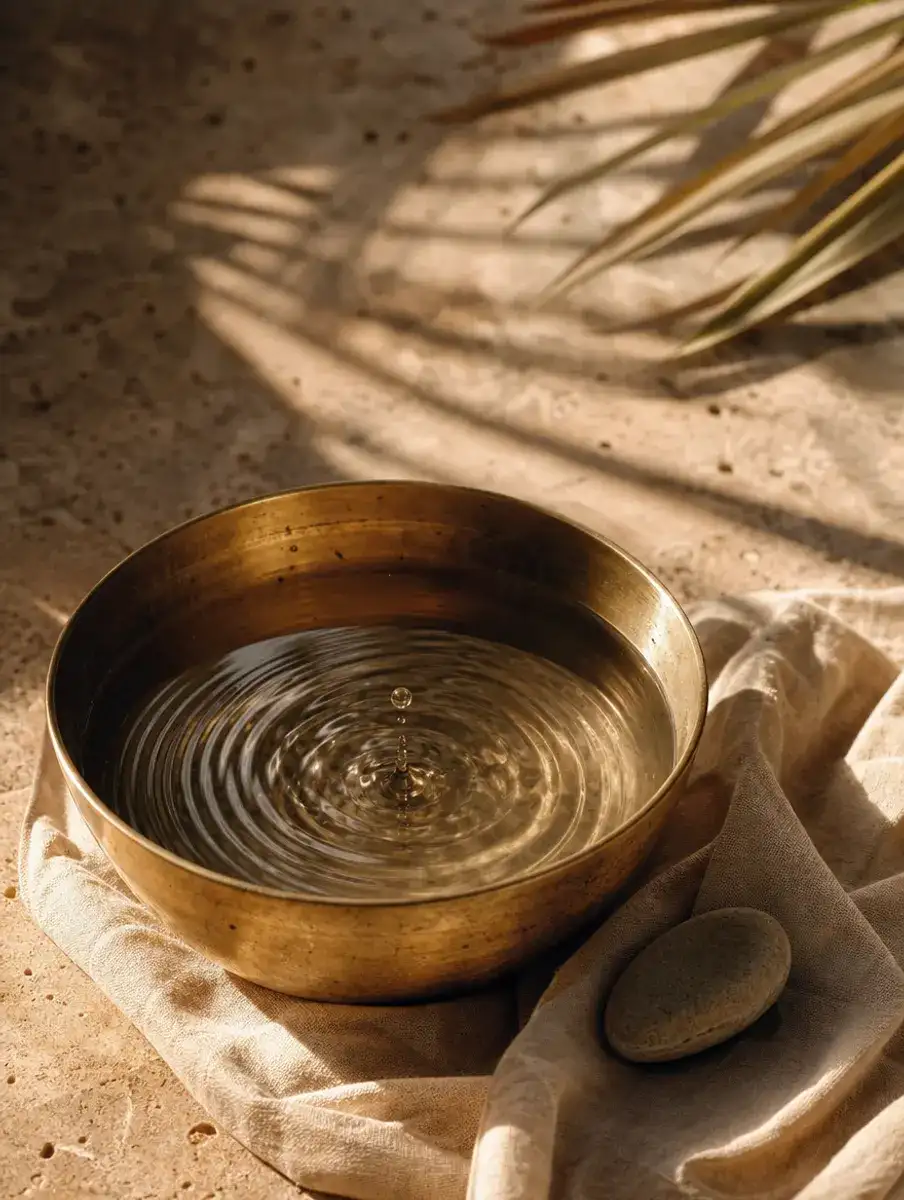
Karma is a Sanskrit word meaning action, from the root kri, to do. By extension it is the idea that every intentional action leaves consequences that shape what follows. Hindu, Buddhist and Jain teaching all use it, each in its own way, and none of them treats karma simply as fate or punishment.
What is karma?
Karma comes from the Sanskrit root kri, to do or to make. At its plainest it means an action or a deed.
Over centuries it came to mean something larger as well: the way intentional actions leave traces that ripen into later experience.
This page is about that idea. The practice built on it, acting well without clinging to results, has its own page on karma yoga, the path of action.
The word now lives in everyday English, usually as a kind of cosmic payback. That is a long way from what the texts say. A calmer reading is more useful, especially in the weeks when work feels heavy and yoga for stress and burnout is what you need.
Where the idea comes from
In the oldest Vedic texts, karma mostly means ritual action: the sacrifice performed correctly brings its proper result.
The Upanishads widen the idea to every action. One well-known passage in the Brihadaranyaka Upanishad says, in paraphrase, that as a person acts, so that person becomes: good action makes one good, and harmful action makes one harmful.
Karma becomes tied to rebirth, the cycle called samsara, and to the hope of release from it.
Buddhism, arising in the same region of India, kept the word (kamma in Pali) and put intention at its centre. In a passage often quoted from the Pali canon, the Buddha says that intention itself is what he calls karma. What counts is the mind behind the act, not ritual correctness.
Jain teaching is the most literal of the three. It describes karma as a fine kind of matter that clings to the soul through action, especially harmful action, which is one reason Jain ethics place such weight on non-harming.
What karma is not
Karma is not a judge handing out punishment, and it is not a fixed fate. In all three traditions the present matters, because what you do now is already shaping what comes next.
Many teachers also warn against using karma to explain someone else’s suffering. The idea is meant to be applied to your own conduct, not to other people’s misfortune.
The Bhagavad Gita adds a turn that matters for yoga. Action cannot be avoided, it says, so the question is how to act. Its answer, set out over the early chapters of the Gita’s dialogue between Arjuna and Krishna, is to do what is yours to do according to your dharma, your duty and place, and to let go of attachment to the result.
How do the traditions compare?
| Hindu | Buddhist | Jain | |
|---|---|---|---|
| What karma is | Action and its traces | Intention expressed in action | Fine matter that binds to the soul |
| What matters most | Right action, offered without clinging | The intention behind the act | Avoiding harm in every act |
| The goal | Moksha, release from rebirth | Nirvana, the end of craving | Freeing the soul from karmic matter |
How does Sikh teaching understand karma?
Sikhism keeps the idea that actions shape what follows, and that karma bears on rebirth, but it gives the last word to grace, called nadar or kirpa. The Guru Granth Sahib teaches that good deeds matter, yet release comes through the grace of the one creator and a life of remembrance, honest work and sharing. It is a reminder that even among the traditions that use the word, karma is not always the whole story.
A short evening reflection
Many teachers suggest a simple way to bring the idea into daily life without any belief about rebirth. At the end of the day, sitting quietly for two or three minutes:
- Recall one action from the day that you are glad of, and notice what intention was behind it.
- Recall one action you would do differently, without blaming yourself.
- Choose one small intention for tomorrow, such as practising the gentler version of a pose or answering a message with patience.
It is the Gita’s advice in miniature: attend to the action, and loosen your grip on the result.
How karma is used in everyday conversation
In casual English, and in everyday Filipino conversation too, karma is often said with a smile when someone gets quick payback for bad behaviour. That use is harmless, but it narrows the idea to punishment and to other people. The older meaning points the other way, towards your own next action.
How the idea shows up in practice
In a yoga class karma rarely gets named, but the idea sits underneath a lot of familiar advice. Practise for the practice, not for the photo. Notice the intention you bring to the mat. Treat your body today in a way you will be glad of tomorrow.
None of that requires a belief in rebirth. It is a simple observation that habits are built one action at a time, and yoga philosophy calls the trace each action leaves a samskara, a mental impression.
How it can come up in a class
In a class karma comes up as habit more often than as philosophy. A student who always pushes into the deepest version of a pose is repeating an action, and that repetition has consequences for the joints over months.
Choosing a gentler version today is a small, deliberate act with its own results. Some teachers are happy to talk about the bigger idea briefly, before or after the practice.
Other words on this page are explained in the glossary of Sanskrit terms.
This page is one of the sources behind the flashcards for Sanskrit terms.
Browse the yoga philosophy library.
Sources: Mayo Clinic, Fitness program: 5 steps to get started; NCCIH (US National Institutes of Health), Yoga: Effectiveness and Safety. Last reviewed 2 October 2026.
Questions
Is karma a religion?
No. Karma is an idea shared by several religions, mainly Hinduism, Buddhism, Jainism and Sikhism, rather than a religion of its own. You can practise yoga, or think about how habits shape your days, without holding any religious belief about it.
What is instant karma?
An everyday phrase for a consequence that seems to follow an action straight away. The texts do not use it. They describe karma ripening over time, sometimes quickly and sometimes much later, and they stress intention over any sense of payback.
Is karma the same as fate?
No. Fate suggests that what happens is fixed in advance. In the traditions that teach karma, present actions are always shaping what comes next, so the idea is as much about responsibility now as about the past.
What are the three kinds of karma?
Vedanta teachers often name three: sanchita, the store of past actions not yet ripened; prarabdha, the part that is ripening in this life; and kriyamana or agami, the karma being made by what you do now.
What does good karma mean?
In everyday speech it means a reward for doing good. In Buddhist teaching the stress falls on wholesome and unwholesome intention: actions done with kindness and clarity tend toward wellbeing, and actions done from greed, anger or confusion tend toward suffering.
Does karma carry over from one life to the next?
In Hindu, Buddhist and Jain teaching, yes: karma is closely tied to rebirth, and the results of actions are said to ripen in this life or in later ones. Each tradition explains the mechanism differently. Many modern yoga teachers focus on the part you can see, how intentions and habits shape the life you are living now.
Can you change your karma?
In Hindu, Buddhist and Jain teaching, karma is not a final sentence. Past actions shape your present situation, but what you intend and do now shapes what follows. Each tradition describes ways to change course, such as ethical conduct, study and meditation, which is part of why karma is not the same as fate.
Your yoga calendar
We track every yoga event, workshop and pop-up class so you don't have to.
Updated