Philosophy
The sacral chakra, Svadhisthana
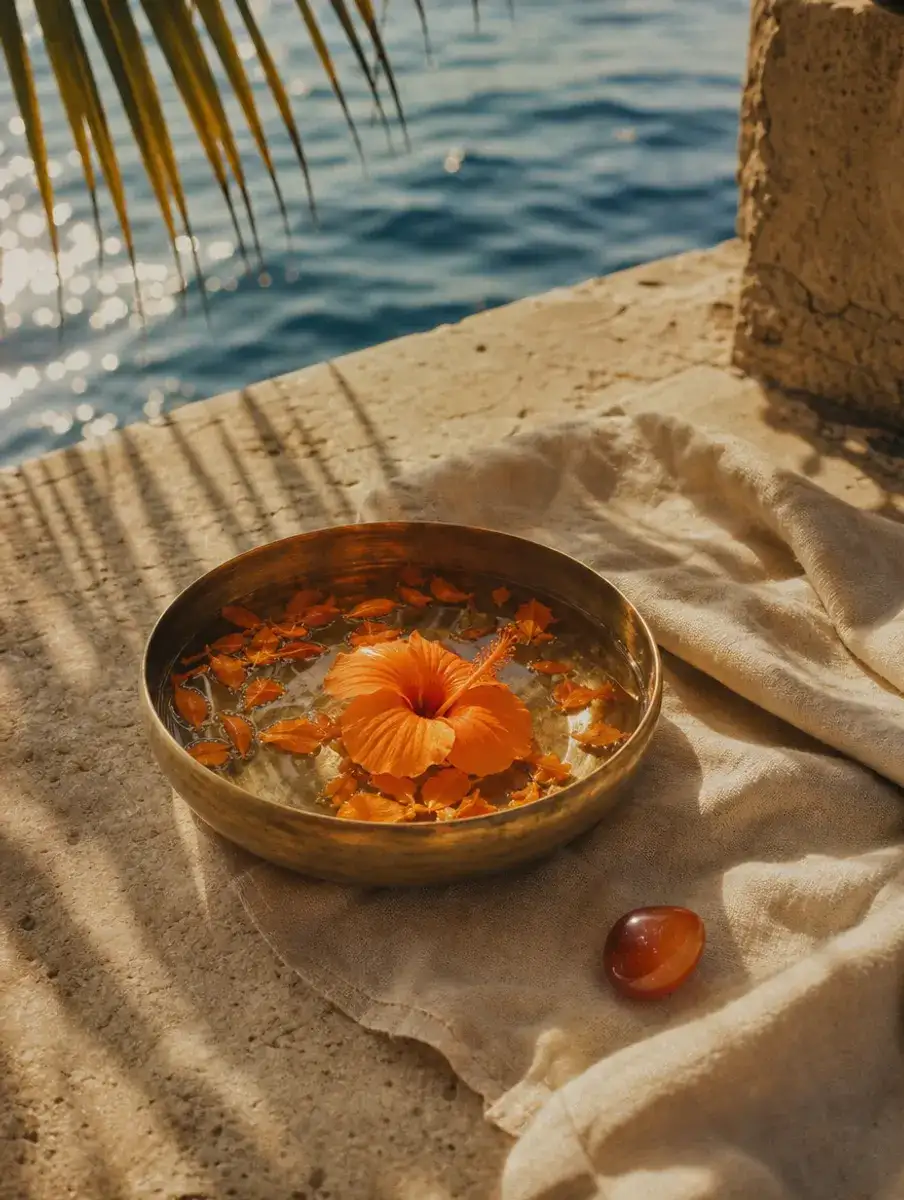
The sacral chakra is the English name for Svadhisthana, the second of the seven chakras in the modern system. Tantric texts place it at the root of the genitals, just above Muladhara, and picture it as a six-petalled lotus holding a white crescent moon, the sign of water, marked with the syllable vam. Its orange colour is modern.
The sacral chakra is the modern English name for Svadhisthana, the second chakra in the seven-centre system familiar from yoga studios. The texts place it at the root of the genitals, just above Muladhara, and connect it with the element water.
This page sets out the chakra as tradition and symbolism. It makes no claim that chakras exist physically or that any practice acts on them. For the history of the whole system, see the page about the seven chakras.
How do the texts describe Svadhisthana?
The standard account is the Sat-cakra-nirupana, a Hindu tantric text by Purnananda dated to 1577 and translated into English by Sir John Woodroffe in The Serpent Power in 1919. It describes Svadhisthana as:
- A lotus of six petals, the colour of vermilion, carrying the letters bam, bham, mam, yam, ram and lam.
- The seat of water, shown as a white crescent moon.
- Marked by the seed syllable vam, the bija of water, seated on a makara.
- Home to the deities Vishnu and the shakti Rakini.
Like every centre in this system it is pictured as a lotus, the flower that runs through Hindu and Buddhist symbolism. In kundalini practice as the texts present it, the coiled power woken in the root chakra, Muladhara, passes through Svadhisthana on its way upward.
Why is Svadhisthana linked with water?
The five lower chakras each carry one of the five elements, in order from the densest upward: earth, water, fire, air and space. Water sits second, just above earth. The white crescent is a traditional sign of water and of the moon, which the tradition also links with coolness and fluids.
Some texts and commentators debate the name, and earlier tantric works do not always count a separate centre here at all. As the main chakras page explains, the number and placing of centres varied between texts before the seven-chakra list became standard.
What did modern writers add?
The English name sacral chakra, the colour orange and the idea that this centre governs creativity, pleasure or emotion are all modern. They come from twentieth-century Western writers who matched the chakras to a rainbow, to glands and to psychology. The Sanskrit sources describe colours, letters, deities and an element, not personality traits or blockages.
How does the sacral chakra show up in a modern class?
If it comes up at all, it is usually as a point of attention in the lower belly and pelvis, perhaps during a seated hip opener or a slow breath into the abdomen. That is a focusing cue, not a claim about what happens in the body.
The centre above it, at the navel, is the solar plexus chakra, Manipura. Higher up, the point between the eyebrows is described on the page about the third eye, ajna.
Browse the yoga philosophy library.
Sources: Mayo Clinic, Fitness program: 5 steps to get started; NCCIH (US National Institutes of Health), Yoga: Effectiveness and Safety. Last reviewed 2 October 2026.
Questions
What does Svadhisthana mean?
It is usually translated as one's own seat or own abode, from sva, self or own, and adhisthana, seat or dwelling place. Some commentators explain it as the dwelling place of the self, others as the seat of the vital force.
Why is it called the sacral chakra?
The name comes from the sacrum, the triangular bone at the base of the spine, which sits near where the texts place this centre. It is a modern English label based on anatomy, not a translation of the Sanskrit name.
What animal goes with the sacral chakra?
In the Sat-cakra-nirupana the seed syllable vam rides on a makara, a sea creature from Indian art often drawn as part crocodile and part fish. The makara is also the vehicle of the river Ganga and of the water deity Varuna.
What does the sacral chakra do?
In the tantric texts, Svadhisthana is not described as doing a job in the body. It is a symbolic centre at the root of the genitals, the seat of water, pictured as a six-petalled lotus marked with the syllable vam. The idea that it governs creativity, pleasure or emotion comes from twentieth-century Western writers.
Can the sacral chakra be blocked?
The Sanskrit sources describe colours, letters, deities and an element, not blockages or personality traits. Talk of a blocked sacral chakra is a modern idea, and this site makes no claim that chakras exist physically or that any practice acts on them. In a class, the centre may simply be a point of attention in the lower belly.
Keep reading
Your yoga calendar
We track every yoga event, workshop and pop-up class so you don't have to.
Updated