Philosophy
The solar plexus chakra, Manipura
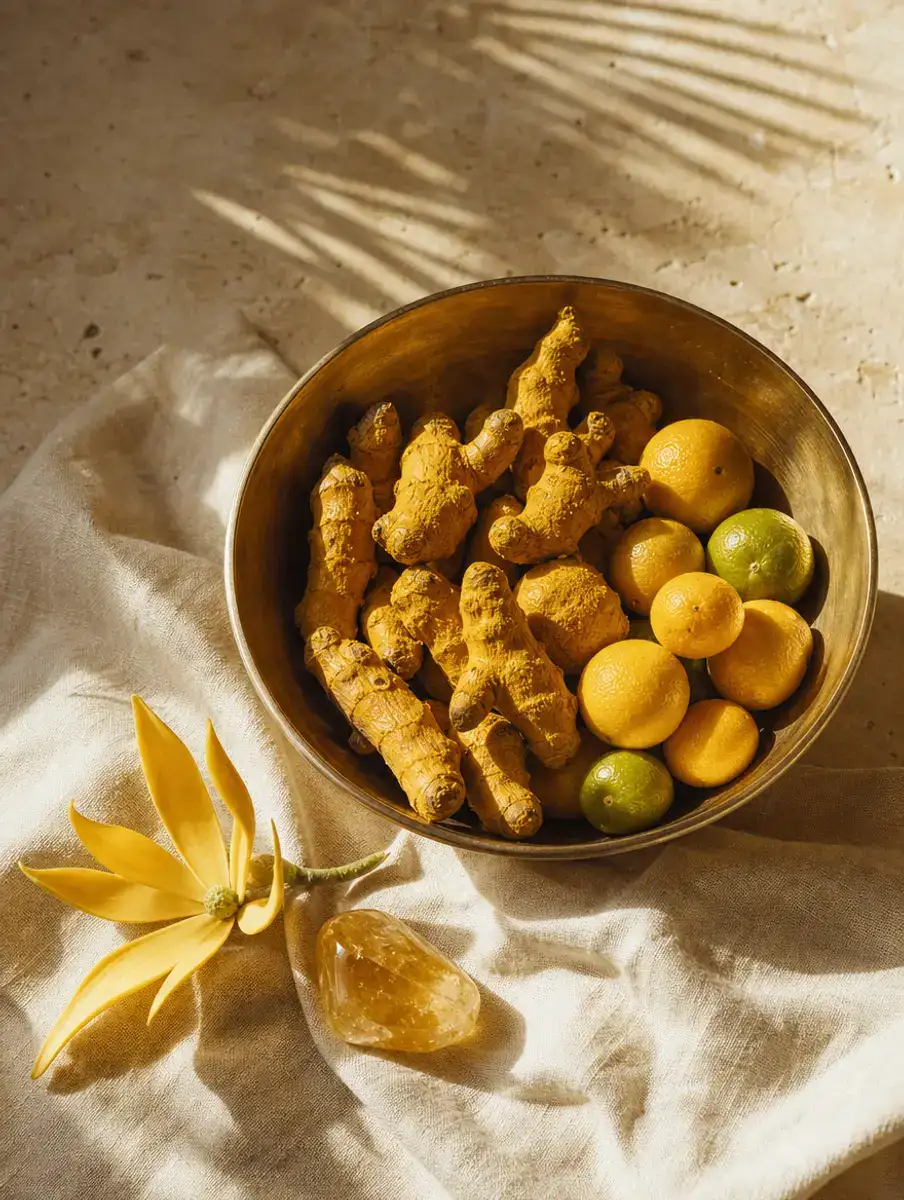
The solar plexus chakra is the English name for Manipura, the third of the seven chakras in the modern system. Tantric texts place it at the navel and picture it as a ten-petalled lotus around a red triangle of fire, marked with the syllable ram. Its name means city of jewels. The yellow colour and English name are modern.
The solar plexus chakra is the modern English name for Manipura, the third of the seven chakras in the system taught in most studios. The texts place it at the navel and link it with the element fire.
This page describes Manipura as tradition and symbolism. It makes no claim that chakras exist physically or that any practice acts on them. The history of the whole system is on the page about the seven chakras.
How do the texts describe Manipura?
The most detailed classical account is in the Sat-cakra-nirupana, a Hindu tantric text by Purnananda dated to 1577, which Sir John Woodroffe translated into English as The Serpent Power in 1919. It describes Manipura as:
- A lotus of ten petals, the dark colour of a heavy rain cloud, carrying the letters from dam to pham.
- The seat of fire, shown as a red triangle pointing down.
- Marked by the seed syllable ram, the bija of fire, seated on a ram.
- Home to the deities Rudra and the shakti Lakini.
It sits above the six-petalled sacral chakra, Svadhisthana, and in the texts’ picture of kundalini rising, it is the third centre the coiled power passes through.
Why is the navel centre so important in the traditions?
The navel has a central place in many Indian traditions, not only in the seven-chakra system. Hatha yoga texts describe a digestive fire, and practices such as uddiyana bandha, drawing the belly in and up on an empty exhale, and nauli, rolling the abdominal muscles, work at this point. They are advanced techniques best learned from an experienced teacher, and the page on pranayama covers how breath practices are approached safely.
Buddhist tantra also gives the navel a key role. In Tibetan practice, the navel centre is where the inner heat of tummo, candali in Sanskrit, is visualised as a small flame. The Buddhist navel centre has its own petal count and names, separate from the Hindu Manipura.
What did modern writers add?
The English name solar plexus chakra, the colour yellow and the idea that this centre governs willpower, confidence or self-esteem are modern additions. They come from twentieth-century Western writers who matched the chakras to a rainbow, to glands and to personality. The Sanskrit description is of a rain-cloud lotus with a fire triangle, and it says nothing about self-esteem.
How does Manipura show up in a modern class?
Most often as a cue to notice the belly: feeling it rise and fall on a slow breath, or the steadiness of the centre of the body in a balance. Some teachers name Manipura when they cue core work. Either way, it is a point of attention, not a claim about energy.
Above Manipura the texts place the heart chakra, Anahata, and higher still the centre between the eyebrows described on the page about the third eye.
Browse every philosophy guide.
Sources: Mayo Clinic, Fitness program: 5 steps to get started; NCCIH (US National Institutes of Health), Yoga: Effectiveness and Safety. Last reviewed 2 October 2026.
Questions
What does Manipura mean?
Manipura joins mani, jewel, and pura, city, so it is usually translated as city of jewels. Some texts use the form manipuraka. Commentators explain the name by the brightness of the fire element said to sit there.
Is the solar plexus chakra at the navel or the stomach?
The Sanskrit texts place Manipura at the navel. The English name borrows the solar plexus, a network of nerves in the upper abdomen, which modern writers chose as a nearby anatomical landmark, so charts sometimes draw it a little higher than the texts do.
What is the element of Manipura?
Fire. In the Sat-cakra-nirupana its centre is a red, downward-pointing triangle, the shape of fire, marked with the seed syllable ram and carried by a ram, the animal of the fire god Agni.
Can the solar plexus chakra be blocked?
The idea of a blocked or unblocked Manipura comes from modern writers. The Sanskrit texts describe a ten-petalled lotus around a fire triangle and say nothing about blockages, willpower or self-esteem. In a class, Manipura is simply a point of attention, such as noticing the belly rise and fall on a slow breath.
Your yoga calendar
We track every yoga event, workshop and pop-up class so you don't have to.
Updated