Philosophy · reviewed by a teacher
Ahimsa meaning: non-harming, the first yama
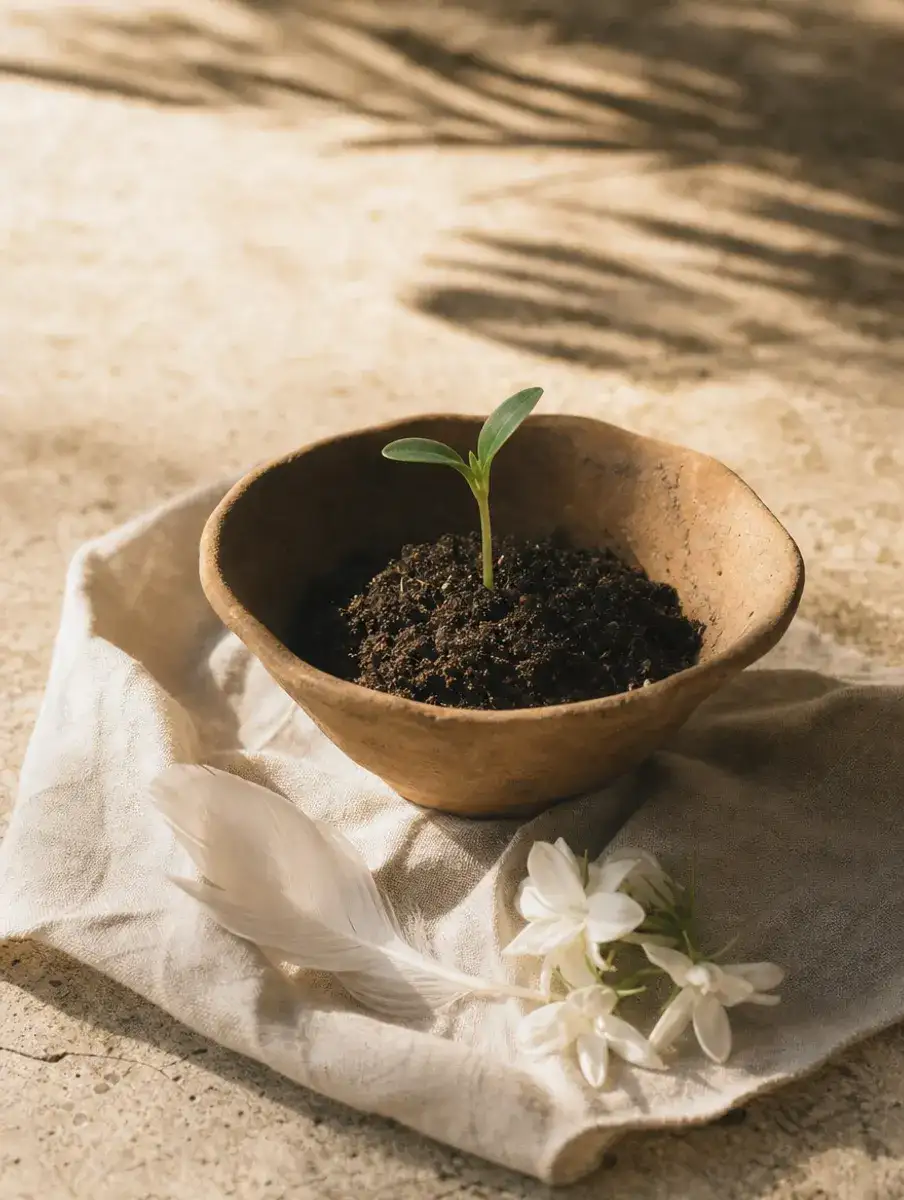
Ahimsa means non-harming: not causing injury to any living being in action, speech or thought. The Sanskrit word joins the prefix a, not, to himsa, harm. It is the first of the five yamas in Patanjali's Yoga Sutras, and a central value in Jain, Buddhist and Hindu ethics.
Teacher's note from Joahnna Lee
“I can see when a shape is costing more than it gives, and change it on the spot.”
What does ahimsa mean?
Ahimsa joins the negative prefix a to himsa, harm or injury. So it means non-harming, the absence of harm, and in older writing also the absence of the wish to harm.
It applies to action, to speech and to thought, and to every living being, yourself included.
On the mat that last part matters most. Ahimsa is the reason beginner-friendly yoga usually starts gently and stays well inside what feels safe. Pain is information, and non-harming means listening to it. If you are new, the guide to your first yoga class covers what to expect.
Ahimsa in the Yoga Sutras
Patanjali’s Yoga Sutras list five yamas, the restraints that open the eight limbs, and ahimsa comes first. The other four are truthfulness, not stealing, brahmacharya, or moderation, and aparigraha, not grasping.
All five are set out on the page about the yamas and niyamas, and the full outline of the practice is on the page about the eight limbs of yoga.
The Sutras call the yamas a great vow when they are kept everywhere and always, without exceptions for birth, place, time or circumstance. A later line describes the fruit of ahimsa: in Charles Johnston’s 1912 rendering, “Where non-injury is perfected, all enmity ceases in the presence of him who possesses it.”
Commentators on the Yoga Sutras of Patanjali often read ahimsa as the root of the other yamas, since a lie or a theft also harms someone.
Ahimsa in Jain, Buddhist and Hindu ethics
Ahimsa is older and wider than yoga. In Jainism it is the first and most demanding vow. Jain monks and nuns may sweep the path ahead of them and cover their mouths to avoid harming small creatures, and lay Jains follow a strict vegetarian diet.
Mahavira, the great Jain teacher of the sixth or fifth century BCE, placed non-harming at the centre of the path.
In Buddhism the first of the five precepts is to refrain from taking life, and compassion for all beings runs through the teaching.
In Hindu texts the phrase “ahimsa paramo dharmah”, non-harming is the highest duty, appears in the Mahabharata, though the same epic also wrestles with war and with duties that seem to require force.
In the twentieth century Mohandas Gandhi made ahimsa the foundation of his nonviolent resistance, and the idea travelled from there into movements for civil rights around the world.
How it shows up in a modern practice
Most students meet ahimsa as a cue rather than a word. Back off before pain, not after. Use the block. Take Child’s Pose when you need it. A good class gives permission to do less.
It also shows up in how people speak to themselves. Comparing your body with someone else’s, or with your own body from last year, can be a quiet kind of harm. Non-harming includes kinder attention.
Some practitioners take ahimsa further into diet, shopping or speech. Those choices are personal, and the Sutras leave them to the practitioner.
How it can come up in a class
A teacher working one to one can often see when a shape is costing more than it gives, and change it on the spot.
A class built around ahimsa keeps every pose inside what feels safe, uses props without apology, and treats rest as part of the practice rather than a break from it. If you want a block or strap at home, the guide to yoga blocks and straps is a good start.
Other words on this page are explained in the Sanskrit yoga glossary.
Browse the yoga philosophy library.
Sources: Mayo Clinic, Fitness program: 5 steps to get started; NCCIH (US National Institutes of Health), Yoga: Effectiveness and Safety. Last reviewed 2 October 2026.
Questions
What is an example of ahimsa?
Coming out of a pose before it turns painful, speaking to a colleague without contempt when you disagree, or moving an insect outside instead of killing it. Each is a small act of not causing harm, which is all the word asks.
How do you pronounce ahimsa?
In three syllables, a-him-sa, with a short a at the start and the h clearly sounded. Many English speakers stress the middle syllable, and that is widely understood.
Does ahimsa mean you have to be vegetarian?
Many people who follow ahimsa are vegetarian, and in Jainism the commitment to non-harming shapes diet very strictly. The Yoga Sutras do not give a diet. How far ahimsa reaches into food is a question each tradition, and each person, answers differently.
Is ahimsa the same as non-violence?
Non-violence is the common translation and a good start. Ahimsa is wider: it includes harsh words and harmful thoughts, and the absence of the wish to harm, not only the absence of violent acts.
How do you practise ahimsa toward yourself?
By not forcing the body past what it can do today, by resting when you are unwell, and by speaking to yourself with the patience you would give a friend. Most teachers see this as the place ahimsa starts on the mat.
What are the three parts of ahimsa?
Ahimsa is usually described as non-harming in three areas: action, speech and thought. In action, you avoid injuring any living being, yourself included. In speech, you avoid harsh or contemptuous words. In thought, you let go of the wish to harm. On the mat, it starts with backing off before pain.
Keep reading
Your yoga calendar
We track every yoga event, workshop and pop-up class so you don't have to.
Updated