Guides
Laughter yoga: what it is and how a session runs
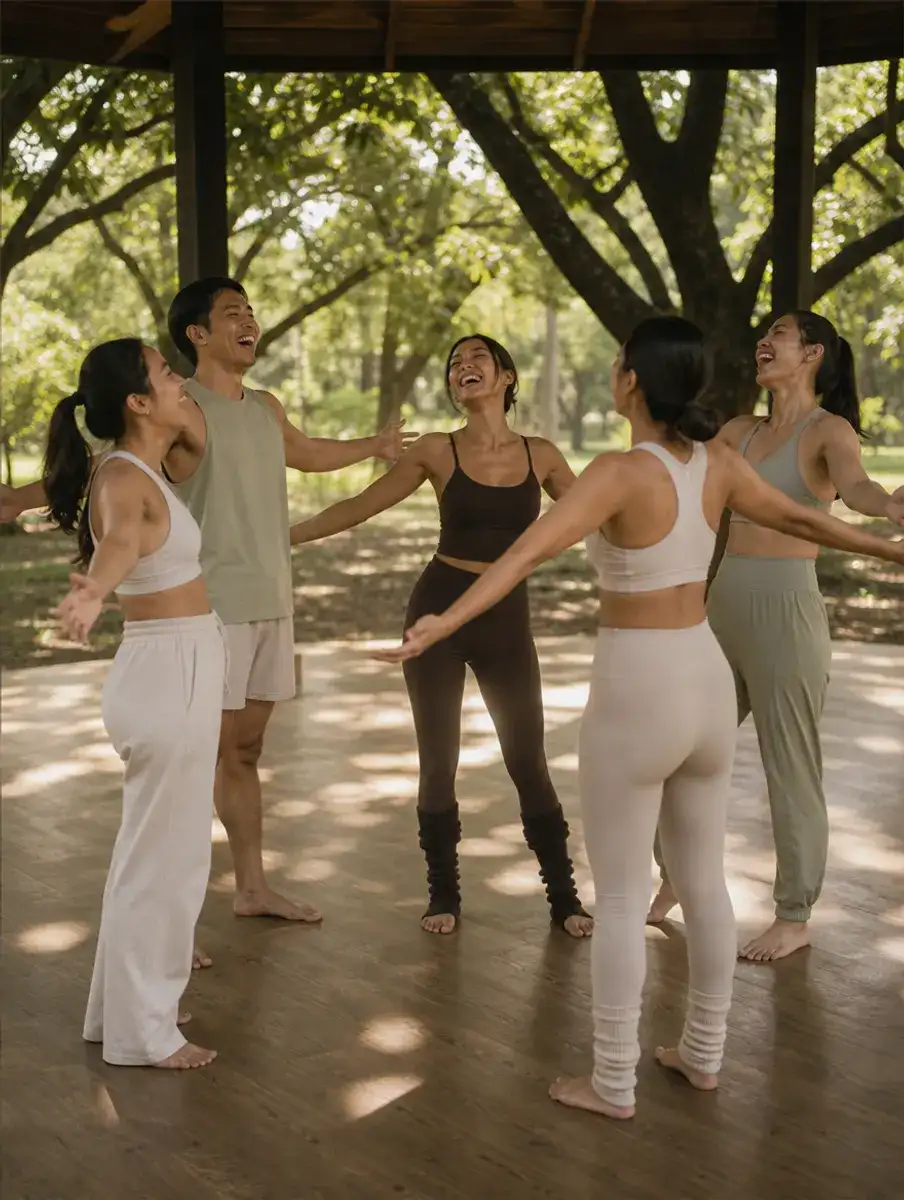
Laughter yoga is a group practice of laughing on purpose, without jokes or comedy. Short playful exercises, clapping, chanting and deep breathing get people laughing together, and the laughter often turns real. It was started in 1995 in Mumbai by Dr Madan Kataria, a physician, with a small group in a public park.
Laughter yoga sounds like a joke, and that is part of its charm. It is a group practice of laughing for no reason, combined with deep breathing. Nobody tells jokes, and nobody has to be funny.
What is laughter yoga?
Laughter yoga treats laughter as an exercise you can choose to do, rather than a reaction you wait for. A session strings together short laughter exercises, many of them small bits of play or acting, with clapping, simple chanting and slow, deep breaths in between.
At first the laughter is deliberate and a little forced. In a group, with eye contact and silliness, it often becomes real and catching. The yoga in the name comes mostly from the breathing, which borrows from pranayama, yoga’s practice of working with the breath, and from light stretching.
Where did laughter yoga come from?
Laughter yoga was started by Dr Madan Kataria, a physician in Mumbai, India, in 1995. He gathered a small group in a public park to laugh together. At first people told jokes, but the jokes soon ran out, and the group found they could laugh just as well without them, by laughing on purpose until it turned real.
His wife, Madhuri Kataria, a yoga teacher, helped shape the practice by adding breathing and stretching between the laughter exercises. The format spread as laughter clubs: free, informal groups that meet in parks, community centres and workplaces. Dr Kataria also began World Laughter Day, held on the first Sunday of May.
Laughter yoga is a modern practice. It does not come from the classical yoga texts, and it sits outside the main types of yoga taught in studios.
How does a laughter yoga session run?
Sessions vary by leader, but most follow a similar pattern over about half an hour to an hour:
- Warm-up clapping. The group claps in a steady rhythm, often one, two, one, two, three, while chanting “ho, ho, ha ha ha”. This gets everyone moving and makes noise feel normal.
- Deep breathing. Slow breaths in with the arms rising, and a long breath out as the arms come down. This returns between each laughter exercise.
- Childlike play. A short chant such as “very good, very good, yay!” with a thumbs up, to drop the self-consciousness.
- Laughter exercises. Short games of a minute or so each. A greeting laugh, shaking hands and laughing instead of saying hello. A milkshake laugh, pouring an imaginary drink between two glasses, then laughing as you drink it. A silent laugh, with the mouth wide open and no sound. Many leaders invent their own.
- Laughter meditation. Some sessions end with a few minutes of free laughter, sitting or lying down, letting it rise and fall on its own.
- Rest. A quiet, relaxed finish, often lying still or sitting with the eyes closed, before the group says goodbye.
What should you expect at your first session?
Expect to feel awkward for the first few minutes. Almost everyone does. You do not need special clothes, a mat or any experience, and you can sit on a chair for the whole session if you prefer.
The laughter is loud and the exercises are playful, so it suits people who are happy to be a little silly in a group. If you have had recent surgery, especially on the belly, a hernia, or a condition that makes strong or long breaths out uncomfortable, check with your doctor first, and you can always join in more quietly.
How does it compare with other breathing practices?
Laughter yoga is lively and social. If you prefer something quieter, three simple breathing exercises can be done alone at home, and yoga nidra practice offers a guided rest lying still. Free community events around International Yoga Day on June 21 are another social, low-pressure way to try yoga with a group.
To find a regular yoga class instead, browse yoga studios across the Philippines.
Browse all our yoga guides.
Sources: Mayo Clinic, Fitness program: 5 steps to get started; NCCIH (US National Institutes of Health), Yoga: Effectiveness and Safety; NHS, Exercise in pregnancy; CDC, Pregnant & Postpartum Activity: An Overview; Canadian Family Physician (Chan et al., 2014), via PubMed Central, Hot yoga and pregnancy: Fitness and hyperthermia. Last reviewed 2 October 2026.
Questions
Do you need a sense of humour for laughter yoga?
No. Laughter yoga does not use jokes, so you do not need to find anything funny. You start by laughing on purpose, as an exercise, and the group, the eye contact and the playfulness usually turn it into real laughter after a few minutes.
Does laughter yoga involve yoga poses?
Hardly any. The yoga in the name comes mainly from the deep breathing and stretching between rounds of laughter. Sessions are done standing, walking or sitting on a chair, so no mat or flexibility is needed.
What is a laughter club?
A laughter club is a group that meets regularly, often early in the morning in a park or community hall, to do laughter yoga together. The first one met in Mumbai in 1995, and the format has since spread to many countries.
How long does a laughter yoga session last?
Most sessions run for about half an hour to an hour. That usually includes warm-up clapping, deep breathing between rounds, a string of short laughter exercises of a minute or so each, and a quiet rest at the end. Sessions vary by leader, so ask the group or club how long theirs runs.
Keep reading
Your yoga calendar
We track every yoga event, workshop and pop-up class so you don't have to.
Updated