Style quiz result
Your style: Aerial
Aerial yoga suits you: poses supported by a soft fabric hammock hung from the ceiling. It is playful, it makes inversions feel lighter, and it is something new.
In an aerial class the hammock holds part of your weight, so you can try hanging shapes and gentle inversions with support. Classes are small because each student needs a rig. Tell the teacher about any neck, shoulder or blood pressure issues before you start, and avoid inversions in pregnancy.
Few studios run aerial classes, so see aerial yoga studios in Manila and book ahead.
A typical aerial class starts on the mat or with the hammock low, warming up the shoulders, wrists and core. The teacher then sets the hammock to hip height and takes the class through supported standing poses, gentle backbends and, for those who are ready, a simple supported inversion. Most classes finish lying in the hammock like a cocoon for the final rest. The aerial yoga guide explains the hammock, the grips and the common beginner shapes.
What to try in your first aerial class
Book a class labelled beginner, intro or basics aerial, and message the studio to ask about any weight guideline for its rigs. Wear fitted clothes that cover your underarms and the backs of your knees, since the fabric can rub, and take off rings, watches and earrings. Eat lightly, at least two hours before.
In class, take your time getting in and out of the hammock and ask the teacher to check your setup before any inversion. Expect the fabric to press into your hips and thighs at first. If you feel dizzy upside down, come up slowly and sit. Shoulder and core strength help, and a few home sessions of plank and downward dog build both.
Studios that teach aerial
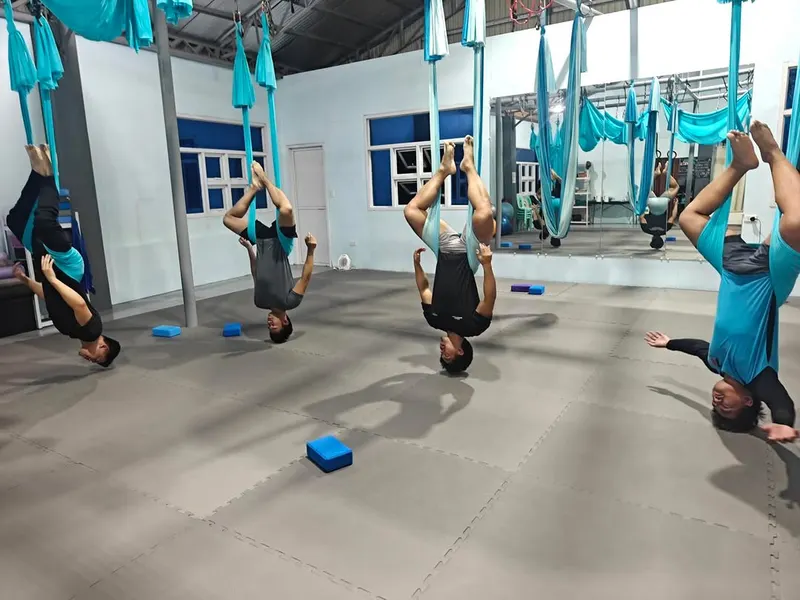
Altair Studio
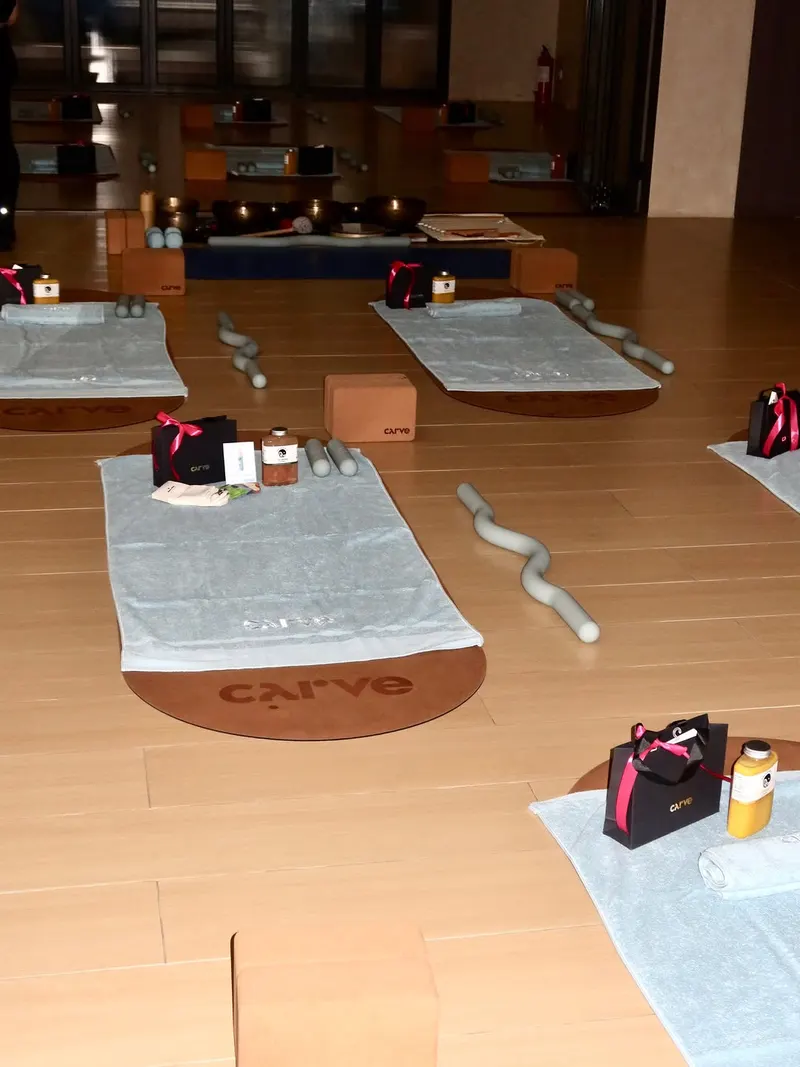
Carve Philippines
Daily Prana
EF Yoga School of Wellness
Float Studio
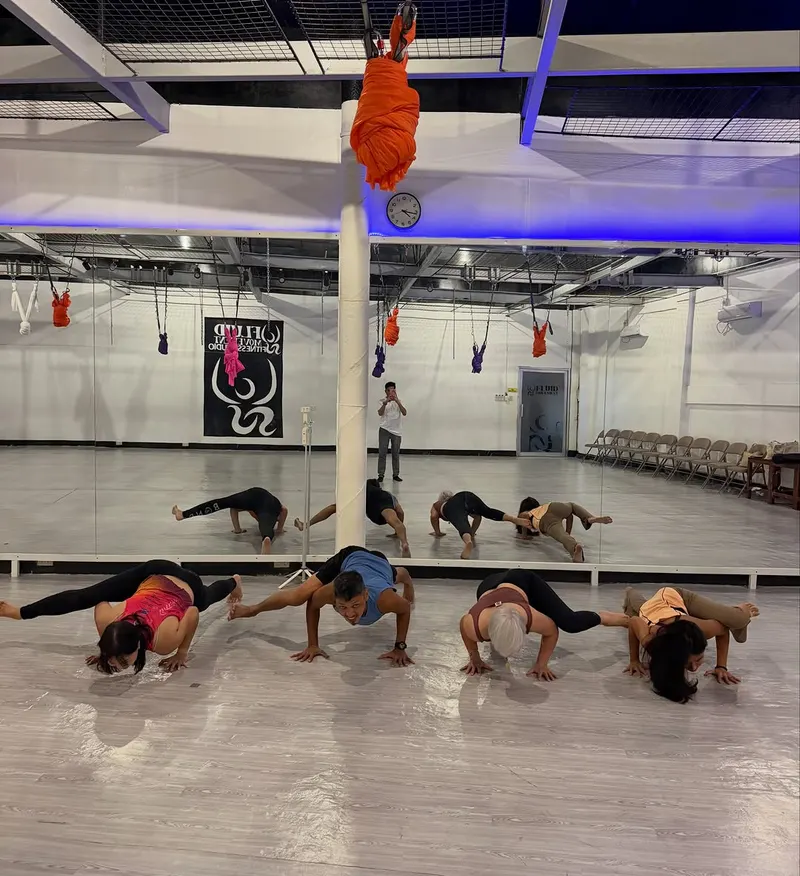
Fluid Movement Fitness Studio
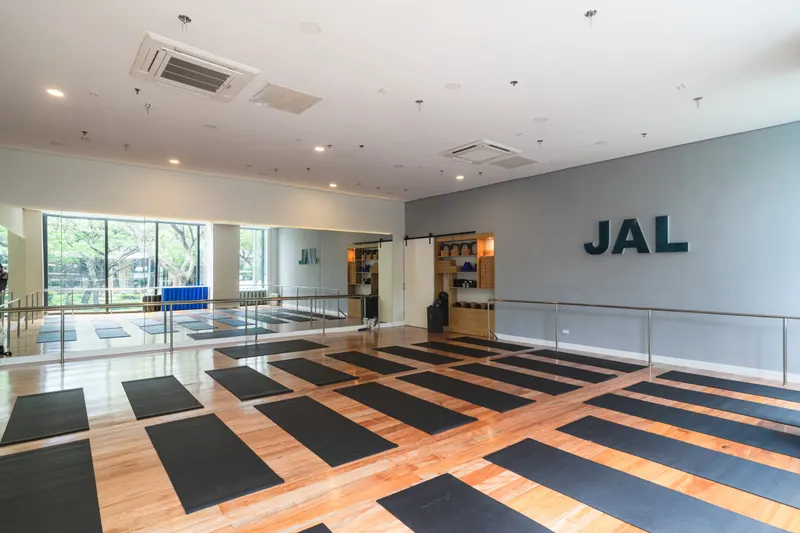
Jal Yoga Alabang
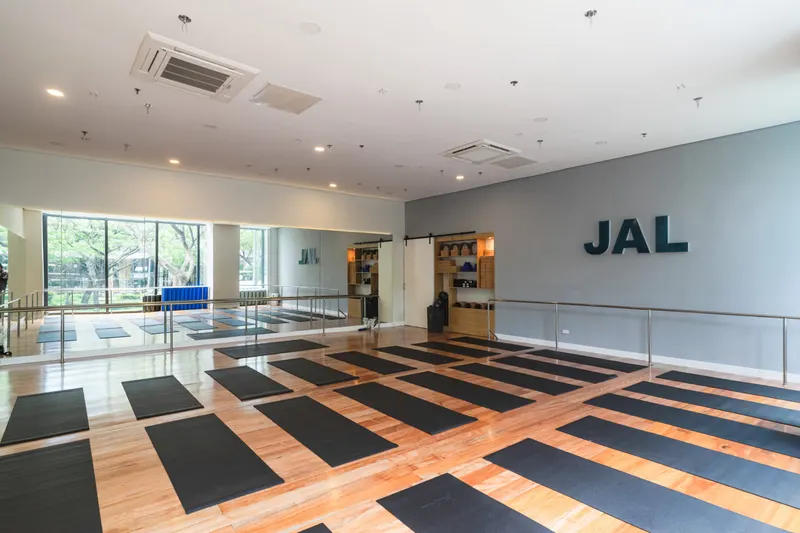
Jal Yoga Greenhills
Aerial yoga: questions
Can you try aerial yoga if you have never done mat yoga?
Yes. Beginner aerial classes assume no yoga experience, and the hammock supports part of your weight. Knowing a few basic poses such as downward dog helps you follow the cues, so a couple of mat classes first is useful but not required.
Why do aerial classes need to be booked ahead?
Each student needs their own hammock rig, and a room only holds a set number. Once those are taken the class is full, so walk-ins are often turned away. Book through the studio's own system or by message, and cancel if you cannot go.
Is it normal to feel dizzy upside down in aerial yoga?
Some people feel light-headed in their first inversions. Come up slowly, sit with your head level and breathe until it passes, and skip further inversions that class. If dizziness keeps happening, or you have a blood pressure or eye condition, check with your doctor before you continue.
Sources: Mayo Clinic, Fitness program: 5 steps to get started; NCCIH (US National Institutes of Health), Yoga: Effectiveness and Safety; NHS, Exercise in pregnancy; CDC, Pregnant & Postpartum Activity: An Overview; Canadian Family Physician (Chan et al., 2014), via PubMed Central, Hot yoga and pregnancy: Fitness and hyperthermia; PLoS One (Cramer et al., 2013), via PubMed Central, Adverse Events Associated with Yoga: A Systematic Review of Published Case Reports and Case Series. Last reviewed 2 October 2026.
Other results
Hatha · Vinyasa · Ashtanga · Hot and Bikram · Kundalini · Yin and restorative · Retake the quiz
Updated