Style quiz result
Your style: Yin and restorative
Yin or restorative yoga suits you: slow floor poses held for minutes at a time, often propped up with bolsters and blankets, to rest and unwind.
Both styles are quiet and slow. Yin holds passive shapes for three to five minutes, while restorative yoga supports the body fully so you can rest. Joahnna Lee teaches both privately and explains the difference in yin vs restorative yoga.
Try the bedtime yoga sequence at home, and see the studios below that publish yin or restorative classes.
A yin class usually holds a handful of floor poses, such as butterfly, dragon and caterpillar, for three to five minutes each, with the muscles soft and the body at rest. You go to a moderate sensation, never pain, and use blocks or bolsters to make the hold sustainable. A restorative class uses even more props so that no stretch is felt at all. Both suit an evening or a recovery day after running, lifting or a stronger class.
What to try in your first yin and restorative class
Arrive a few minutes early to collect props: two blocks, a bolster and a blanket are typical, and the teacher will show you how to set them up. Wear layers, because you cool down when holding still, and let the teacher know about any knee, hip or back problem.
Expect long quiet holds. If a pose starts to feel sharp, numb or tingly, ease out and prop it higher; strong sensation is not the goal. Come out of each pose slowly, since joints can feel stiff after a long hold. The quiet can feel strange at first; noticing the breath gives the mind somewhere to rest.
Studios that teach yin and restorative
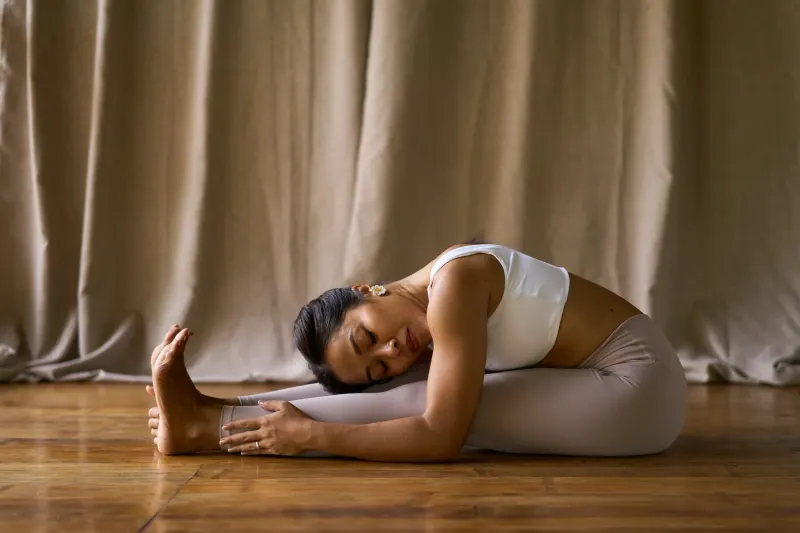
anahaw Yoga Studio
Antipolo Ashtanga Yoga Shala
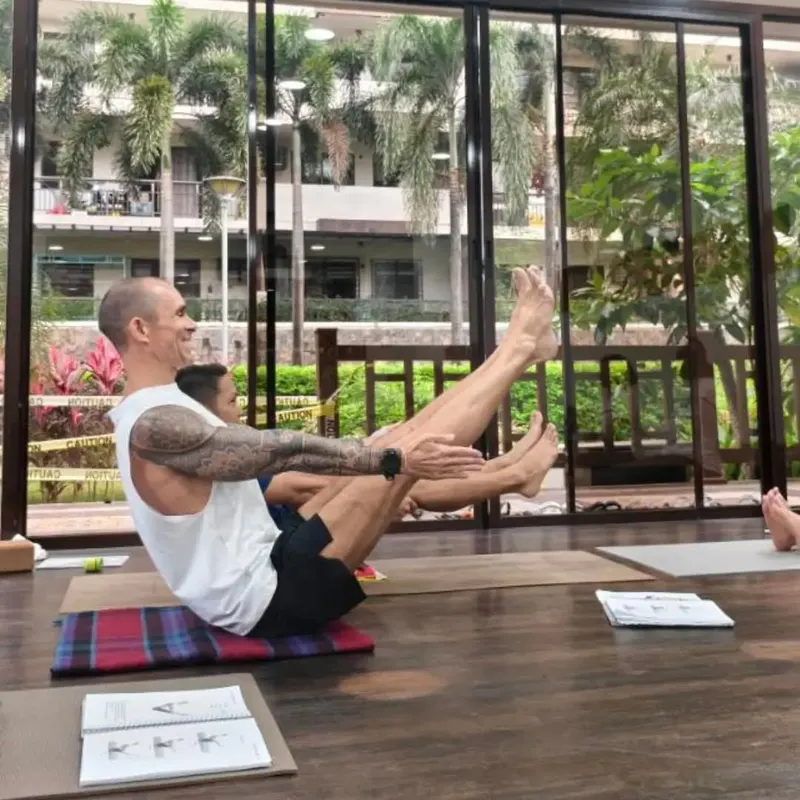
AV108 Yoga School
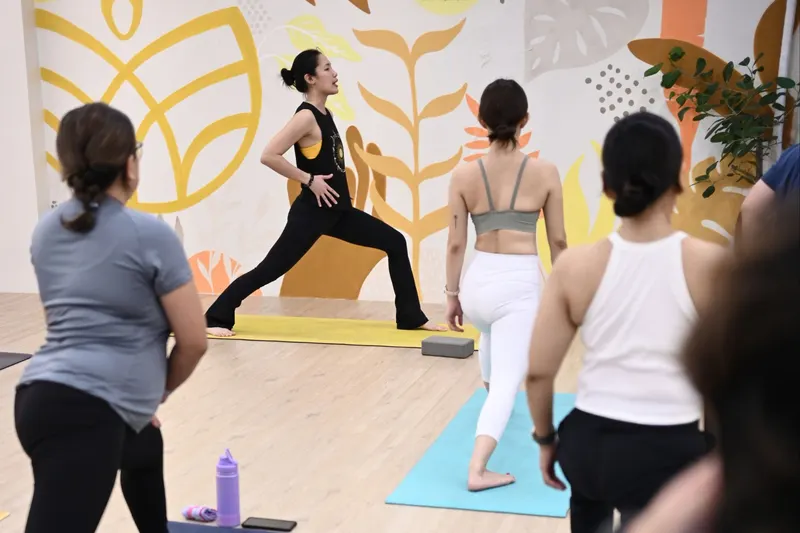
BetterLife Studio
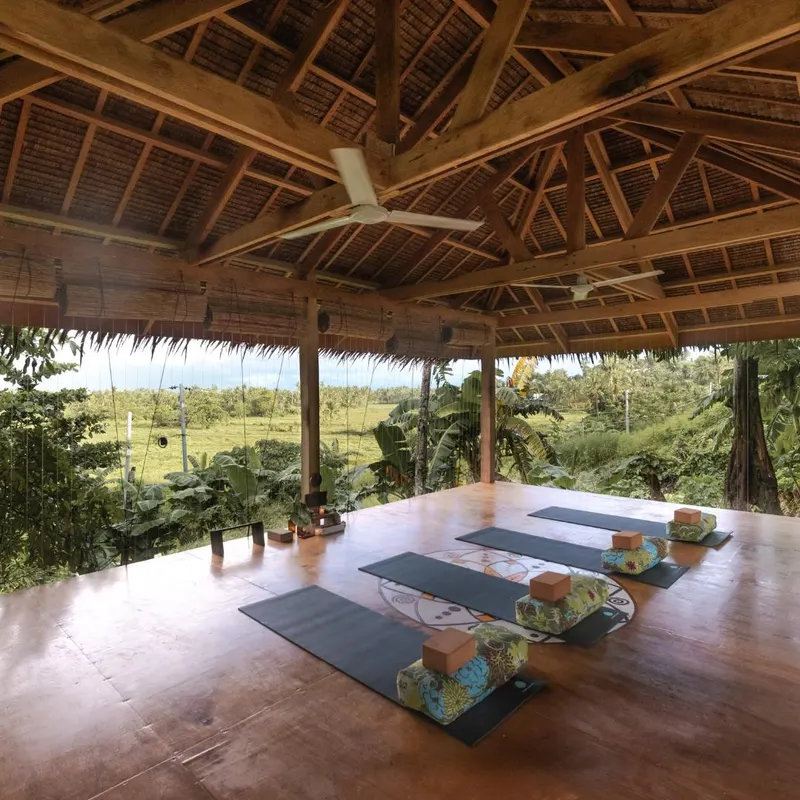
Bodhi Yoga Center Siargao (Lakshmi Yoga Shala)
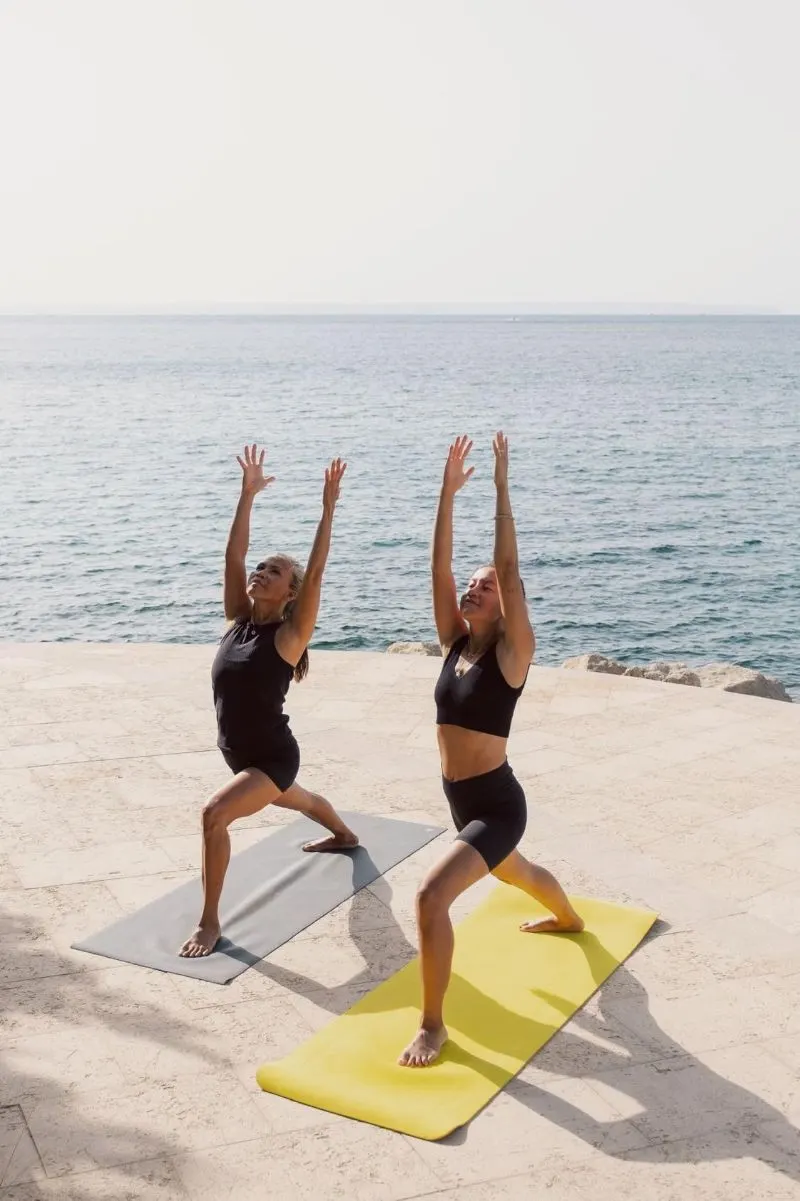
Coco Grove Beach Resort Yoga Classes
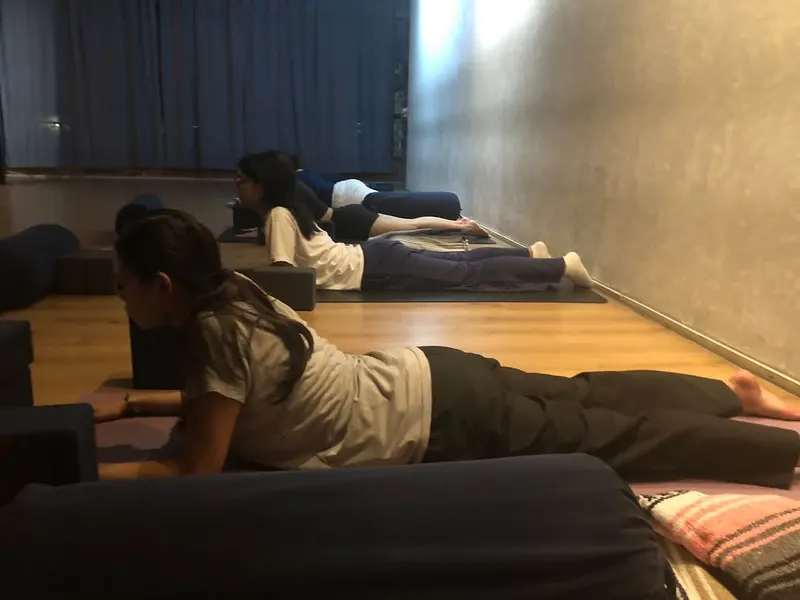
ComFit Studio PH
Dharana Yoga
Yin and restorative yoga: questions
Is a yin class too easy if you already exercise a lot?
Many active people find yin harder than expected, because holding still for several minutes is a different kind of work. It complements running, lifting and stronger yoga styles rather than replacing them. If you want more effort, choose a slow flow and keep yin for rest days.
What should a yin pose feel like during a long hold?
A moderate, dull stretch that you could stay with for minutes while breathing calmly. It should never be sharp, burning, numb or tingly. If it is, back off, add a prop or come out. Sensation often changes over the hold, so adjust as you go.
Can yin and restorative classes be done at home without props?
Yes. Pillows, folded blankets, a rolled towel and a couch cushion stand in for bolsters and blocks. Start with three or four poses held for a few minutes each, such as those in the bedtime yoga sequence, and set a timer so you can relax into the hold.
Sources: Mayo Clinic, Fitness program: 5 steps to get started; NCCIH (US National Institutes of Health), Yoga: Effectiveness and Safety; NHS, Exercise in pregnancy; CDC, Pregnant & Postpartum Activity: An Overview; Canadian Family Physician (Chan et al., 2014), via PubMed Central, Hot yoga and pregnancy: Fitness and hyperthermia. Last reviewed 2 October 2026.
Other results
Hatha · Vinyasa · Ashtanga · Hot and Bikram · Aerial · Kundalini · Retake the quiz
Updated